

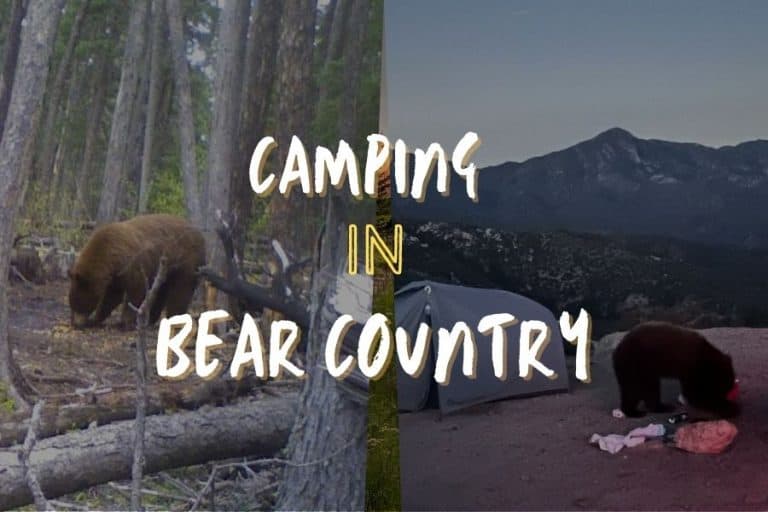
Love to camp, but are afraid of bears? Don't be!
Just because there are bears in the area doesn't mean you should stay away from the wilderness.
In fact, you can have a safe trip, as long as you know some things about bears and their behavior.
The safety advice in this guide follows guidance from the National Park Service and the U.S. Forest Service. Rules differ from place to place, so always check the regulations for the park or forest you're visiting before you go.
Let's dive in.
Understand Bear Behavior
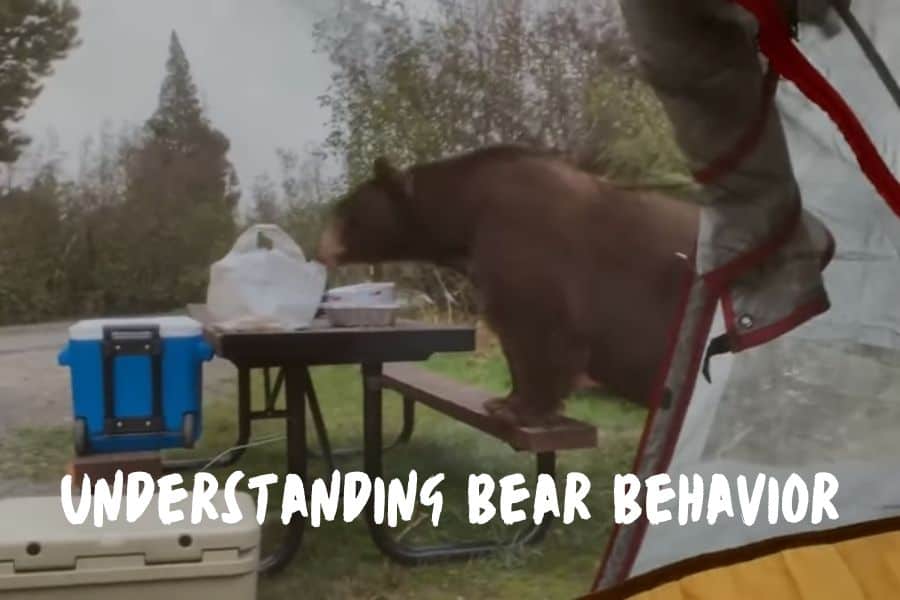
In order to know how to behave in bear country, you need to understand bear behavior first.
The more you learn about bears, the easier it is to avoid negative encounters.
Bears are solitary animals. Of course, that's with the exception of a mama bear with her cubs or a pair during the mating season.
Typically, bears are most active during warmer months, around the time the sun sets and rises.
Bears aren't territorial in the way some animals are, but they will defend cubs, a food source, or a potential mate.
So you won't see them patrolling around and defending their region.
And in areas populated with people, a bear will typically come out at night to avoid encounters.
That is also when active bears in the area may head to your campground or campsite to search for food.
When And Why Do Bears Attack?
Bears aren't interested in eating humans, or having any kind of close encounter for that matter.
In reality, most bear attacks are defensive attacks. A bear will charge at a human if it feels threatened or is protecting its cubs or food.
Bear attacks are rare. According to the National Park Service, most bears are only interested in protecting their food, their cubs, or their space.
Most encounters happen during warmer months, when bears are most active.
Bear activity drops in the colder months, when many bears are in their dens. That varies by region and by year, though, and bears can still be active in winter, so the same precautions apply if you're camping during colder months.
Winter is also when cubs are born, so stay well away from any den you come across.
Camping in Bear Country Safety Tips
Given that bears aren't "after us," you can definitely have a safe camping trip in bear country.
But there are a few things you need to make sure of.
Inspect Your Campsite First
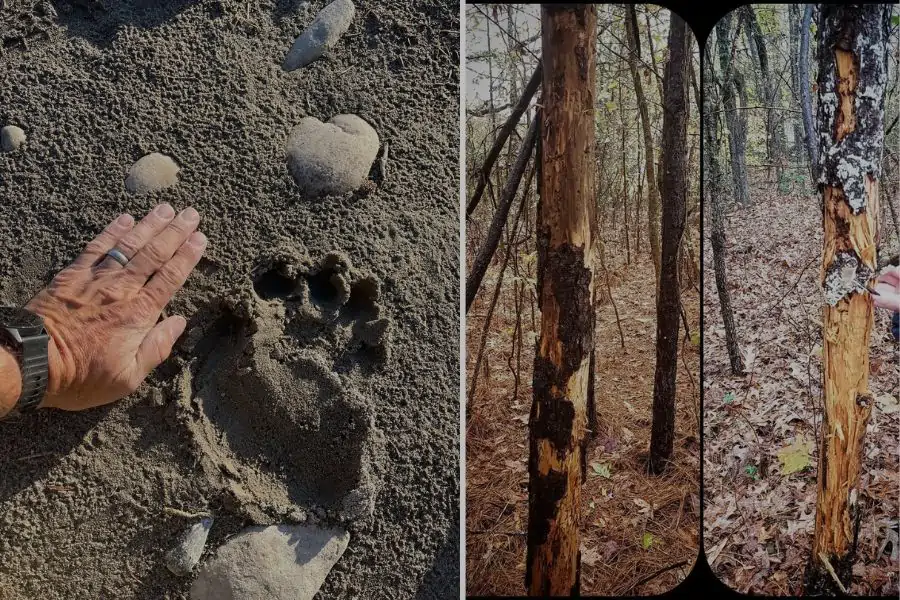
The first thing you should do when you arrive at the designated campsite is to inspect it for signs of recent bear activity.
Bear tracks and scat, as well as scratched trees and logs, are clear signs that a bear was there not long ago.
You might also come across an animal carcass, or the remains of one. If you do, leave the area. A bear may be nearby and will defend it.
Keep in mind that bears are omnivores, meaning they eat both plants and animals.
They'll gladly feast on a moose or deer, but much of their diet is roots, grass, berries, fish, insects, larvae and fruit.
For that reason, you also want to avoid places surrounded by berry bushes and lush grasses.
If there's a source of fresh water nearby, that's another place where bears may be looking for food.
Camp Well Away From Any Cover for Bears
In uncertain situations, bears are very cautious.
They often travel along the edges of wetlands and forests, right around the first row of trees and bushes.
That way, they can see potential danger or prey before it sees them.
Bears also tend to reuse the same trails, so tracks can stay visible for a long time in areas they pass through regularly.
Avoid setting up camp near a trail or on the edge of a forest or wetland, as this is where bears might be found.
Instead, it's best to camp in an open area.
And don't think that camping near a tree gives you an escape route in case of an encounter:
Do not climb a tree to get away from a bear.
The National Park Service is clear on this: both grizzlies and black bears can climb trees.
Sleep in a Tent
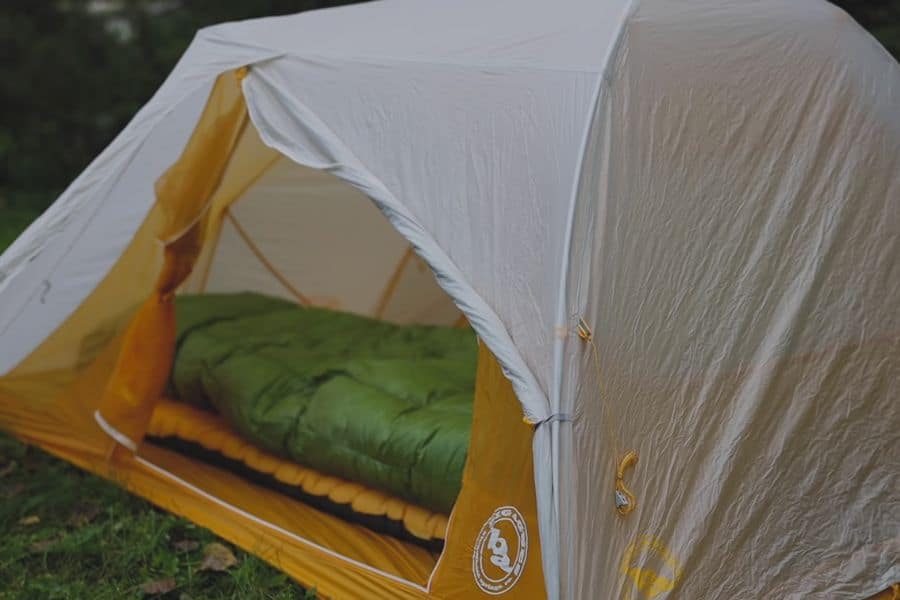
To make one thing perfectly clear: a tent won't provide you with a safe space away from bears.
But sleeping in a tent is still better than sleeping without a shelter over your head.
A bear is unlikely to charge a tent, especially if it isn't sure what or who might be inside.
With that being said, you don't want to sleep with your body touching the walls of the tent.
Keep your bear spray and a flashlight within reach at night, so you can see what's going on and react quickly.
Never keep food, toiletries, or anything else with a scent inside your tent.
Also Read: What To Do If A Bear Is Outside Your Tent?
Keep a Clean Camp
While this should always be the case, it's even more important to keep your camp clean and tidy when camping in bear country.
By this, I mean keeping your tent and sleeping area separated from where you're cooking or eating.
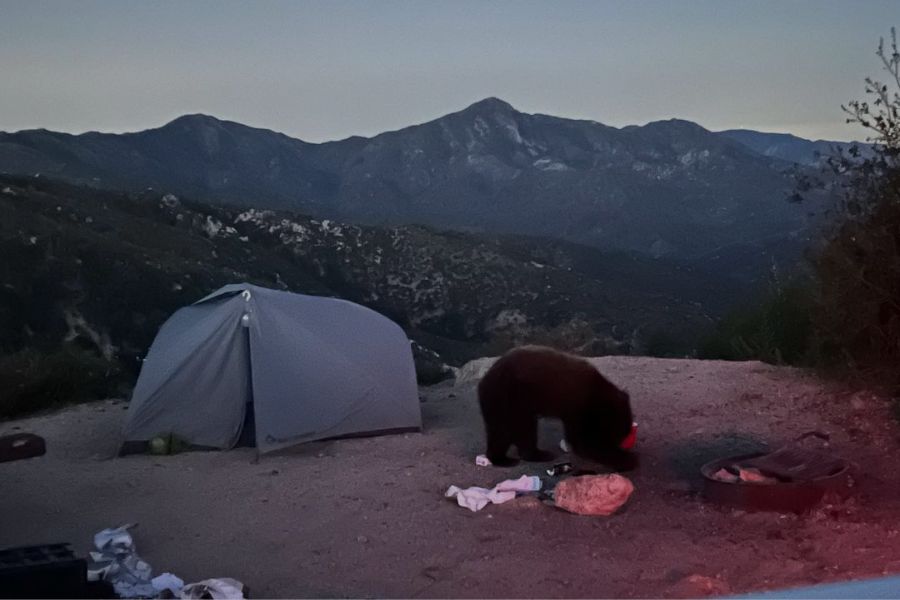
In the backcountry, the U.S. Forest Service advises that you sleep a minimum of 100 yards from where you hang, cook, and eat your food.
In a developed campground you won't have that much room, so use the food lockers provided and follow the campground's rules.
But that's not all. You should make sure to get rid of any leftover food or used packaging after you're done cooking.
These are all things a bear would happily eat.
As for what to do with leftovers, you can store them in sealable plastic bags, and then in a bear canister.
In campgrounds, there are often metal boxes designated for this purpose.
When it comes to dishes, you should always clean your pots and plates right after you're done eating.
You don't want to leave other scented items lying around either. The National Park Service notes that bears consider anything with a scent to be "food", including toiletries, sunscreen, bug repellent, trash and drinks.
Bears have a very strong sense of smell and can pick up scents from a long way off.
If you're camping with a dog, never leave a bowl of dog food lying around.
Store Your Food in a Bear-Resistant Food Container
I'm sure you've heard of bear-resistant food containers before. These containers have to pass specific tests to be considered bear-resistant.
This means being very sturdy and difficult for a bear to open.
Bear-resistant does not mean smell-proof. A bear may still smell what's inside, which is why where you put the container matters as much as the container itself.
Some parks and forests require a specific type of storage, and some don't allow hanging food at all. Check the rules for the area you're visiting before you choose a method.
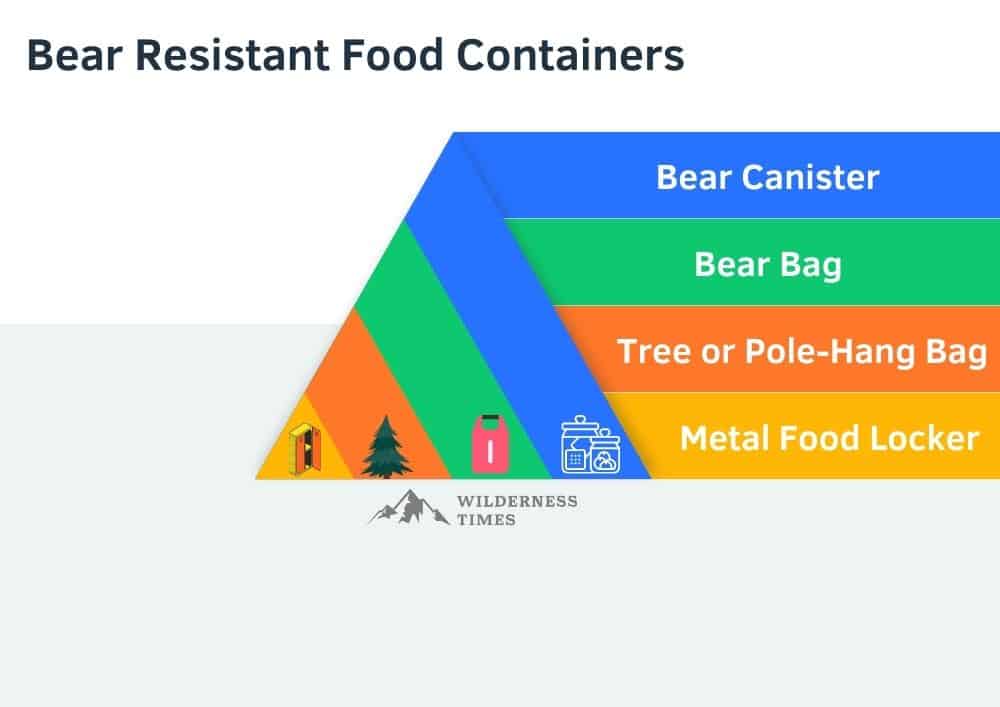
Bear Canister
This is a hard-sided, portable container designed so that a bear can't open it or carry it off easily.
In many cases, it requires a coin or a screwdriver to open.
A canister only works if it is closed and locked, so check the lid every time.
Bear canisters come in different sizes, and they're the standard choice for hiking and backpacking.
They can also double as a stool, which is quite practical.
Bear Bag
Bear bags aren't hard-sided like canisters and containers.
Instead, they're made of a very tough, tear-resistant fabric.
Some bear bags are waterproof, but that's not always the case. They're also not odor-resistant.
Many campers put an odor-barrier bag inside the bear bag to reduce smells.
Not every park accepts bear bags as approved storage, so check before you rely on one.
Tree or Pole-Hang Bag
Before bear canisters were widely available, campers would hang their food from a tree, high enough that a bear couldn't reach it.
Where hanging is allowed, it can still work. Some campsites provide food poles for this.
Keep in mind that you need about 35 feet of rope.
The bag should hang at least 10 feet off the ground and 4 feet out from the tree trunk.
That way, a bear can't reach it even if it climbs the tree.
Metal Food Locker
These are commonly found in parks and campgrounds throughout bear country.
They're exactly what the name says they are: a metal storage box that you can keep your food inside.
If your campsite has one, use it. Typically made of steel, these lockers are built to keep bears out.
Be Prepared, Not Scared
If there's even the smallest chance of coming across bears on your camping trip, it's important to prepare yourself for such an encounter.
By this, I don't mean practicing karate 5 days a week. That won't help you much anyway.
Instead, I mean learning what to do and how to react.
Ideally, you want to camp in a group. Groups are noisier and easier for a bear to notice from a distance.
Talk and make noise as you move around, so bears hear you coming. Most bears will avoid people if they know they're there.
While I really hope you never experience it, you should always be prepared for possible injuries.
That means at least someone in your group should know how to treat injuries and perform basic first aid.
Of course, that also means having a first aid kit close at hand, with all the essentials.
You'll also want a way to call for help, such as a mobile phone, radio or satellite communicator.
Keep Pets Contained and Restrained
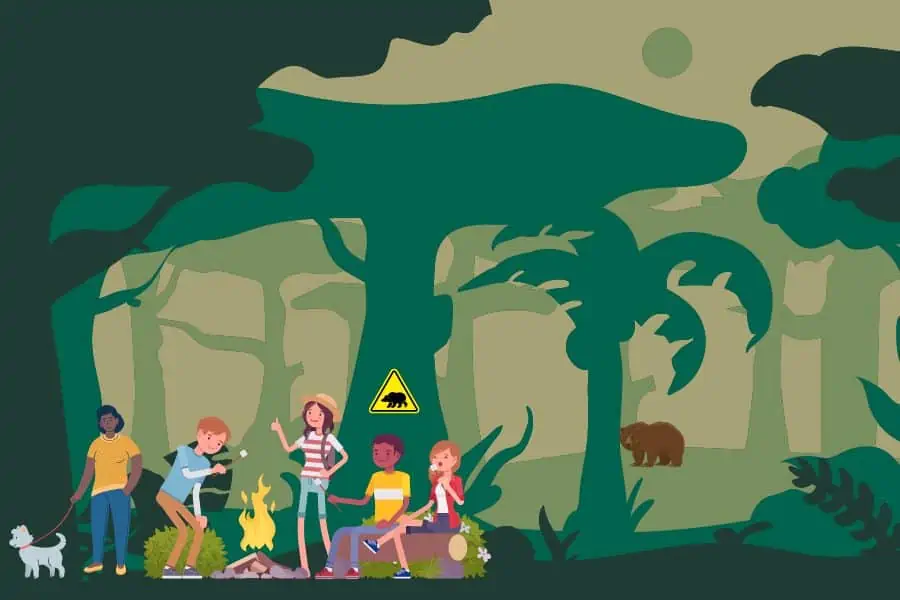
No matter how well-behaved your dog may be, you can never predict how a close encounter with a wild animal will turn out.
And of course, you don't want to risk it. Not only can your pet get hurt, it can also provoke the bear into coming after you.
So even if you're sitting around the campfire, you should have your dog restrained and by your side.
At night, I'd definitely recommend they sleep inside the tent with you.
As I've already mentioned, never leave dog food in a bowl.
After your canine companion is done eating, pack up leftovers and wash the bowl.
Don't leave any treats or chews out in the open either.
Remember to clean up after your pet as well.
Not just because it's the right thing to do under Leave No Trace principles, but because the scent can also attract bears.
Also See: Dog Camping Tips
Keep Bear Spray With You
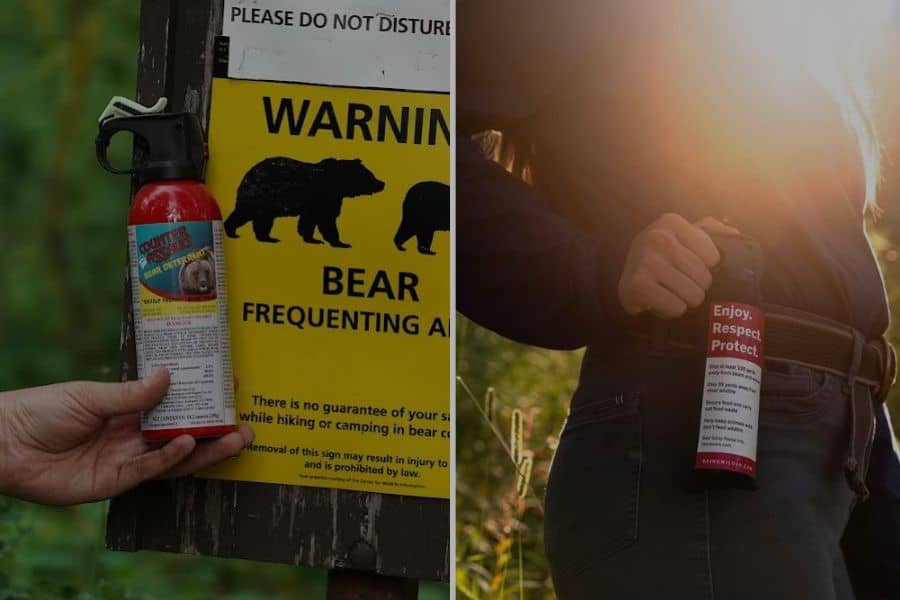
When camping in bear country, keep bear spray on you at all times.
Whether you're cooking, using the restroom or sleeping, you should have it close at hand.
When you're hiking or exploring the surroundings, carry it on a belt or chest holster, never in your backpack.
Bears are extremely fast, and you won't have time to search for it.
Before you even head out for your trip, get acquainted with the spray. Read the instructions, check the expiration date, and practice drawing it from the holster.
A canister empties quickly. Grand Teton National Park advises choosing a spray that lasts at least 6 seconds and reaches 25 feet or more. Check the label on yours so you know what you have.
Use it only on a bear that is charging or attacking. The National Park Service says the time to spray is when an aggressive, charging bear is within about 60 feet.
Bear spray is not a repellent. Never spray it on your tent, your gear or yourself.
Also See: Does Bear Spray Work on Mountain Lions?
Always Keep Children Close
Before you go on a camping trip, tell your kids what to expect. Agree on what everyone will do if you encounter a bear.
Explain to them that it's important they stay close to you at all times.
Kids can make quite a mess when eating.
Crumbs all over the ground, spilled ketchup and leftover food are all things that can attract bears.
Remember to clean up thoroughly right after every meal.
If a bear wanders into your campsite, pick up small children right away and keep everyone calm, without sudden movements.
Then move them to a secure place, such as your car.
Never Entice, Feed or Interact with Bears
No matter how cute or peaceful they might appear, remember that bears are wild animals.
And as such, they're unpredictable. For that reason, you want to stay as far away from them as possible.
This is especially important if you see bear cubs. If they're close, then mama bear is too.
And she won't be very friendly when she sees you around her babies.
You shouldn't feed bears either. A bear that learns to get food from people keeps coming back for it, which puts both people and the bear at risk.
That's not a scenario that ends well for either side. Feeding wildlife is also against the rules in national parks.
Leave No Trace
You should follow the Leave No Trace principles every time you're out in the wilderness.
But this is even more important when you're in bear country.
This means packing out everything you brought. Every food scrap, wrapper, plate and container, both on the table and on the ground.
And that's not just for food, but drinks as well. A spilled can of soda can also attract bears.
It's sweet and aromatic!
If A Bear Enters Your Campsite
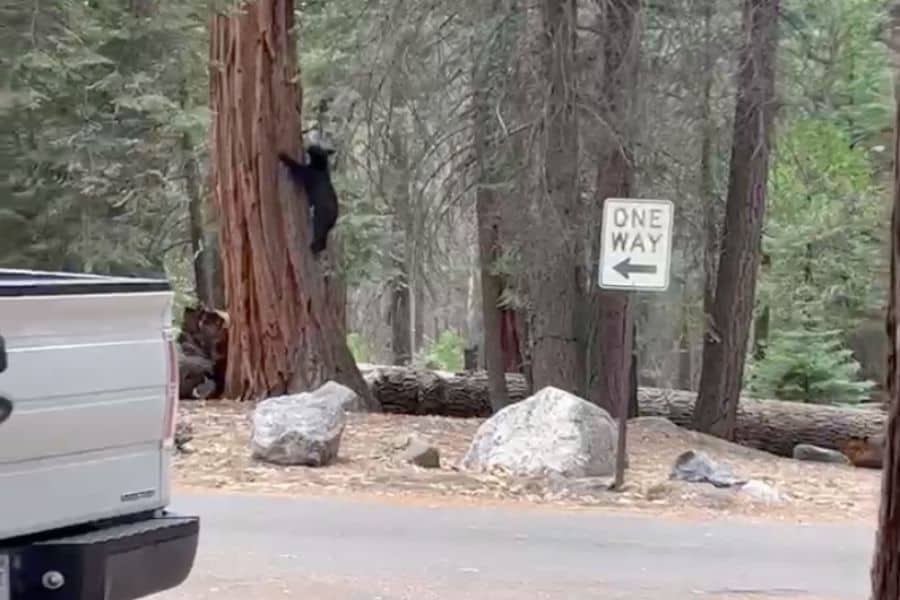
What if…?
Well, you have to be prepared for anything. Here's what you should do in case a bear enters the campsite.
1. Do Not Run
Don't for a second think that you can outrun a bear.
While these animals might look chubby and slow, they can run up to 35 miles per hour!
Instead of running, stay calm, keep facing the bear and slowly back away. If the bear follows, stop and hold your ground.
2. Do Not Climb a Tree
Both grizzlies and black bears can climb, so a tree is not a safe place.
3. Make Yourself Look Larger
Raise your arms and stand tall. If you're with other people, stand close together.
This can be enough to discourage a black bear from coming closer.
4. Make Loud Noises
Speak in a firm, loud voice so the bear knows you're a person.
With a black bear in camp, shouting, clapping and banging pans will often send it on its way.
Have your bear spray out and ready while you do this.
If a Bear Attacks You
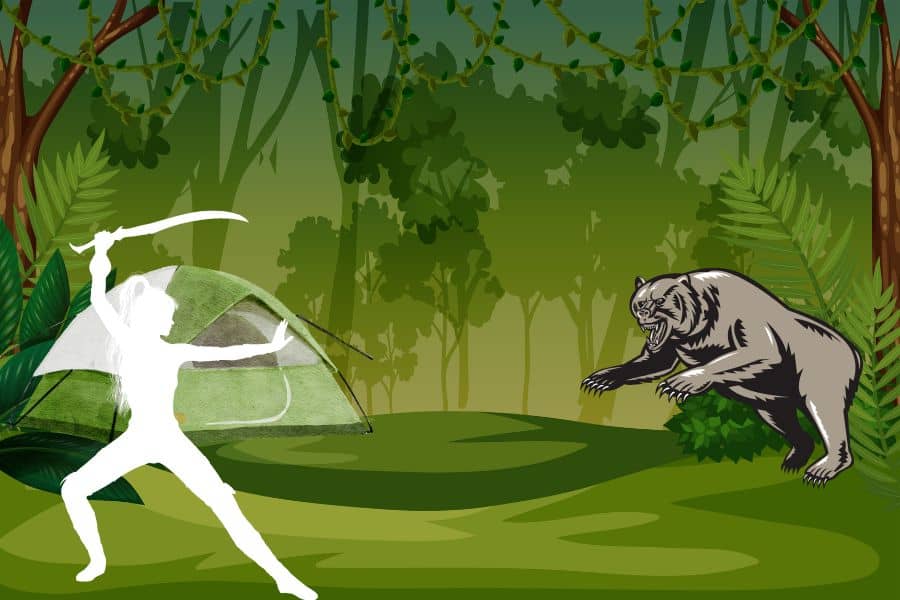
If a bear charges, use your bear spray first.
If the bear makes contact, what you do next depends on the type of bear. This is the National Park Service's guidance:
Brown or grizzly bear: play dead. Leave your pack on, lie flat on your stomach, and clasp your hands behind your neck. Spread your legs so it's harder for the bear to turn you over. Stay still until the bear leaves the area.
If the attack continues, fight back with whatever you have, aiming for the bear's face.
Black bear: do not play dead. Try to escape to a secure place such as a car or building. If you can't escape, fight back with anything available, aiming your blows at the bear's face and muzzle.
Any bear that attacks you in your tent, or stalks you and then attacks: do not play dead. Fight back. This kind of attack is very rare, but it is the one case where you should fight no matter what type of bear it is.
If you've had an encounter like this, report it to a park ranger or the local authorities as soon as you can.
If there's an aggressive bear in the area, other people need to know about it.
FAQs
Is it safe to camp around bears?
Yes, as long as you store your food properly and follow the rules for the area. If you see signs of recent bear activity at a specific spot, pick a different one.
How common are bear attacks?
Bear attacks are rarer than most people think, and fatal attacks are rarer still.
The National Park Service describes bear attacks as rare, and says most bears are only interested in protecting their food, their cubs, or their space.
Can a bear get into a tent?
Bears can get into tents fairly easily. With their sharp claws and strength, it doesn't take much for them to tear through soft tent fabric.
However, bears are unlikely to try to get into your tent unless they are attracted by the scent of food or toiletries. For this reason, anything that has ANY scent, even deodorant or toothpaste, should be locked away in approved bear-resistant storage.
Is it safe to camp in Yellowstone with bears?
Bears can often be seen in Yellowstone, but that doesn't mean camping in the park is necessarily dangerous.
Follow the park's own food storage and bear safety regulations, which rangers will go over with you, and you should have a safe camping experience.
What to do if a grizzly bear is outside your tent?
Keep your bear spray ready and turn on a flashlight or lantern.
If the bear tries to enter the tent, fight back and yell. The National Park Service advises fighting back against any bear that attacks you in your tent.
Do campfires keep bears away?
A campfire won't deter bears. The sound of people is more likely to keep them at a distance.
So enjoy your time camping, and sing and laugh with your companions.
To Sum Things Up
Camping in bear country doesn't have to be risky.
Store your food properly, keep a clean camp, carry bear spray, and check the local regulations before you go, and you should have a safe and enjoyable trip.