

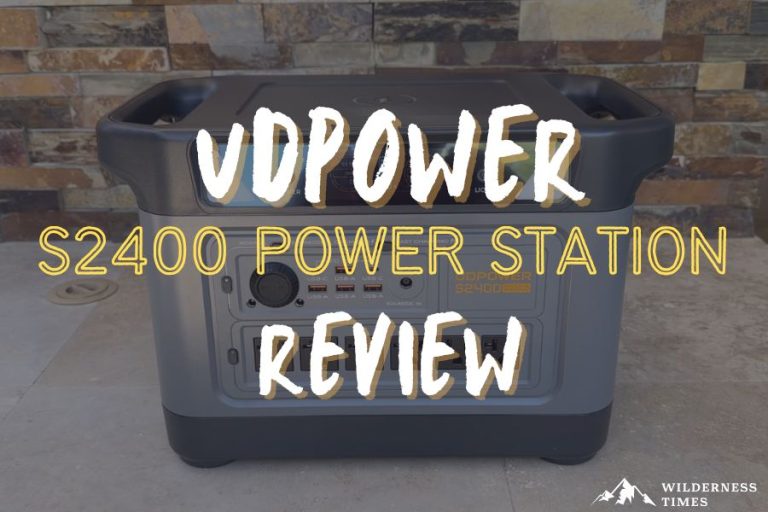
Here's the simple rule on portable power stations: capacity is what gets advertised, but charge speed is what you actually live with.
Most 2,000Wh+ units take 4 to 6 hours to fully recharge on AC. That window dictates how you plan trips, how you handle outages, and whether the thing is actually useful when you need it most.
The UDPower S2400 is one of the few we've field-tested that flips the math.
It's a 2,083Wh LiFePO4 station that goes from zero to full in about 80 minutes on a standard wall outlet — substantially faster than the EcoFlow Delta 2 Max or Jackery Explorer 2000 Plus at the same price point.
Below is how it performs in real use, who it's right for, the solar caveat, and how it stacks against the names you're probably already considering.
Quick Take
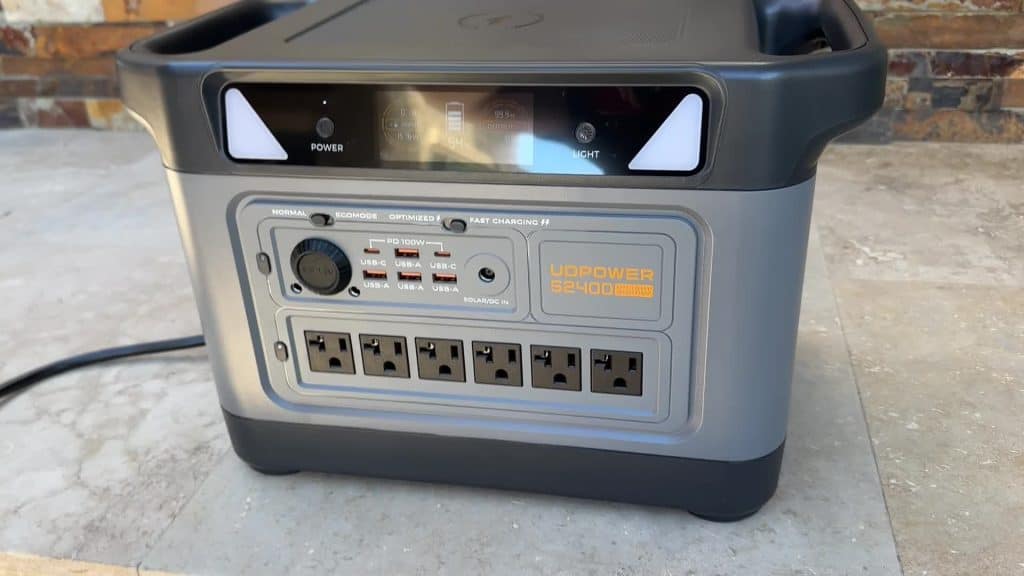
The S2400 is a 2,083Wh LiFePO4 power station with 2,400W continuous output (3,000W surge), six AC outlets, ten DC outputs, and 16 simultaneous devices supported.
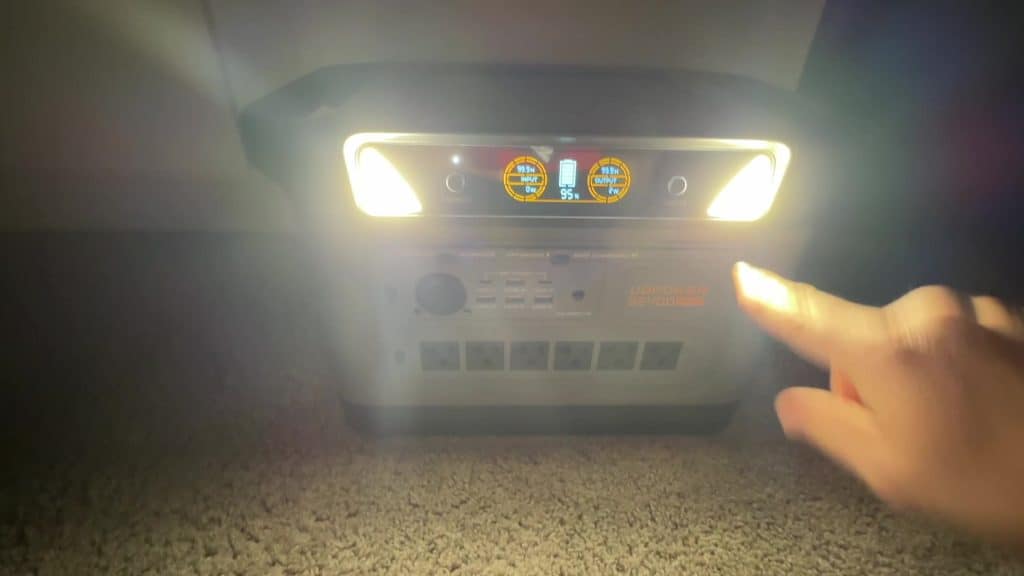
It charges fully in about 80 minutes on AC, runs a UPS function with 0.01-second switchover, and includes a built-in LED light with SOS mode.
The tradeoff: solar input is capped at 440W, which is conservative for a unit this size. For drive-up camping, RVs, van life, and home backup, it's one of the best mid-range picks we've tested. For pure solar-primary off-grid, you'll plan around the slower panel recharge.
What's Actually Good About It
LiFePO4 chemistry — the gold standard. Lithium iron phosphate is more thermally stable than standard lithium-ion, which means better cold and heat performance.
It's also rated for 4,000+ charge cycles before degrading to 80% capacity. At one full charge per day, that's over 10 years of use. This is a buy-it-once unit, not a three-year disposable.
2,400W continuous output is the real-appliance threshold. Microwave, coffee maker, CPAP, refrigerator — the S2400 runs them without breaking a sweat.
The 3,000W surge handles motor-start appliances that spike during the first second of operation.
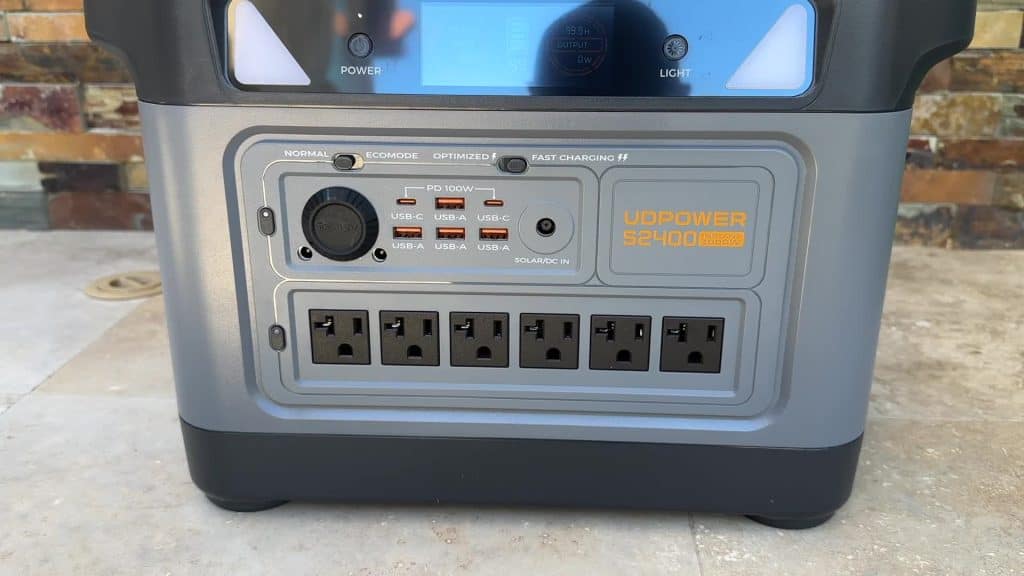
Sixteen devices simultaneously. Six AC outlets plus ten DC outputs — USB-A, two USB-C ports up to 100W each, a car outlet, DC ports, and 15W wireless charging.
That's enough to cover a full camping setup, a van build, or a home office during an outage without juggling adapters.
Built-in LED light. Three brightness levels (30%, 60%, 100%) plus an SOS flashing mode. The power station doubles as a lantern, which is one less thing to pack.
80-minute AC charging is the headline. UDPower built in a 1,600W charging input — substantially faster than competitors in this price range.
Most stations this size take 4 to 6 hours on AC. The S2400 does it in roughly the time it takes to set up camp.
UPS function with 0.01-second switchover. Fast enough to protect desktop computers, medical equipment, or anything sensitive to even momentary power interruptions.
Who It's Right For
This power station makes the most sense for:
- Drive-up car campers and RV travelers who want serious power capacity without a generator — pairs naturally with high-draw camping gear like the best tent air conditioner or a portable fridge
- Van lifers running a full mobile build with appliances, lighting, and electronics
- Home backup buyers who want UPS-grade switchover protection and fast recharge between outages
- CPAP users camping off-grid who need reliable, multi-night medical-grade power
- Anyone in long-term camping or extended trips where charging speed actually matters
What to Know Before You Buy
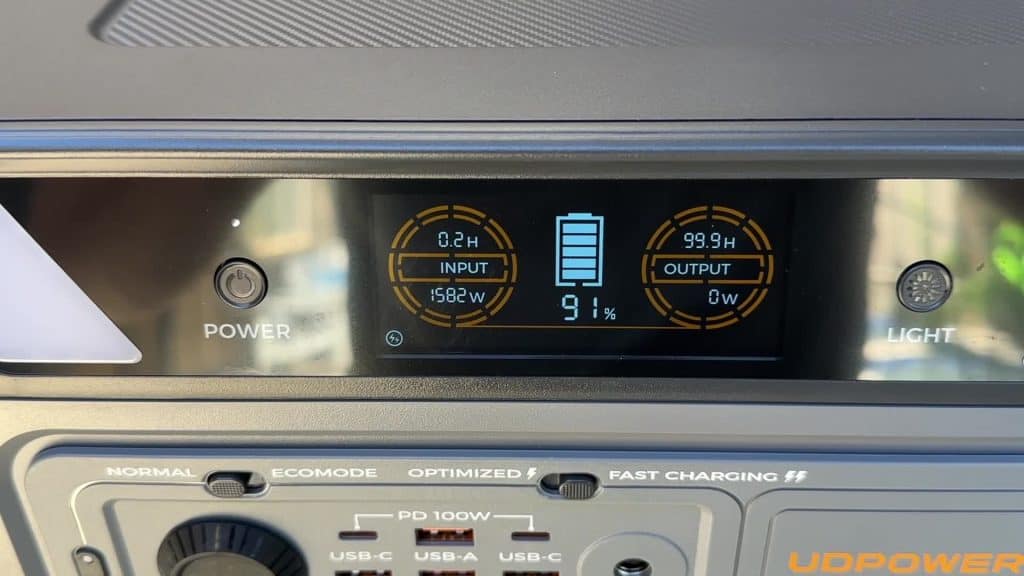
The 440W solar input cap. For a unit this size, that's on the conservative side.
If you're planning to rely on solar as your primary charging source — say, extended off-grid camping with no AC access — you'll be waiting longer to refill than you would with a wall outlet. Plan your panel setup around the slower window.
For emergency home backup, drive-up camping, and anywhere you have intermittent AC access, this isn't a concern. For pure solar-primary van life or off-grid setups, it's a real planning item.
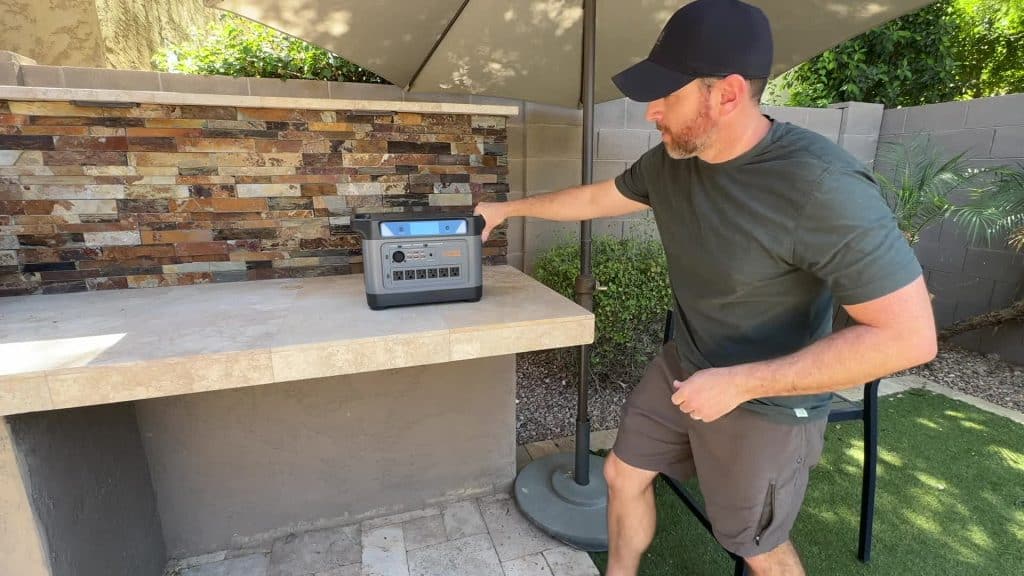
It weighs 41 pounds. Lighter than you'd expect for 2,000Wh+ of capacity, and the dual handles make it manageable for most people.
But it's not pack-in gear. This is a drive-up, base camp, or home backup unit.
How It Compares
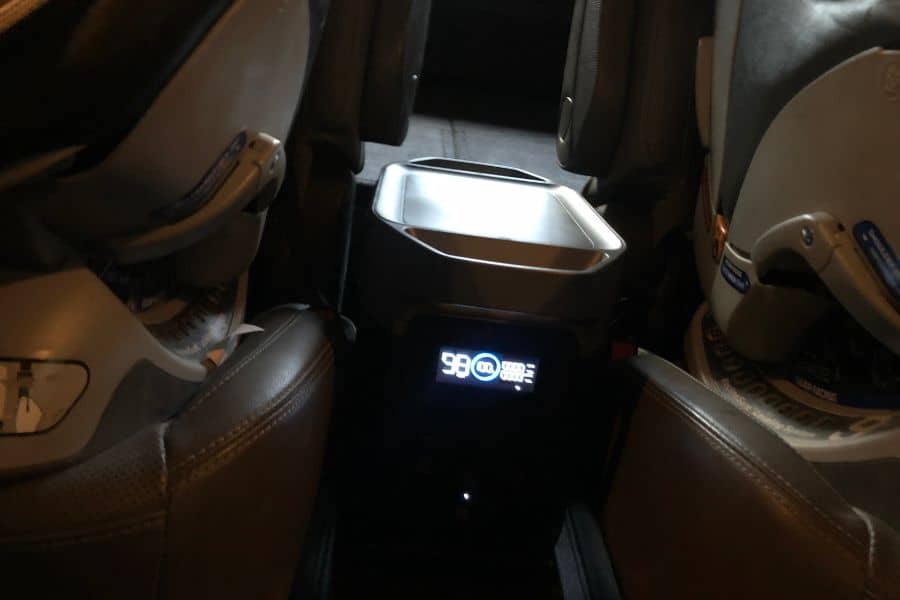
vs. EcoFlow Delta 2 Max: Similar capacity and price, but the S2400's 80-minute AC charge time is a meaningful advantage.
The EcoFlow ecosystem (panels, batteries, app) is more mature if you're building a connected system. The UDPower wins on raw charge speed and price-per-watt-hour.
vs. Jackery Explorer 2000 Plus: Both are LiFePO4 with similar output specs. The Jackery is the more established brand name.
The S2400 charges faster, has more total output ports (16 vs. fewer), and adds the built-in LED light. If brand recognition matters most to you, Jackery still wins on that front.
vs. a gas generator: Quieter, no fumes, no fuel storage, and runs CPAPs and electronics safely.
The tradeoff is finite capacity. A generator runs as long as you have fuel; the S2400 runs until the battery dies. For most camping and outage use, the battery wins. For multi-day grid-down scenarios, a generator (or solar paired with the S2400) is still the answer.
Pricing puts the S2400 in solid mid-range territory for the 2,000Wh+ class. The 80-minute charge and LiFePO4 longevity earn the spot.
FAQ
How long does the UDPower S2400 take to recharge?
About 80 minutes from zero to full on a standard AC wall outlet, using the 1,600W input. That's substantially faster than most 2,000Wh+ stations, which typically take 4-6 hours.
What can it actually run?
2,400W continuous output handles microwaves, coffee makers, refrigerators, CPAPs, induction cooktops, power tools, and most household appliances. The 3,000W surge covers motor-start spikes.
How long will the battery last over time?
LiFePO4 chemistry is rated for 4,000+ charge cycles before degrading to 80% capacity. At one full cycle per day, that's over 10 years of use.
Can I run my CPAP on it?
Yes — and overnight use is one of the main use cases. A typical CPAP draws 30-60W, which means the S2400 can run one for multiple nights on a single charge.
How fast can I charge it with solar?
Solar input is capped at 440W. With a full panel setup, expect roughly 5-6 hours of direct sun to recharge from empty. Plan your solar setup accordingly if it's your primary source.
Does it work as a home backup UPS?
Yes — it includes a UPS function with 0.01-second switchover, fast enough to protect desktops, medical equipment, and other sensitive electronics during outages.
The Verdict
The UDPower S2400 Portable Power Station is a strong pick for anyone who needs serious, long-life capacity and doesn't want to wait six hours for a refill.
The 80-minute charge time, LiFePO4 longevity, 16-port output, and built-in LED light add up to one of the better mid-range power stations we've tested — particularly for drive-up campers, RVers, van lifers, and home backup buyers.
Just factor in the 440W solar input if your setup is solar-primary. For everyone else, this earns its spot.
Next step: If you're still narrowing down power station options, our EcoFlow Delta 2 review covers the closest competitor head-to-head. And if you're building out a hot-weather setup, pair it with the best tent air conditioner to make off-grid cooling actually realistic.