

The best ultralight tent for most backpackers is the NEMO Hornet OSMO Ultralight 2P — it delivers a 2.1-pound trail weight with dual doors, dual vestibules, and weather-resistant OSMO fabric that stays taut through multi-day storms without constant retensioning. For long-distance thru-hikers covering 500+ miles, the Hyperlite Unbound 2P is our top long-distance pick with a 22-ounce A-frame design and Dyneema construction built for trail durability. Solo backpackers prioritizing livable space should consider the Big Agnes Copper Spur HV UL1, which gives you near-vertical walls and 38-inch peak height at 2.6 pounds trail weight.
11 ultralight tents scored across 7 criteria — weight, interior space, weather resistance, durability, setup ease, packability, and user reviews. Last updated: May 2026.
The difference between a standard 4-pound backpacking tent and a 2-pound ultralight is roughly the weight of a full water bottle.
That sounds small until you are on mile 15 with tired legs, and every ounce you cut from your shelter is an ounce that is not slowing you down for the next 200 miles.
The ultralight tent category in 2026 is the best it has ever been: options under 2 pounds now include freestanding designs, double-wall construction, and enough floor space to actually sit up in.
You no longer have to choose between going light and sleeping comfortably, though the tradeoffs are still real and worth understanding before you buy.
We narrowed down to 11 shelters here from our database of 350+, giving various options from sub-1-pound tarps to livable freestanding designs, covering every style of ultralight backpacking from weekend trips to long trails.
Whether you are cutting weight for the first time or looking for your next shelter upgrade, there is a legitimate option here at every experience level and budget.
The buying guide at the bottom covers everything you need to pick the right type of ultralight shelter for how you actually hike.
Freestanding Ultralight Tents
- Best Freestanding Solo Ultralight Tent: Big Agnes Copper Spur HV UL1 — 1 lb 13 oz with a high-volume geometry that gives solo hikers actual headroom rather than just a flat place to sleep
- Best Budget Freestanding Ultralight Tent: REI Co-op Flash Air 1 — 1 lb 14 oz at $329, the lowest-cost entry point into freestanding ultralight backpacking
- Best Lightweight Freestanding Solo Ultralight Tent: Mountain Hardwear Nimbus UL 1 — 1 lb 8 oz and a sub-liter packed size, the lightest freestanding solo shelter on this list
- Best Packable Freestanding Ultralight Tent: MSR FreeLite 1 — 1 lb 15 oz hub design that compresses into tight pack spaces, a strong choice for bikepacking and ultralight travel where pack volume matters as much as weight
- Best Freestanding Duo Ultralight Tent: NEMO Hornet OSMO Ultralight 2P — 2 lb 2 oz for two people in a fully freestanding design, the strongest combination of low weight and no-compromise pitch on this list
Trekking Pole Ultralight Shelters
- Best Value Solo Ultralight Trekking Pole Tent: Durston X-Mid 1P — $269 with structural integrity that rivals freestanding models twice the cost, the strongest price-to-performance ratio on this list
- Best Thru-Hiking Duo Ultralight Trekking Pole Tent: ZPacks Duplex — 19 oz and 42 square feet of floor space, the default choice on long trails for two-person teams willing to master the pitch
- Best Long-Distance Duo Ultralight Trekking Pole Tent: Hyperlite Unbound 2P — 22 oz A-frame design with Dyneema construction built for thru-hiking durability without the weight penalty of double-wall alternatives
- Best Ultralight Trekking Pole Tent for Groups of Three: ZPacks Triplex — 24 oz for three people, the first ultralight option that works for couples with a dog or a three-person team unwilling to split into two shelters
Tarps and Pyramids
- Best Four-Season Pyramid Ultralight Tent: Hyperlite Mountain Gear UltaMid 2 — 1 lb 5 oz Dyneema pyramid that handles winter conditions, the only shelter here that eliminates the need for a separate cold-weather tent
- Best Tarp Shelter Style Ultralight Tent: SlingFin SplitWing UL Tarp — 8.8 oz with modular pitch configurations, the right choice for experienced backpackers optimizing for the absolute minimum weight
Best Ultralight Tents – Our Top Picks
Big Agnes Copper Spur HV UL1 Tent
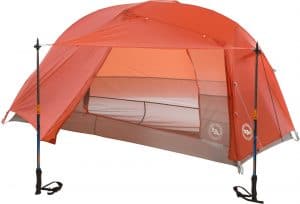
This is the tent for solo backpackers who refuse to choose between ultralight packweight and livable interior space.
The Copper Spur HV UL1 packs down to 2 pounds 6 ounces trail weight, but the near-vertical walls and 38-inch peak height give you actual room to sit up and move around without brushing fabric constantly.
The freestanding DAC Featherlight pole structure sets up quickly, though the inner-pitch-first design means you'll get the tent body wet if you're racing against rain.
Big Agnes built this tent with a massive 3D bin pocket that swallows headlamps, electronics, and small gear without crowding the floor, and the two vestibules give you separate storage for boots and a pack.
The 20 square feet of floor area is genuinely enough for a wide sleeping pad and a small pack inside, which matters on exposed sites where you don't want gear sitting in vestibules overnight.
The rainfly zippers are the real weakness here, and owners report failures often enough that it's worth calling out plainly.
Big Agnes uses lightweight YKK zippers to save grams, but they snag on the silnylon fabric under tension and can separate or break after a season of heavy use.
This tent is not the right choice if you're planning a thru-hike or extended trip where a zipper failure in the backcountry would end your plans, and it's not built for anyone who pitches in weather regularly enough that the inner-first setup becomes a liability.
Pros
- Trail weight of 2 lbs 6 oz makes it one of the lightest freestanding single-person tents
- Near-vertical walls maximize usable interior volume without adding floor space
- Oversized 3D bin pocket keeps small gear organized and off the floor
- Two vestibules provide separate storage for boots and pack
- Freestanding structure pitches on rocky or hard-packed ground without stakes
Cons
- Rainfly zippers snag easily and fail under regular use
- Inner-pitch-first setup leaves tent body exposed in rain
Best For: Solo backpackers prioritizing livable space at ultralight packweight
REI Co-op Flash Air 1 Tent
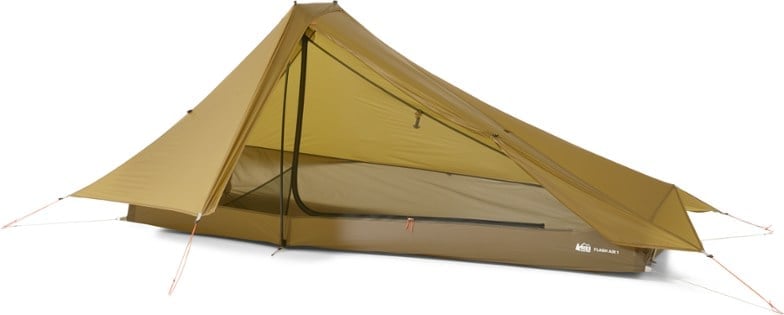
This is the ultralight solo shelter for backpackers who want to drop serious packweight without dropping serious cash.
At 1 lb 6 oz trail weight, the Flash Air 1 undercuts most ultralight competitors by $200 or more, and REI achieves that by using a trekking pole setup instead of dedicated poles.
The nearly 90-degree hubbed roof pole creates usable headroom at the head end, while a foot pole adds volume where your legs go, but the 21 square foot floor still feels tight for anyone over six feet or anyone who moves around at night.
The rollaway fly lets you stargaze without leaving the tent, and integrated mesh vents help manage moisture buildup, though owners consistently report heavy condensation in humid conditions or when the fly is fully closed.
The Flash Air 1 packs down small and pitches in about five minutes once you've done it a few times, making it a solid choice for solo fastpackers and thru-hikers who prioritize weight savings over interior space.
The real limitation here is livability: this is a sleep-and-go shelter, not a place to wait out a storm comfortably, and taller backpackers or restless sleepers will find the floor area genuinely cramped after a few nights.
If you need room to sit up, sort gear, or move around inside, this tent will frustrate you quickly.
Pros
- Trail weight of 1 lb 6 oz cuts packweight meaningfully
- Trekking pole setup eliminates the need for dedicated poles
- Rollaway fly allows stargazing without exiting the tent
- Integrated mesh vents help reduce condensation buildup
- Affordable at $329 compared to most ultralight options
Cons
- Heavy condensation in humid or fully closed conditions
- 21 sq ft floor feels tight for taller campers
Best For: Solo fastpackers and thru-hikers prioritizing packweight over interior space
Mountain Hardwear Nimbus UL 1 Tent

The Nimbus UL 1 is built for solo backpackers who count ounces without sacrificing livability, delivering a genuine 1.9-pound trail weight in a non-freestanding shelter that still feels like a real tent.
The DAC Featherlight NFL poles keep the structure rigid in wind without the weight penalty of alloy alternatives, and the three-quarter mesh canopy means you can stargaze on clear nights without feeling like you're sleeping in a bivy sack.
The 20D silnylon floor is impressively light but thin enough that a footprint becomes necessary on rocky or abrasive ground, adding cost and a small weight penalty back into the system.
The front vestibule gives you dry-entry access in rain, but the opposite-side secondary door placement forces an awkward crawl-over if you need to exit from the back side in the night.
This tent is not the right call for alpine camping where snow loading or sustained high winds are expected, and the single-wall silnylon construction means condensation management becomes your responsibility on humid nights.
Pros
- 1.9-pound trail weight makes it one of the lightest true shelters available
- DAC Featherlight poles provide excellent wind resistance without a weight penalty
- Three-quarter mesh canopy for stargazing on clear nights
- Front dry-entry vestibule keeps gear protected in rain
- Sets up in three minutes with intuitive pole routing
Cons
- Thin floor requires a footprint on rocky ground
- Opposite-side door placement makes nighttime exits awkward
Best For: Solo ultralight backpackers prioritizing packweight on multi-day trips
MSR FreeLite 1 Tent
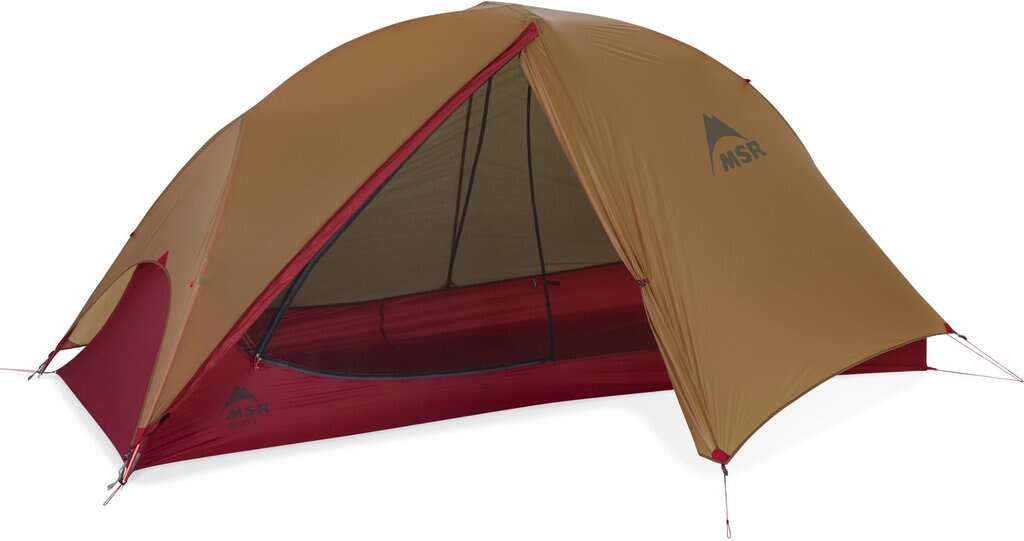
The FreeLite 1 is built for solo backpackers who count ounces but refuse to compromise on livable space.
At 1 lb 15 oz trail weight, it undercuts most ultralight solo shelters without forcing you into a coffin-shaped floor plan.
The 20 square foot interior and 39-inch peak height let you sit upright comfortably, a rare thing in this weight class.
MSR's semi-freestanding design pitches quickly with trekking poles and corner stakes, though it won't stand on its own like a true freestanding tent.
The side-entry vestibule offers generous gear storage without requiring you to crawl over your pack to get in.
The 1200mm waterproof rating on the fly is lower than we prefer for extended trips in wet climates, and owners camping in the Pacific Northwest report needing to seam-seal aggressively.
The semi-freestanding design also means you're staking out every corner, which makes rocky or frozen ground a genuine problem.
This tent is not the right call if you're headed into sustained rain or camping above treeline where wind-driven moisture finds every seam.
Pros
- Weighs just 1 lb 15 oz without sacrificing livable space
- 39-inch peak height lets you sit upright comfortably
- Side-entry vestibule stores gear without blocking the door
- Sets up in under 5 minutes with trekking poles
- Tech-friendly pockets keep cables organized and accessible
Cons
- 1200mm waterproof rating requires extra seam sealing
- Semi-freestanding design needs stakeable ground to pitch properly
Best For: Solo backpackers prioritizing low weight and usable interior space on dry-season trips
NEMO Hornet OSMO Ultralight 2P Tent
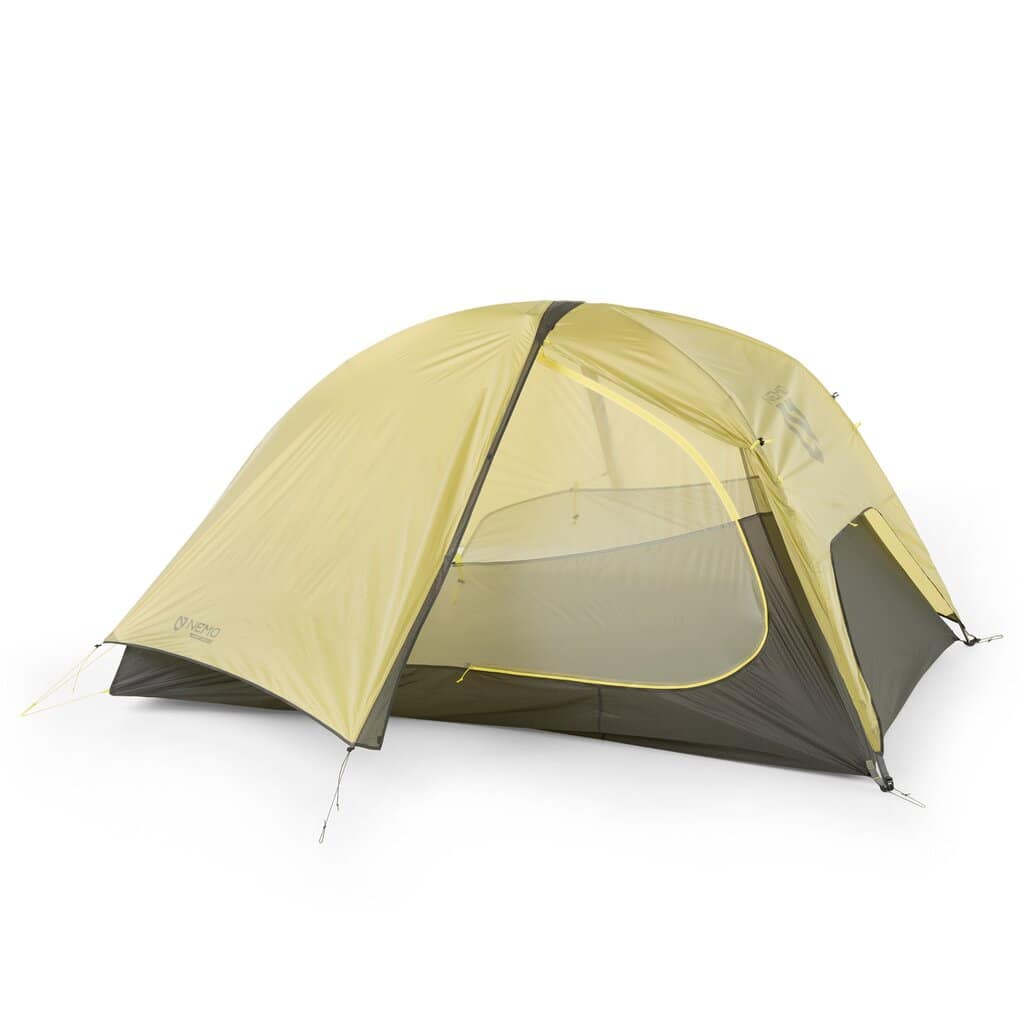
The Hornet OSMO is built for solo backpackers who want a two-person footprint without carrying two-person weight.
At 2.1 pounds trail weight, it undercuts most true ultralight shelters while keeping dual doors and dual vestibules, features typically sacrificed to hit this weight class.
NEMO's OSMO fabric resists the wet stretch that plagues standard nylon in rain, meaning the fly stays taut through multi-day storms without constant retensioning.
The single-pole design pitches fast, and owners consistently report setup times under five minutes even on their first attempt (and we confirm this as well in our testing).
Nightlight Pockets let you turn a headlamp into ambient interior lighting, a small feature that makes a real difference when you're cooking dinner inside during a storm.
The 28-square-foot floor is legitimately tight for two adults with full-size sleeping pads.
NEMO lists this as a 2P tent, but the interior dimensions work best as a solo shelter with room for gear, or as a couples tent only if both sleepers are comfortable with minimal personal space.
If you're planning to share this tent regularly with a partner on week-long trips, the lack of elbow room will wear on you by day three.
Pros
- Trail weight of 2.1 lbs is lighter than most ultralight shelters
- OSMO fabric eliminates wet stretch in rain and humidity
- Dual doors prevent the midnight crawl-over on shared trips
- Sets up in under five minutes with a single pole
- Nightlight Pockets turn a headlamp into ambient interior lighting
Cons
- 28 sq ft floor is cramped for two adults
- Fly-only setup is not possible
Best For: Solo backpackers who want dual doors and vestibules without the weight penalty
ZPacks Duplex Tent
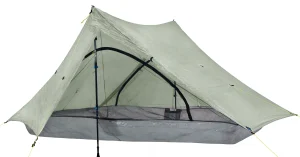
The Duplex is built for thru-hikers and ultralight backpackers willing to sacrifice convenience for packweight savings that matter over hundreds of miles.
At 19 ounces trail weight, this trekking-pole shelter uses Dyneema Composite Fabric to achieve a weight-to-space ratio that puts most freestanding tents to shame.
The symmetrical pitch design makes setup straightforward once you learn it, but the non-freestanding structure requires solid stakes and competent site selection every time.
The floor fits two wide sleeping pads without overlap, and the 48-inch peak height provides enough headroom to sit upright comfortably.
Condensation is the real weakness here, and it shows up consistently in owner reports from humid climates and cold-weather trips.
The single-wall Dyneema construction breathes poorly compared to double-wall designs, and moisture management becomes a nightly task in anything but dry mountain air.
If you camp frequently in the Southeast, Pacific Northwest, or anywhere condensation-prone, this tent will frustrate you.
Pros
- Trail weight of 19 ounces makes it one of the lightest two-person shelters available
- 28 sq ft floor fits two wide sleeping pads side by side
- Symmetrical design pitches the same from either end
- Dyneema fabric is waterproof and does not require seam sealing
- Packs down smaller than most ultralight tents in its class
Cons
- Single-wall design creates condensation in humid conditions
- Non-freestanding setup requires trekking poles and solid stakes
Best For: Thru-hikers and ultralight backpackers prioritizing packweight above all else
Durston X-Mid 1P
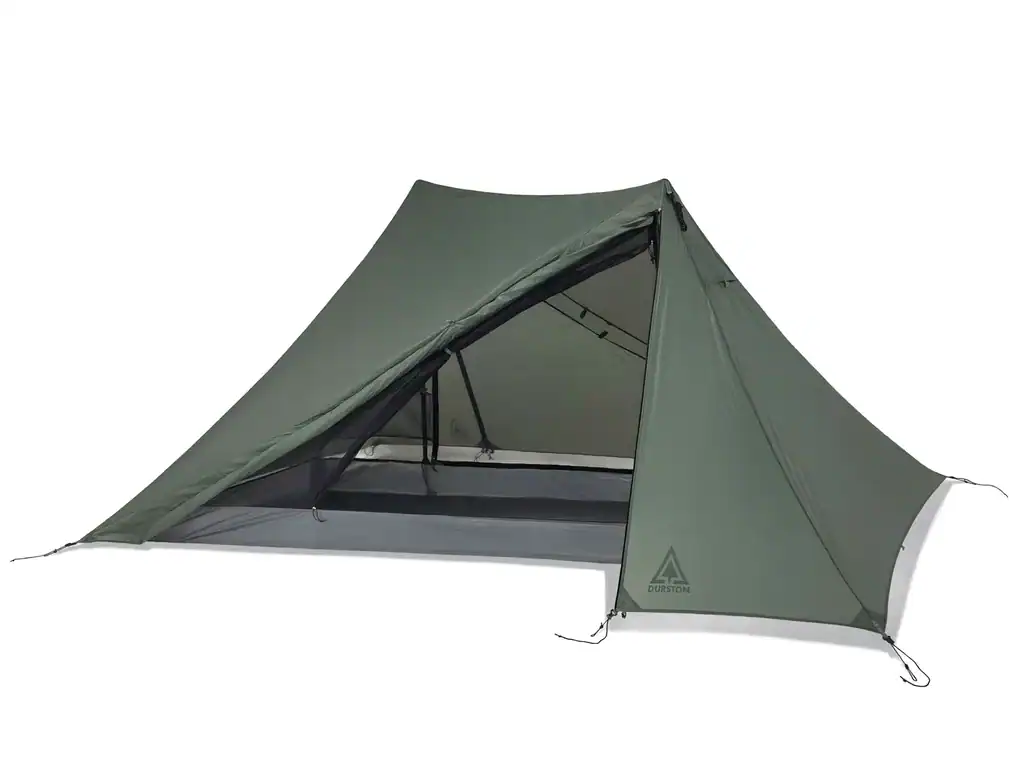
The X-Mid 1P is built for solo backpackers who want legitimate weather protection without carrying a brick.
At 26 ounces trail weight, it undercuts most double-wall competitors by several ounces while offering a 93-inch floor length that fits taller sleepers without forcing a diagonal sleep position.
The trekking pole pitch is non-negotiable here, which means you're carrying poles or you're not pitching this tent.
Dual vestibules split gear storage cleanly, and the four interior mesh pockets keep headlamps and small items off the floor where they belong.
The magnetic door toggles eliminate fumbling with cord locks in the dark, a small detail that owners mention consistently in reviews.
YKK #5 zippers handle the stress of daily use better than the lighter alternatives found on budget ultralight shelters.
The large rectangular footprint requires more site flexibility than a tapered design, and exposed alpine sites with limited flat ground will force compromises.
Pitching takes real practice to get the geometry right, particularly in wind, and first-timers should expect a learning curve before the setup becomes intuitive.
This tent is not the right call for campers who want to roll into a site and have shelter up in two minutes without thinking about it.
Pros
- 26 oz trail weight beats most double-wall tents by several ounces
- 93-inch floor length fits taller sleepers without going diagonal
- Dual vestibules split gear storage cleanly on both sides
- YKK #5 zippers handle stress better than lighter alternatives
- Magnetic door toggles eliminate fumbling with cord locks in the dark
Cons
- Requires trekking poles to pitch, no pole set included
- Large footprint demands more site flexibility than tapered designs
Best For: Solo backpackers prioritizing weather protection over packweight
Hyperlite Unbound 2p
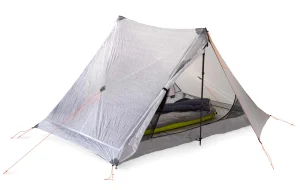
The Unbound 2p is built for thru-hikers and long-distance backpackers who need a shelter that disappears into the pack and holds up to months of continuous use.
The Dyneema Composite Fabric construction delivers a waterproof, tear-resistant shell at a 1.5 lb minimum trail weight, which puts it among the lightest true two-person shelters available without sacrificing structural integrity.
The tent pitches taut in wind but uses a single-wall design, which means condensation will collect on the interior fabric during humid nights or when you're breathing heavily inside a sealed shelter.
This is not a tent for car camping, weekend warriors, or anyone who prioritizes interior comfort over packweight, and it requires trekking poles to pitch, so it's a non-starter if you hike without them.
Pros
- Weighs just 1.5 lbs minimum trail weight
- Dyneema fabric is fully waterproof and highly tear-resistant
- Dual magnetic vestibule toggles simplify entry and ventilation
- Pitches taut and stable in wind when staked correctly
- 28 sq ft floor fits two sleepers with packs inside
Cons
- No attachment system for a footprint
- Single-wall design leads to interior condensation in humid conditions
Best For: Thru-hikers and long-distance backpackers prioritizing packweight above all else
ZPacks Triplex Tent
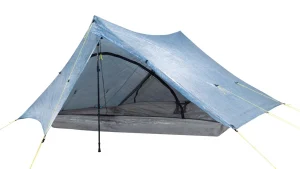
The Triplex is built for ultralight backpacking pairs who want legitimate interior space without carrying a pound more than necessary.
At 21.6 ounces minimum trail weight, it delivers a 60-inch floor width that matches tents twice its weight, and the Dyneema Composite Fabric construction sheds water reliably while packing down smaller than most single-person shelters.
The non-freestanding design requires careful site selection and practice with guyline tensioning, and the floor layout doesn't actually sleep three adults comfortably despite the name.
This tent works for experienced backpackers who know how to pitch trekking pole shelters quickly and are willing to trade setup simplicity for packweight savings, but it's the wrong call for anyone expecting car camping convenience or genuinely needing space for three people.
Pros
- Weighs just 21.6 ounces (min trail weight)
- Waterproof Dyneema fabric sheds rain without weight penalty
- 60-inch floor width gives two people real room to move
- 38 sq ft floor area rivals heavier two-person tents
- Packs smaller than most ultralight solo shelters
Cons
- Non-freestanding setup requires staking and practice
- Three-person capacity is tight for actual use
Best For: Ultralight thru-hikers and experienced backpacking pairs prioritizing packweight over setup speed
SlingFin SplitWing UL Tarp
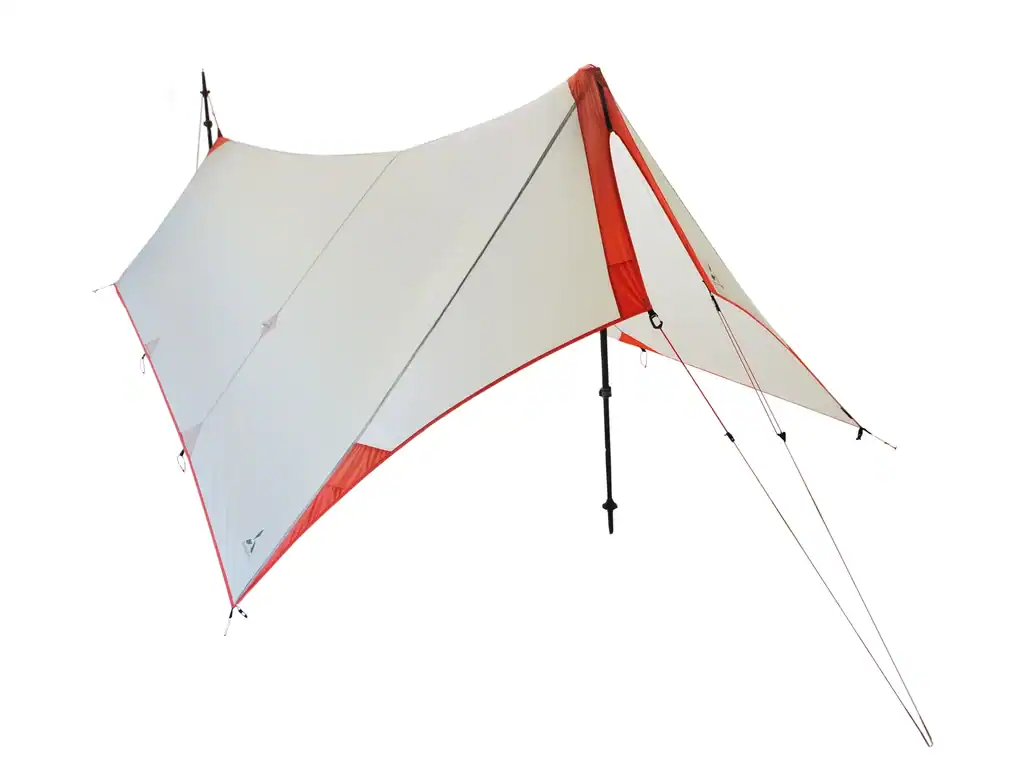
The SplitWing UL is built for gram-counting thru-hikers willing to trade interior space for a pack weight that barely registers.
At 7.9 ounces minimum trail weight, this modular tarp system packs down to the size of a grapefruit and disappears into a corner of your pack.
The removable vestibule and adjustable front wings give you pitch options across changing weather, though the modular approach requires practice to dial in.
The 27 square feet of floor space is genuinely tight for anyone over six feet or carrying bulky gear, and the 10-denier fabric sags noticeably when wet, requiring mid-trip retensioning in prolonged rain.
This is not a tent for casual overnighters or anyone prioritizing comfort over packability.
Pros
- Weighs just 7.9 ounces with minimal trail configuration
- Packs to grapefruit size for ultralight loadouts
- Modular vestibule adapts to changing weather conditions
- Internal ridgeline O-rings provide gear storage options
- Lifetime warranty backs long-term durability
Cons
- 27 sq ft floor is cramped for taller users
- 10D fabric sags when wet and requires retensioning
Best For: Thru-hikers prioritizing packweight over interior comfort
Hyperlite Mountain Gear UltaMid 2
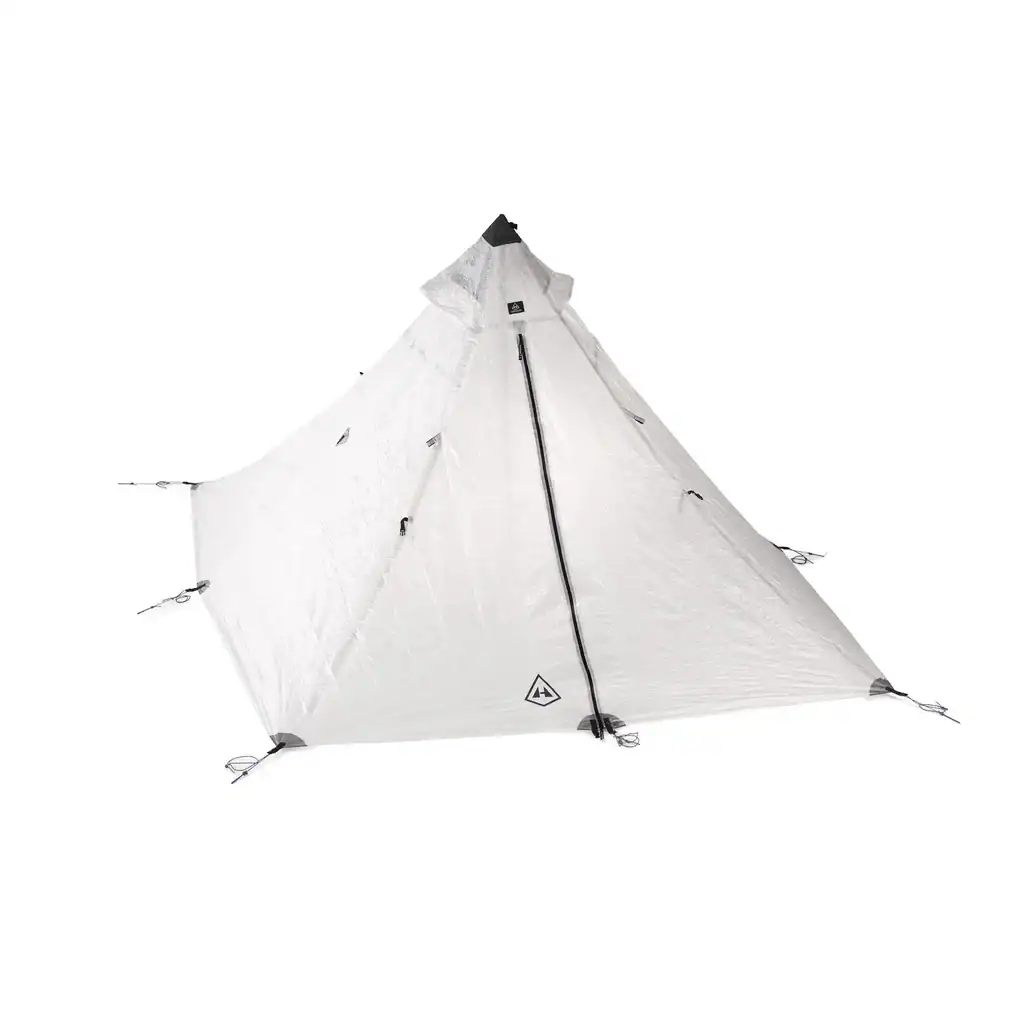
The UltaMid 2 is built for ultralight mountaineers who need a true four-season shelter that won't break their back on long approaches.
At 19 ounces of trail weight, this floorless pyramid tent uses Dyneema fabric to deliver alpine storm protection at a packweight most three-season shelters can't touch.
The center pole creates a fixed divider down the middle of the sleeping area, which means two people can't sleep side by side without careful positioning.
The floorless design also requires a separate footprint or bivy for ground protection, adding cost and complexity that casual backpackers will find frustrating.
This tent is not right for campers who need a simple pitch-and-sleep setup or who plan to use it below treeline where a conventional tent offers better livability for the same weight.
Pros
- 19 ounce trail weight makes it one of the lightest two-person shelters available
- Dyneema construction handles serious alpine weather without adding bulk
- 63 square feet of floor space offers generous room for two people and gear
- 64-inch peak height allows full sitting headroom at the center
- Dual peak vents with mesh reduce condensation in cold conditions
Cons
- Center pole divides the sleeping area awkwardly for two people
- Floorless design requires a separate footprint or bivy system
Best For: Ultralight mountaineers who prioritize packweight on alpine objectives
How to Choose an Ultralight Tent
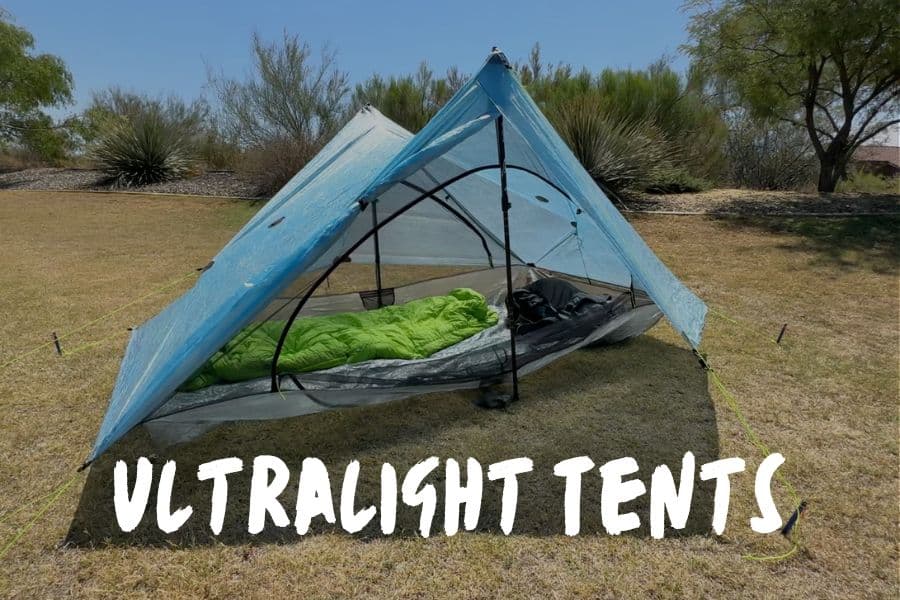
Ultralight tents reward knowing what you actually need from a shelter.
The category spans an enormous range, from 8-ounce tarps to 2-pound freestanding designs, and picking the wrong type means either carrying more weight than necessary or dealing with a pitch system you are not ready for.
Here is what matters and what each decision means in practice.
What "Ultralight" Actually Means
The backpacking community generally defines ultralight as under 2 pounds for a 1-person tent, though some set the threshold at 1.5 pounds.
For 2-person shelters, under 2 lb 8 oz is broadly accepted as ultralight territory.
The more useful framework for duo tents is per-person weight: split a 2 lb 6 oz tent between two hikers and each person carries 1 lb 3 oz, which is competitive with many solo ultralight shelters.
Always check the trail weight rather than the minimum weight when comparing shelters.
Trail weight includes all required components for a functional pitch; minimum weight sometimes excludes stakes, guylines, and stuff sacks, which can make a tent look lighter than it actually is in your pack.
Freestanding vs. Trekking Pole vs. Tarp Shelter
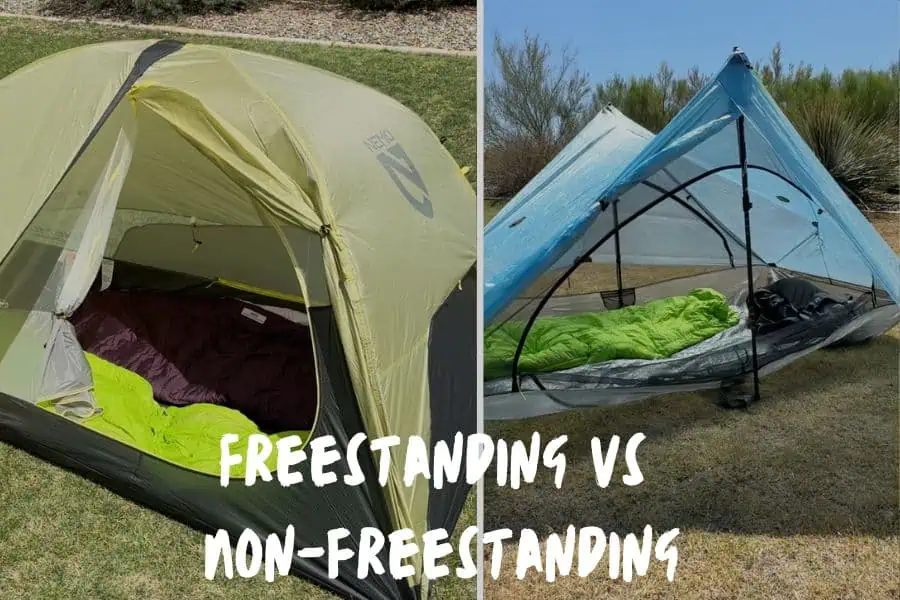
This is the single most important decision in the ultralight tent category, and it shapes every other tradeoff.
Freestanding tents pitch with their own poles, hold their shape on any surface, and pack and unpack the same way every time.
They are heavier and more expensive than trekking pole designs, but they require no extra gear and work on rocky or sandy ground where staking is difficult.
Trekking pole shelters use your hiking poles as the structural element, which eliminates the weight of dedicated tent poles, typically 8 to 12 ounces, and drops the price significantly.
The tradeoff is a more involved pitch, less flexibility on campsite selection, and dependence on your poles being the correct height and available when you set up.
Tarps and flat shelters are the lightest option by a wide margin but require staking, guylines, and a campsite with suitable anchor points.
They are the right choice for experienced backpackers who have their pitch systems dialed and prefer the flexibility of a fully customizable shelter setup.
Also see: Freestanding VS Non-Freestanding Tent: Which Is Right for You?
Single-Wall vs. Double-Wall Construction
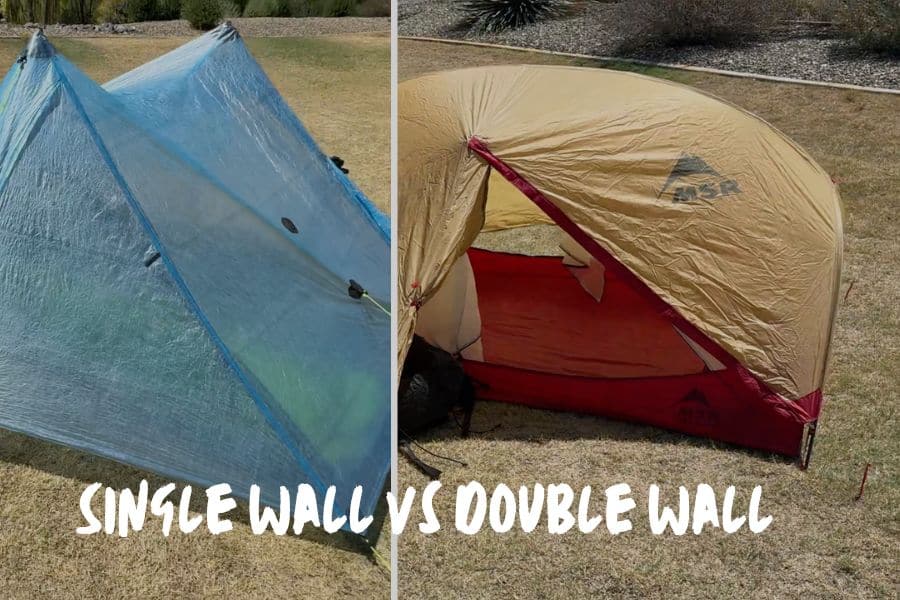
Double-wall tents separate the inner mesh canopy from the outer waterproof fly, which allows warm air from your body to escape through the mesh rather than condensing on a cold waterproof surface.
The result is less overnight condensation and a drier interior, at the cost of slightly more weight and pack volume.
Single-wall shelters combine the inner and outer layers into one, saving weight and pack space, but are more prone to condensation in conditions where body heat meets a cold fly directly.
Most ultralight tents under 1.5 pounds use single-wall or partial single-wall construction because removing that inner layer is one of the most effective ways to cut weight without changing materials.
If you camp regularly in humid conditions or below freezing, double-wall construction makes a meaningful difference in overnight comfort and is worth the extra weight.
See more: Single Wall Vs. Double Wall Tent (The Complete Guide)
Materials: Silnylon, Silpoly, and Dyneema
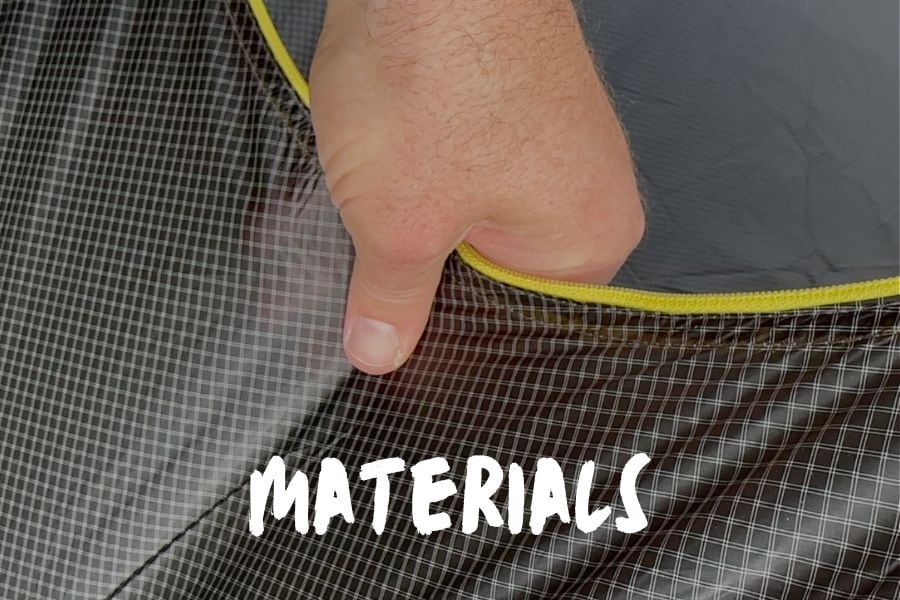
Most ultralight tent fabrics fall into one of three categories, and understanding the difference matters for long-term performance.
Silnylon, which is silicone-coated nylon, is the most common: lightweight, packable, and reasonably water-resistant, but it stretches when wet, which means a tight pitch in dry conditions can go slack and sag in the rain.
Silpoly, which is silicone-coated polyester, does not stretch when wet, holds its pitch geometry in the rain, and handles UV exposure better than nylon over time.
The tradeoff is that silpoly is slightly heavier per square foot than silnylon, though the gap has narrowed significantly as manufacturing has improved.
Dyneema Composite Fabric, previously sold under the name Cuben Fiber, is the premium option: lighter and stronger than either silnylon or silpoly, non-absorbent, and resistant to UV degradation.
The catch is price: Dyneema shelters typically start at $500 and reach well above $1,000 for multi-person options.
For most backpackers, a well-constructed silpoly shelter delivers the vast majority of the performance at a fraction of the cost.
See more: Tent Fabrics
The Livability Trade-Off
Every ounce you cut from an ultralight tent comes from somewhere, and the tradeoffs are mostly in livability: floor space, peak height, vestibule size, and door count.
A 1 lb 8 oz solo tent will generally have a smaller interior, lower peak height, and less gear storage than a 2 lb 8 oz tent from the same brand.
The question to ask before buying is how much time you actually spend inside the tent on a typical trip.
For thru-hikers who sleep hard and wake up moving, a tighter interior is a reasonable tradeoff for lighter miles.
For weekend backpackers who sit out storms, cook inside, and spend full days in camp, buying a few extra ounces of headroom and vestibule space is usually worth it.
Vestibule size is the most commonly underestimated spec: a vestibule under 8 square feet handles shoes and a small pack, while anything above 12 square feet gives you enough room to cook in the rain without getting soaked.
See more: How Much Weight Should You Carry Backpacking?
Weather Performance at Ultralight Weights
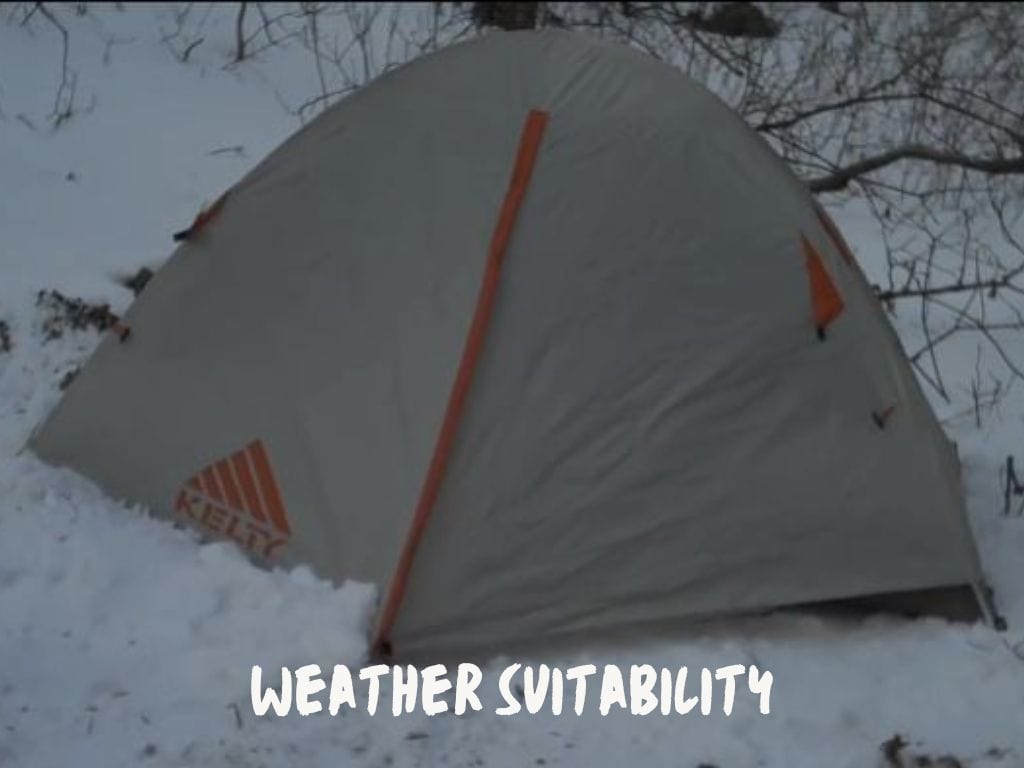
The relationship between weight and weather resistance is real but not absolute.
A well-designed ultralight tent with a full-coverage fly geometry and adequate stake points will outperform a heavier, poorly-designed tent in bad conditions.
That said, structural limits exist: ultralight pole systems carry less load than heavier aluminum frames, and thin fabrics transmit wind vibration more noticeably on gusty nights.
For three-season backpacking in the lower 48, virtually every tent on this list is adequate for the conditions you are likely to encounter.
For exposed ridge camping, shoulder-season trips with snow risk, or anything above treeline in the Pacific Northwest, a tent with a geodesic or semi-geodesic pole structure is worth the extra weight.
The floor and fly HH ratings on ultralight shelters often run lower than on heavier camping tents: a 1,200mm floor and 1,500mm fly are standard at this weight, versus the 3,000mm-plus ratings on bomber car camping shelters.
That is a real tradeoff in sustained heavy rain, and it is worth factoring in if you regularly camp in genuinely wet climates.
Price: What to Expect

Budget ultralight starts around $200 to $350 for silnylon freestanding options, and this range is where most first-time ultralight buyers land.
The $350 to $600 range covers the performance tier: better pole systems, improved waterproofing, livable floor plans, and construction that holds up through thru-hiking distances.
Above $600, you are mostly paying for weight reduction through Dyneema construction, or both.
The ZPacks and Hyperlite options on this list sit in the $500 to $700 range and deliver genuinely impressive weight-to-performance ratios, but they are not necessary for most backpackers.
Starting in the $300 to $450 range and upgrading once you understand what you want to optimize for is a smarter path than going straight to the most expensive option on your first ultralight trip.
Frequently Asked Questions
What Weight Counts as Ultralight for a Backpacking Tent?
Under 2 pounds for a 1-person tent and under 2 lb 8 oz for a 2-person tent are the broadly accepted thresholds.
Some backpackers set the bar lower, at 1.5 pounds for solo shelters, but that puts you in genuinely minimalist territory where livability tradeoffs become more significant.
For duo shelters, per-person weight is the more useful number: a 2 lb 6 oz tent split between two hikers means each person carries less than 1 lb 4 oz, which is competitive with most solo ultralight shelters.
Are Trekking Pole Tents Worth the Learning Curve?
For most backpackers who already hike with trekking poles, yes, once you have used one a few times.
The pitch is more involved than a freestanding tent, requires suitable staking ground, and is less forgiving of tight or rocky campsites.
The weight savings are significant, typically 8 to 12 ounces off the pole weight alone, and the price-to-performance ratio is consistently better than freestanding options at the same weight target.
If you are new to backpacking or camp frequently on hard or rocky ground, starting with a freestanding design and moving to trekking pole shelters later is the lower-risk path.
Can an Ultralight Tent Handle Rain?
Yes, with caveats. Most ultralight tents use 1,500mm to 2,000mm HH-rated flies, which handle typical rain well.
Where they fall short is in sustained heavy rain combined with wind, where full-coverage fly geometry and solid stake-out points matter more than the raw HH number.
Condensation is also more common in single-wall ultralight shelters and can be mistaken for leaking: if moisture is appearing on the interior walls in cold conditions without obvious water entry, condensation is the more likely cause.
What Is Dyneema and Is It Worth the Cost?
Dyneema Composite Fabric is a laminated material built around ultra-high-molecular-weight polyethylene fibers, the same fiber used in ballistic protection and marine rope.
For tents, the result is a fabric that is lighter, stronger, and more waterproof than silnylon or silpoly, and does not absorb water or degrade as quickly under UV exposure.
The cost is significantly higher: a Dyneema shelter typically costs two to four times more than an equivalent silnylon design.
For thru-hikers and serious gram-counters where every ounce adds up over hundreds of miles, the premium is justified.
For weekend backpackers, a well-made silpoly tent delivers most of the performance at a fraction of the price.
How Durable Are Ultralight Tents Over Time?
More durable than their weight suggests, with proper care.
The main failure points are floor abrasion, zipper wear, and fly coating delamination from UV exposure.
Using a footprint under an ultralight tent floor matters more than it does with heavier shelters: the thin floor fabrics common in this category are more susceptible to punctures and abrasion on rough ground.
Storing the tent dry and avoiding leaving it pitched in direct sunlight for extended periods will add years to any ultralight shelter's life.
Dyneema shelters are significantly more durable over time than silnylon, which is a meaningful part of their value proposition for backpackers who put serious mileage on their gear.
The Bottom Line
Ultralight tents reward knowing what you actually need, and the category is wide enough that there is a right answer at almost every weight target, budget, and experience level.
The freestanding options on this list work for backpackers who want ultralight performance without changing how they have always camped.
The trekking pole and tarp shelters are for hikers who are ready to optimize further and willing to invest the time in their pitch systems.
If you are not sure where to start, the NEMO Hornet OSMO is the tent we point most first-time ultralight buyers toward: genuinely light, genuinely livable, and genuinely freestanding.
For everything else, the buying guide above covers the key decision points clearly enough to get you to the right shelter for your specific trips.
If you want to go lighter than anything on this list, our dedicated bivy shelter guide covers the sub-pound options for backpackers who have made the full commitment to minimalist camping.
Find Your Perfect Tent — In Minutes, Not Hours.
Ask our AI or take the 5-question quiz.
Find My Tent →