

If you've ever read a tent spec sheet and felt like you needed a decoder ring, you're not alone.
Hydrostatic head. Silnylon. Bathtub floor. Double-wall construction.
These terms get thrown around like everyone already knows what they mean, but nobody explains them.
That changes right now. I've put together this complete tent glossary so you can walk into any gear conversation or gear purchase knowing exactly what you're dealing with.
I've organized everything into categories so you can find what you need fast, but I'd encourage you to read through the whole thing at least once.
Understanding how these terms connect to each other will make you a smarter tent shopper.
Let's get into it.
Tent Anatomy: The Parts of a Tent
Before anything else, you need to know what the physical pieces of a tent are called.
These are the terms you'll see on every product page, in every setup guide, and in every gear review.
Rain Fly
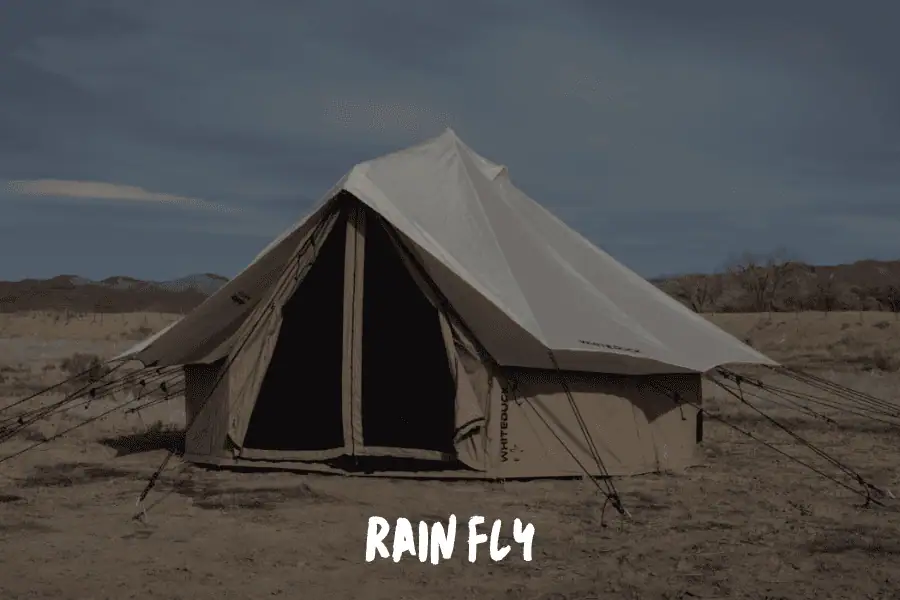
The rain fly — sometimes just called "the fly" — is the waterproof outer shell that goes over your tent's inner body. Think of it as your tent's raincoat.
On a double-wall tent, the fly is a separate piece from the inner tent. This separation creates an airspace that dramatically reduces condensation inside the tent — one of the biggest advantages of double-wall designs. On a single-wall tent, there's no separate fly; the outer shell does everything at once.
A full-coverage fly extends all the way to the ground and provides maximum weather protection. A partial fly only covers the roof area and trades weather protection for ventilation and views. For three-season camping in mixed conditions, most people prefer a full-coverage fly. For clear-weather camping, a partial fly keeps things airier and lighter.
The fly attaches to the tent via clips, buckles, or hook-and-loop connections, and is staked out with guylines for structure and wind resistance.
Want the full breakdown? What is a rain fly and do you need one?
Related terms: Double-wall construction, Single-wall construction, Guylines, Vestibule
Footprint
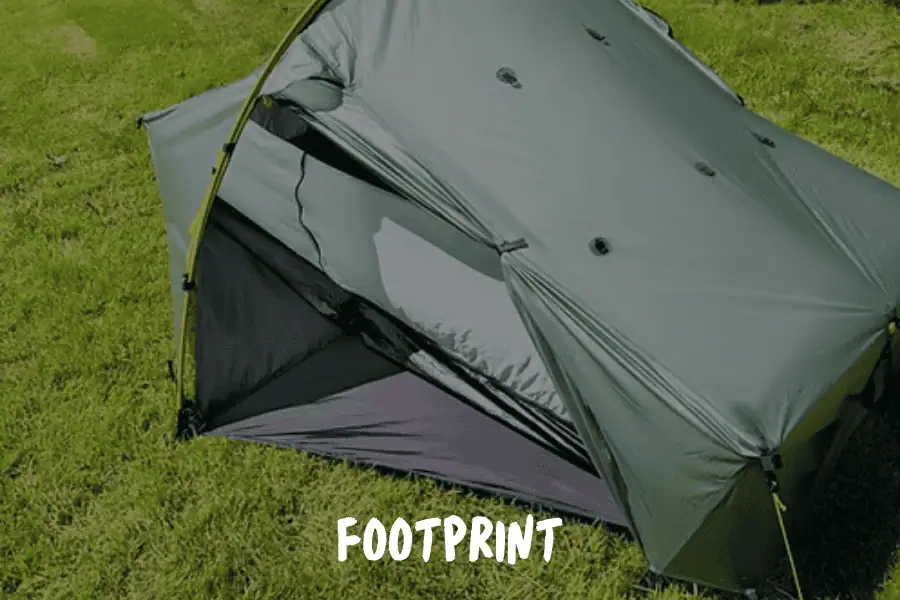
A footprint is a custom-cut ground cloth that goes underneath your tent, between the tent floor and the ground. It's shaped to match your tent exactly.
The main job of a footprint is to protect your tent floor from abrasion, punctures, and ground moisture. Tent floors are often the first thing to wear out or develop leaks — a footprint extends the life of your shelter significantly.
Most tent manufacturers sell footprints made specifically for each tent model. They're worth the investment, especially if you camp on rocky or abrasive terrain. You can also use a generic cut-down tarp as a footprint, but make sure it doesn't extend beyond the edges of your tent floor or it'll channel rainwater underneath you.
Dig deeper: Do you need a tent footprint? | Tent footprint vs. tarp — what's the difference?
Related terms: Tent Floor, Bathtub Floor, Groundsheet
Vestibule
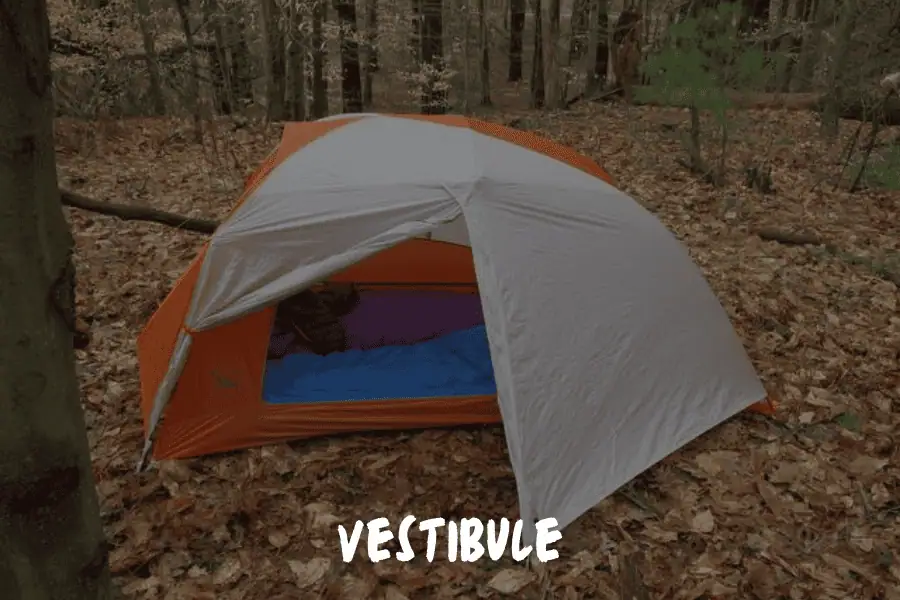
A vestibule is a covered porch area at the entrance of your tent. It sits between the main door and the outside world — created when the rain fly extends out past the tent body and is staked to the ground.
Vestibules are genuinely one of my favorite tent features. They give you a protected space to store muddy boots, wet gear, and anything else you don't want inside the tent. On a rainy night, a good vestibule means you can dig through your pack without getting soaked.
The size of a vestibule matters. A generous vestibule — think 15 square feet or more — can store full packs and significant gear. A small vestibule barely fits a pair of boots. Many tents with two doors have two vestibules, which is a huge quality-of-life upgrade for two-person camping since each camper gets their own entry and storage space.
Be sure to check out the best tents with a vestibule on the market today.
Inner Tent (Tent Body)
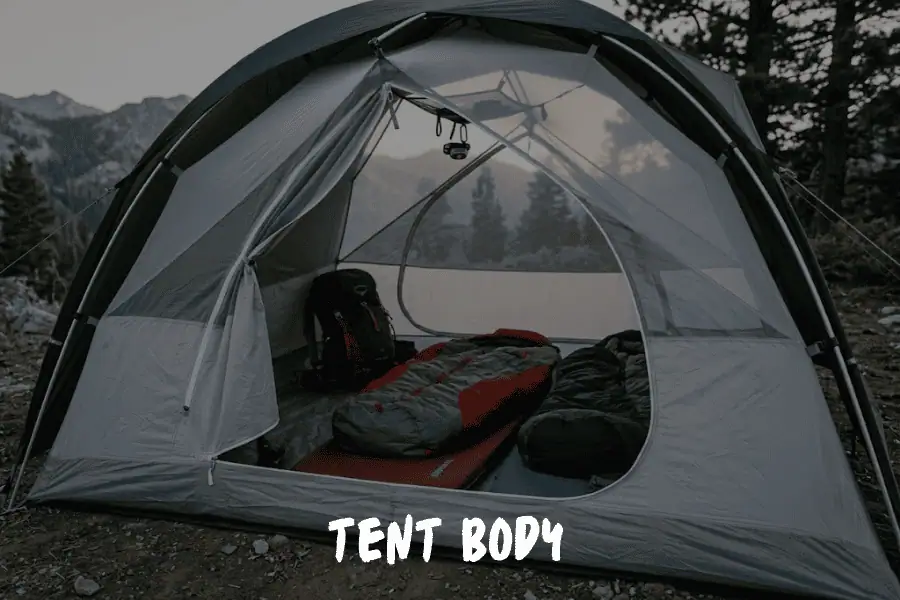
The inner tent — also called the tent body — is the living space of your shelter. It includes the floor, walls, and ceiling of the area where you actually sleep. On a double-wall tent, it's the non-waterproof (or lightly water-resistant) interior structure that the rain fly covers.
Inner tents are typically made from a combination of nylon or polyester panels and mesh panels. More mesh means better ventilation and airflow. More solid fabric panels mean better insulation and condensation management in cold weather. Most backpacking tents lean toward more mesh for weight savings; most winter camping tents use less mesh to retain heat.
Related terms: Rain Fly, Double-Wall Construction, Mesh Inner
Tent Floor
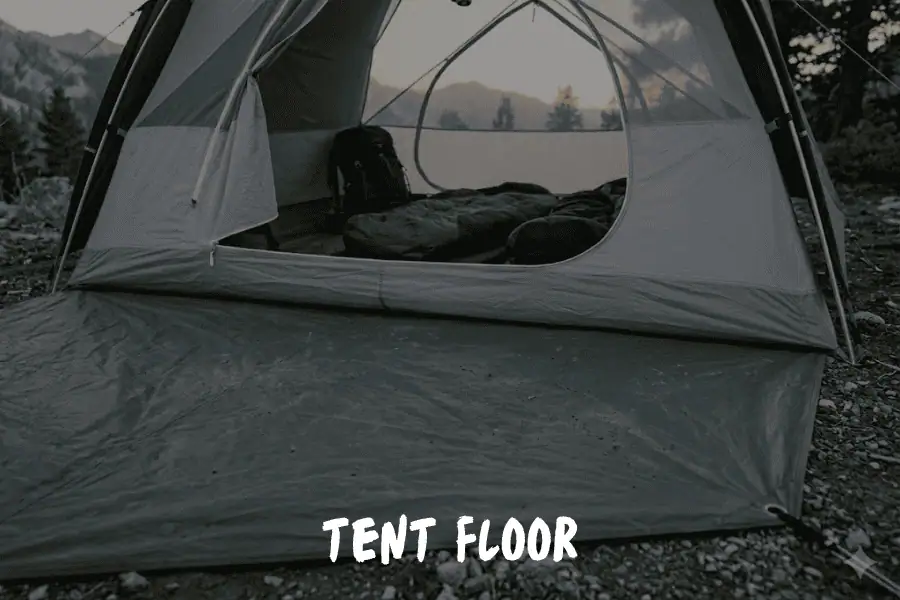
The tent floor is the bottom of your inner tent — the piece of fabric you sleep on. Tent floors need to be waterproof, abrasion-resistant, and tough enough to handle rocks, roots, and rough ground.
Tent floors are almost always made from a heavier, more durable fabric than the tent walls — typically 40D to 70D nylon or polyester with a polyurethane or silicone waterproof coating. The higher the denier number, the tougher and heavier the floor.
Floor waterproofing degrades over time. Reapplying a DWR treatment or seam sealer to your tent floor every few seasons is good tent maintenance practice.
Related terms: Bathtub Floor, Footprint, Denier, DWR
Bathtub Floor
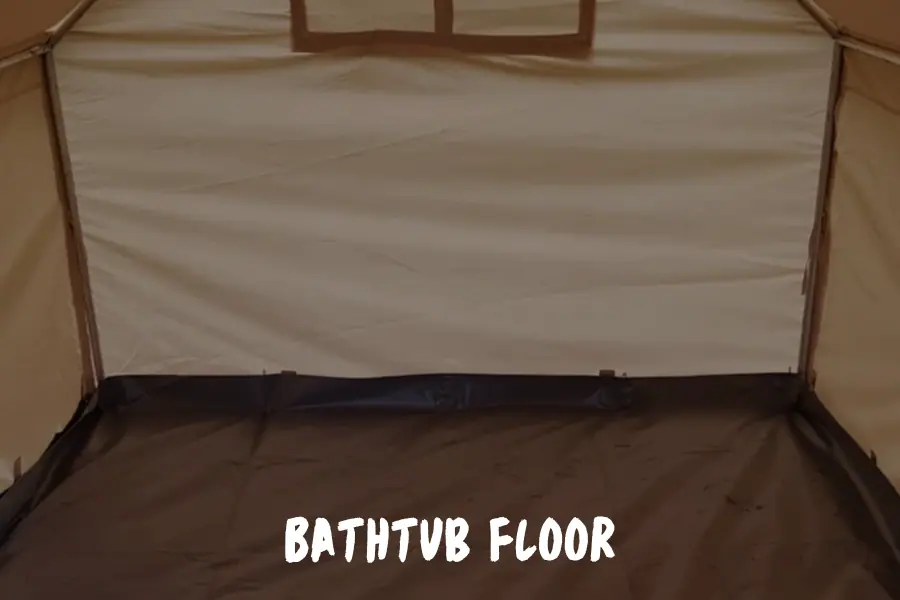
A bathtub floor is a tent floor design where the waterproof material extends several inches up the tent walls before transitioning to the lighter wall fabric. Just like a bathtub has raised sides, a bathtub floor creates a waterproof "tub" around the bottom of your sleeping space.
This is a major feature. Without a bathtub floor design, water that flows under the tent can seep in right at the seam where the floor meets the walls. With a bathtub floor, water has to rise several inches before it can enter. Look for at least a 6-inch bathtub height — premium tents often go 10 to 12 inches.
Related terms: Tent Floor, Seam Sealing, Footprint
Tent Poles
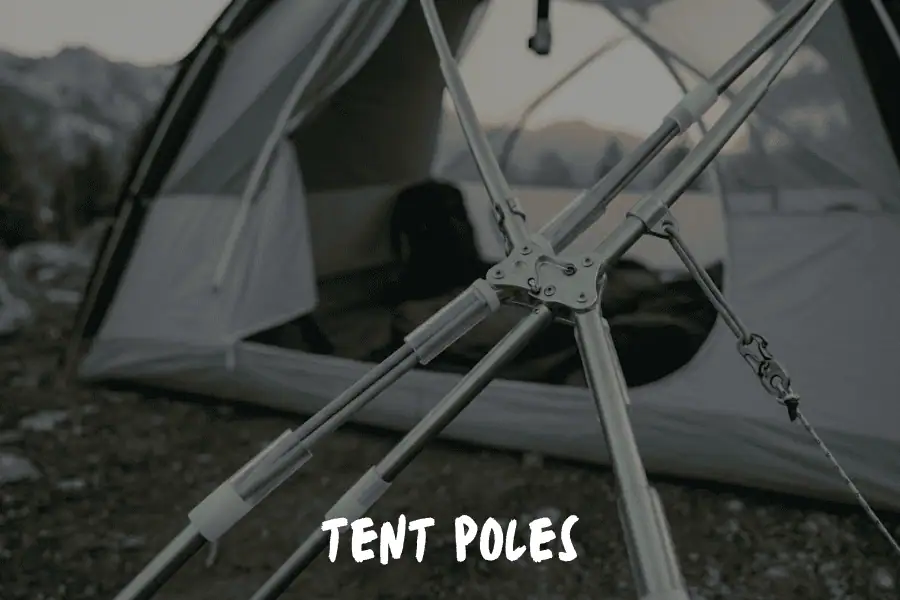
Tent poles are the structural skeleton of your tent. They create the shape, provide internal volume, and — in a freestanding tent — hold everything up without stakes.
Poles are connected to the tent via two main methods: pole sleeves, where poles thread through fabric channels sewn into the tent, or clip systems, where the tent clips attach to the poles at multiple points. Clip systems set up faster and allow for easier adjustments. Sleeve systems typically provide a more structurally solid connection.
Pole material matters a lot:
- Aluminum — the standard for quality backpacking and camping tents. Strong, light, and durable. DAC aluminum (made by a Korean manufacturer) is considered the gold standard.
- Fiberglass — heavier and more prone to shattering than aluminum. Common on budget tents. Fine for car camping, not ideal for backpacking or harsh conditions.
- Carbon fiber — ultralight and strong, found on premium ultralight tents. Expensive and less forgiving of hard impacts than aluminum.
Hub poles — where multiple pole segments connect at a central hub — allow for more complex dome shapes and faster setup. They're common on family camping tents and large group tents.
Related terms: Freestanding, Geodesic, Dome Tent
Guylines (Guy Lines / Guy Wires)

Guylines are the cords that run from attachment points on your tent or rain fly out to stakes in the ground. They add structural rigidity, help the fly maintain its shape, and are absolutely critical in windy conditions.
Most tents come with guyline attachment points already built in. Not all tents include the guylines themselves — and not all campers use them even when they do. That's a mistake. In a storm, guylines can be the difference between a tent that weathers the night and one that collapses at 2 AM.
Proper guyline technique: attach the line to the tent, run it out at roughly a 45-degree angle, and stake it into firm ground. Tensioning the line snugly (without over-tensioning, which can stress the fabric) is what gives your tent its weather resistance.
Related reading: What is a guyline? | How to secure a tent in high winds | Best tents for high winds
Related terms: Tent Stakes, Freestanding, Wind Resistance
Tent Stakes (Pegs)
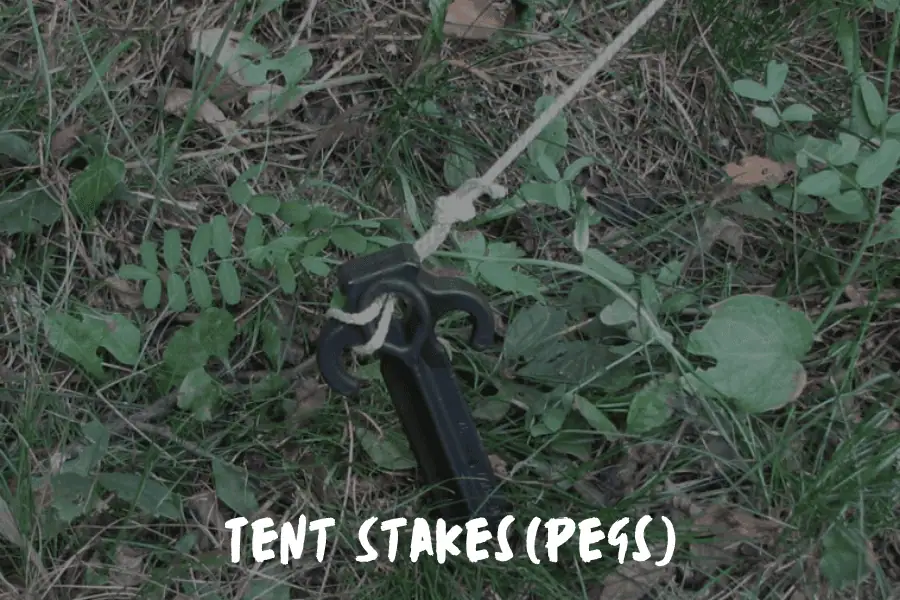
Tent stakes — also called tent pegs — are driven into the ground to anchor your tent and guylines. The stakes that come with most tents are functional but not exceptional. Upgrading to better stakes is one of the highest-value gear investments you can make.
Stake types include:
- Shepherd's hook — the classic wire hook stake. Works fine in soft soil, bends easily in hard ground.
- Nail stake — a solid nail shape, better in firm or rocky ground.
- V-stake / Y-stake — aluminum stakes with a V or Y cross-section. Better holding power than nail stakes with minimal weight penalty. The everyday standard for most campers.
- Snow stake — wide, flat stakes designed to anchor in snow or sand by providing a larger surface area.
- Titanium stake — ultralight and extremely strong, popular with backpackers willing to pay the premium.
See our gear picks: Best tent stakes reviewed | How to stake a tent properly
Related terms: Guylines, Freestanding vs. Non-Freestanding
Door
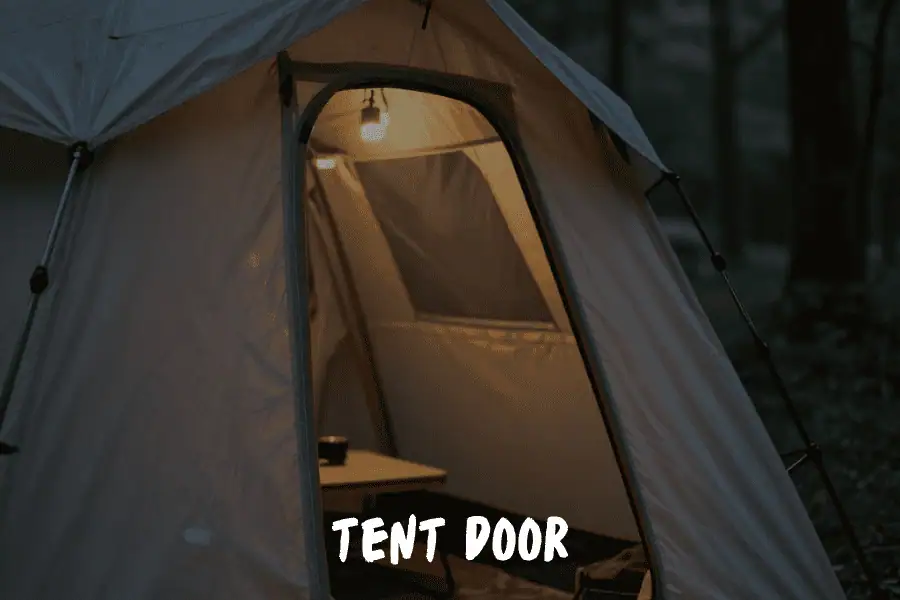
A tent door is the entry and exit point of your tent, typically a zippered opening in the tent wall. Door design affects how easy it is to get in and out, how much you disturb your tent partner, and how much airflow the tent allows.
D-shaped or J-shaped doors open wide for easy entry. Smaller "cat door" openings conserve heat but require more contorting to get through. Two-door designs are one of the most underrated features in camping tents — each person has their own side, which means no more climbing over your tent partner at 3 AM for a bathroom run.
Windows and Vents
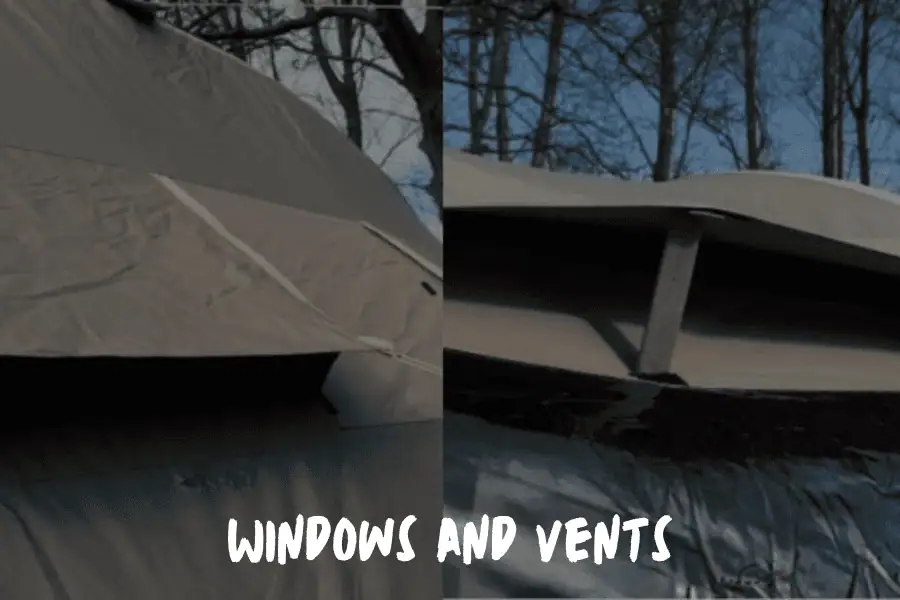
Vents are openings in the rain fly or tent walls designed to allow air circulation and reduce condensation buildup. Most quality tents include adjustable vents near the top of the fly where warm, moist air collects and needs to escape.
Windows are typically mesh panels covered by a zippered flap. They provide ventilation when open and weather protection when closed. In hot weather camping, maximizing ventilation is critical for comfort. In cold or wet conditions, you'll want to close most vents to retain heat while leaving just enough airflow to prevent condensation.
Related terms: Condensation, Double-Wall Construction
Room Divider (Privacy Panel)
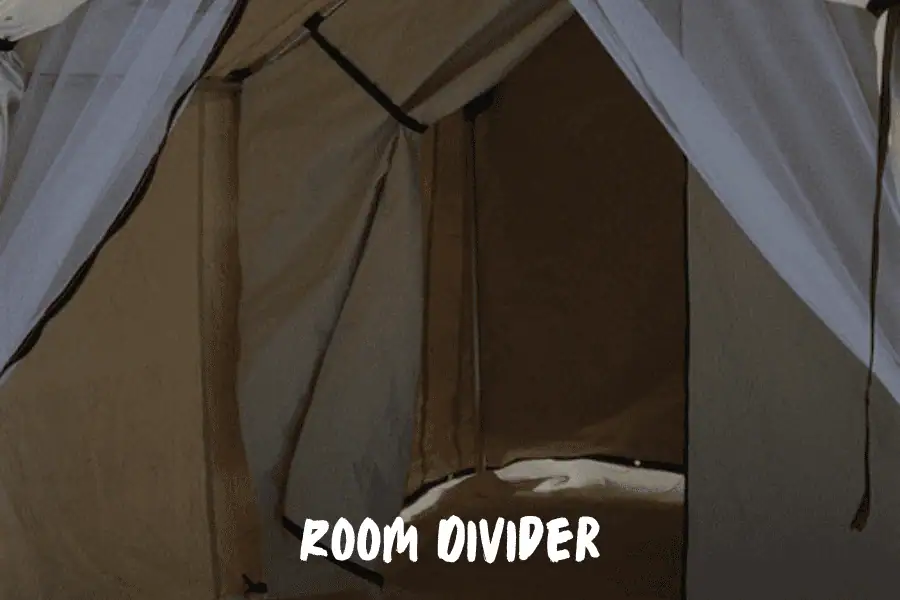
A room divider is a removable fabric panel that splits a tent's interior into two or more separate sleeping compartments. It attaches via hook-and-loop fasteners or a dedicated zipper track sewn into the tent walls and ceiling. When installed, it creates distinct private spaces. Remove it and you're back to one open interior.
The practical value is real: parents get their own space from the kids, two couples can comfortably share a large tent without things getting awkward, and light sleepers can block out movement and light from the other side. Some dividers also provide modest sound dampening — not total silence, but enough to matter at 11 PM when half your group is still up.
Room dividers are almost exclusively found on larger cabin-style family tents. If you're shopping a 6-person or larger tent for group use, this is one of the first features worth checking for.
Related terms: Cabin Tent, Multi-Room Tent, Tent Capacity
Tent Materials and Construction
What your tent is made of determines how much it weighs, how long it lasts, and how well it performs in bad weather. Here's what every tent material term actually means.
Denier (D)
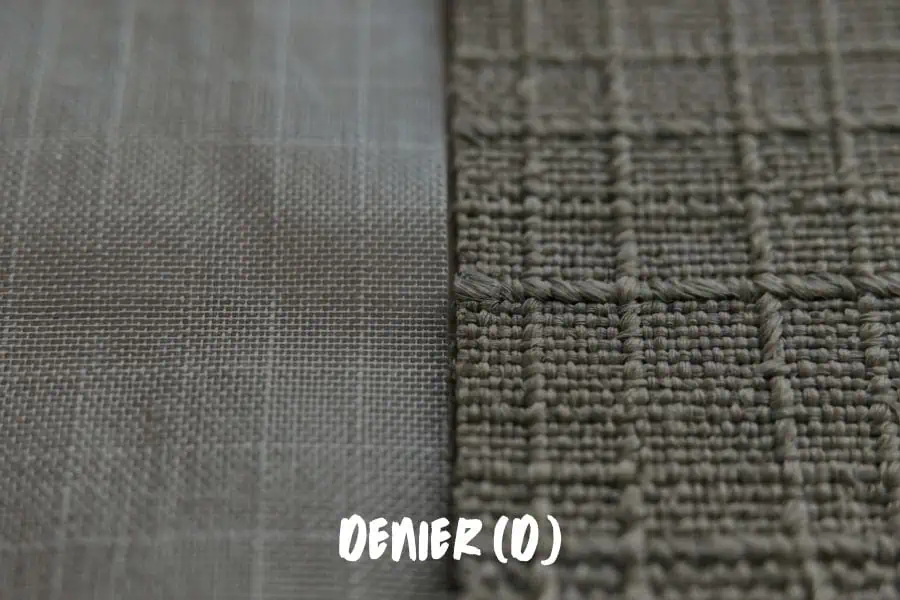
Denier is the unit of measurement for fabric thread thickness. A single denier is defined as the weight in grams of 9,000 meters of a single fiber. The higher the denier number, the thicker and heavier the thread — and therefore the more durable the fabric.
In tent spec sheets, you'll see this written as "20D nylon" or "40D polyester." Here's the practical translation:
- 10D–20D — ultralight fabrics used in premium backpacking tents. Very light, less durable, requires careful use.
- 30D–40D — the sweet spot for backpacking tents. Good balance of weight and durability.
- 50D–70D — standard for tent floors and heavier-duty shelters. More durable, heavier.
- 150D+ — found on canvas tents and heavy-duty family tents. Built to last decades.
Related terms: Silnylon, Silpoly, Ripstop
Ripstop
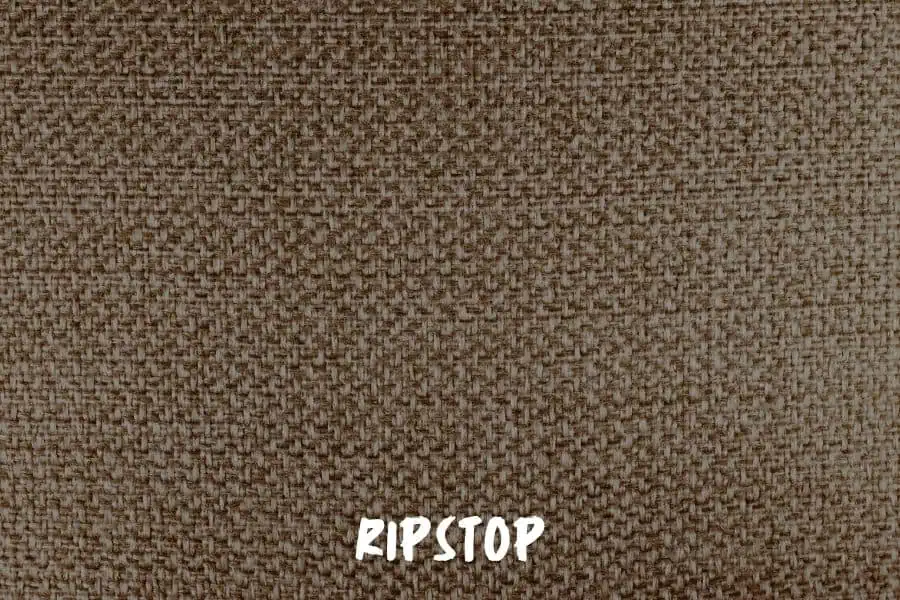
Ripstop is a weaving technique where thicker reinforcement threads are woven in a grid pattern throughout the fabric. If the material tears or punctures, the reinforcement grid stops the tear from spreading — hence the name.
You'll see this called out as "ripstop nylon" or "ripstop polyester." It's one of those features you definitely want in a backpacking or performance tent. The grid pattern is usually visible to the eye — small squares are a sign of ripstop construction.
Silnylon (Silicone-Nylon)
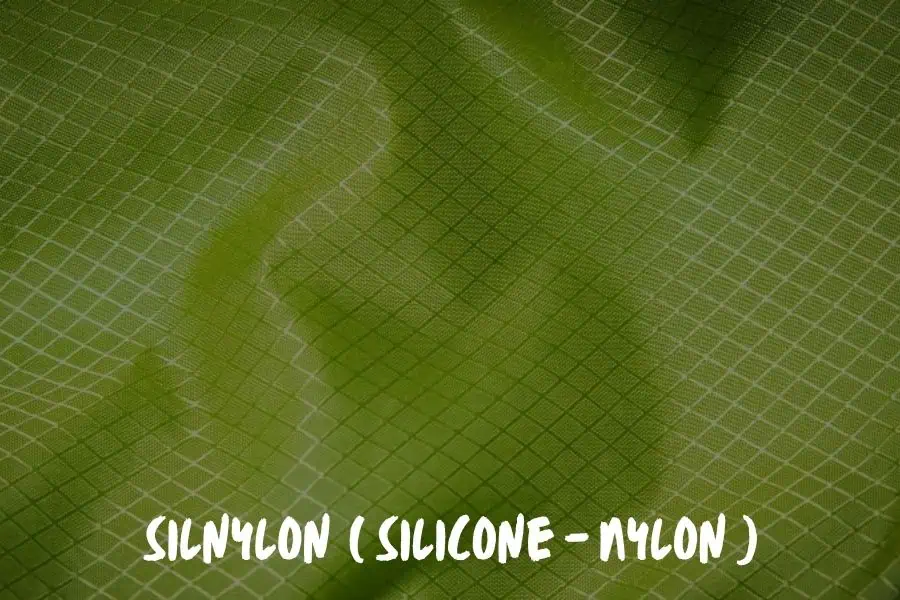
Silnylon is nylon fabric impregnated with silicone on both sides. It's one of the most popular materials for ultralight tent flies and floors because it's incredibly strong for its weight and has excellent water resistance.
The trade-off: silnylon stretches when wet, which means your fly can sag and change shape in the rain. Some campers find this maddening; others barely notice it. Silnylon also can't be seam-taped using standard polyurethane tape — it requires silicone-based seam sealer, applied by hand.
Related terms: Silpoly, Dyneema / DCF, Seam Sealing
Silpoly (Silicone-Polyester)
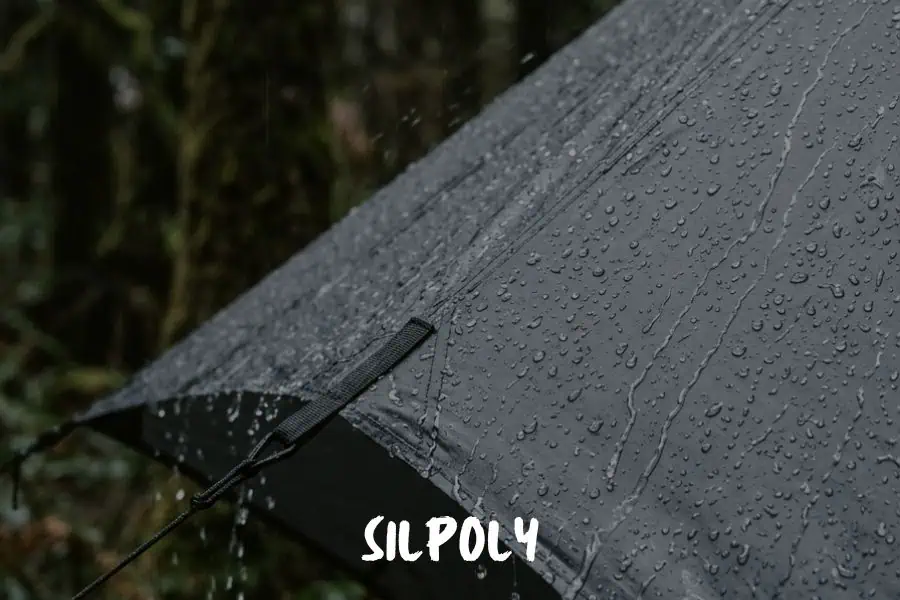
Silpoly is the polyester equivalent of silnylon — polyester fabric coated with silicone. It shares most of silnylon's strengths (light, strong, water-resistant) but with one big advantage: it doesn't stretch when wet. That means your fly stays taut in the rain without needing to be re-tensioned.
Silpoly is slightly heavier than silnylon at the same denier but has become increasingly popular in quality backpacking tents for its dimensional stability. Many current-generation shelters from brands like Big Agnes and Nemo use silpoly fly fabrics.
Related terms: Silnylon, Denier
Dyneema / DCF (Dyneema Composite Fabric)
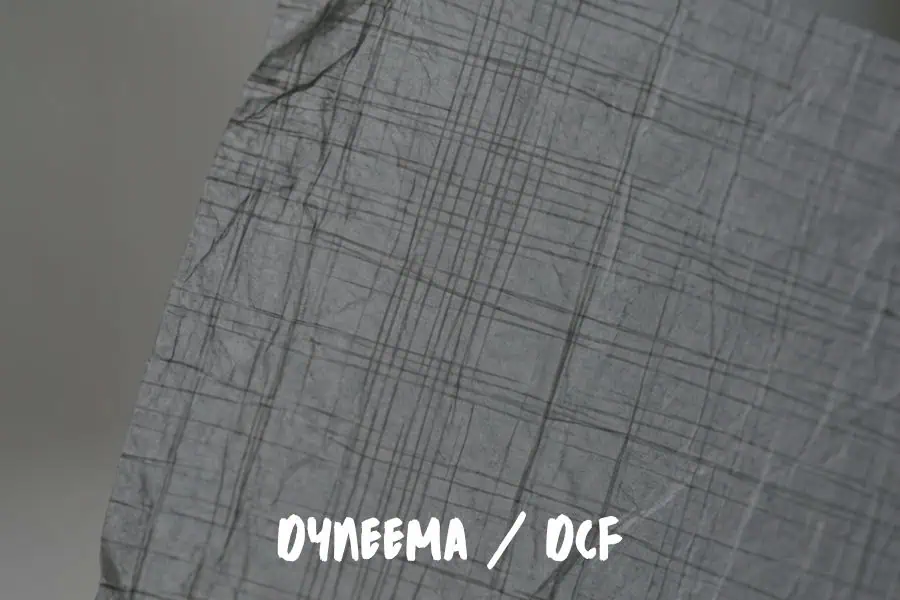
Dyneema Composite Fabric — formerly known as Cuben Fiber — is the lightest, strongest tent material available. Period. It's used in ultralight and expedition shelters where weight and performance are worth the steep price premium.
DCF is not woven; it's a laminate made from Dyneema fibers bonded between thin films. It doesn't absorb water, doesn't stretch, and is extraordinarily resistant to tearing. The downside: it's expensive (a DCF shelter typically costs 2–4× a comparable nylon option) and it crinkles loudly, which some people find annoying.
If you're a fastpacking or ultralight backpacking tent buyer, DCF is worth understanding. For most car campers and weekend backpackers, silnylon and silpoly represent better value.
Canvas

Canvas is a heavy-duty natural or synthetic fabric — typically cotton, polycotton, or a cotton-polyester blend — used in traditional wall tents, glamping tents, and hot-tent setups. It's the opposite of ultralight: heavy, incredibly durable, and excellent at temperature regulation.
Canvas "breathes," which means moisture vapor passes through the fabric rather than condensing on the interior walls. This makes canvas tents significantly more comfortable for extended stays than synthetic tents. Canvas also holds heat well when used with a wood stove or tent heater.
The trade-offs are real: canvas tents are heavy (often 30–80 lbs for a full setup), require proper drying before storage to prevent mildew, and cost significantly more than synthetic alternatives. See our full guide to the best canvas tents if this category interests you. And if you already own one, don't miss our walkthrough on how to waterproof a canvas tent — it's a necessary part of ownership.
Polyurethane (PU) Coating
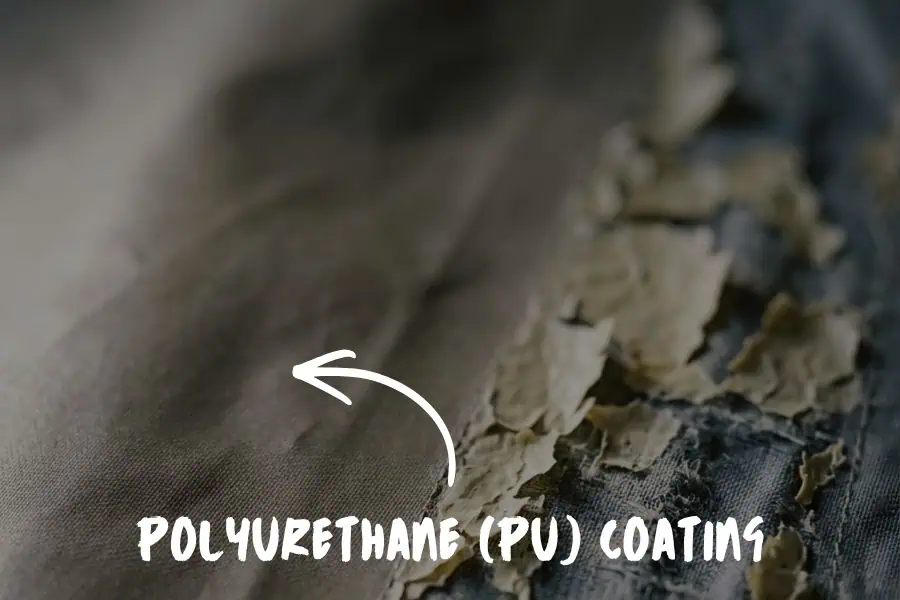
Polyurethane coating is the most common waterproofing treatment applied to tent fabrics. The PU coating is applied to the interior surface of fly fabrics and tent floors to block water penetration.
PU coatings are measured by their hydrostatic head rating. Over time, PU coatings break down — a process accelerated by UV exposure, heat, and improper storage. When your tent fabric starts to feel tacky or flakes on the inside, the PU coating is delaminating and needs to be replaced or reapplied.
DWR (Durable Water Repellent)
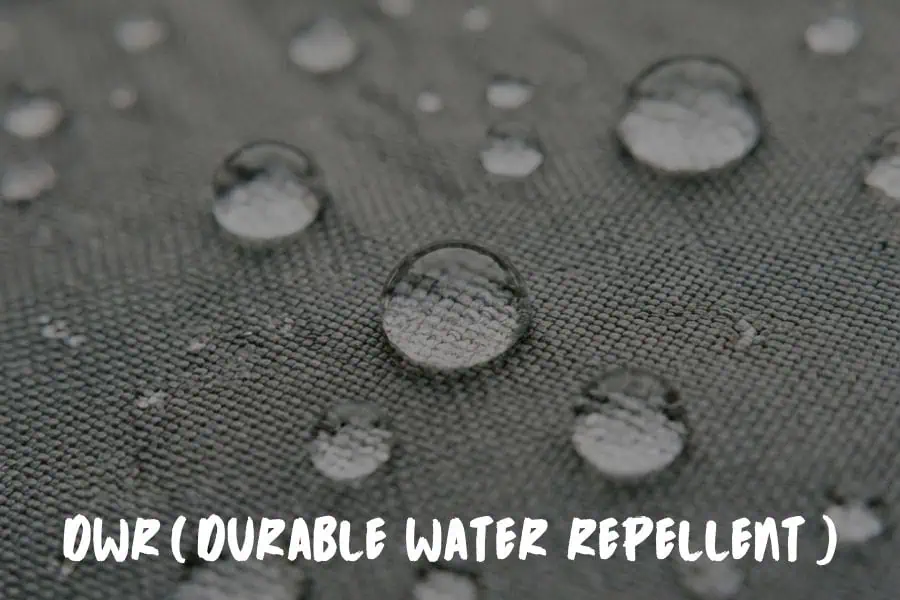
DWR is a chemical treatment applied to the outer surface of tent fabrics that causes water to bead up and roll off rather than soaking into the fibers. It's not the primary waterproofing layer — that's the PU coating underneath — but it's an important first line of defense.
When a tent's DWR wears off, the outer fabric "wets out" — it gets saturated and heavy, which reduces breathability and makes the tent feel clammy. You can reapply DWR with products like Nikwax Tent and Gear SolarProof or Gear Aid Revivex. It's a simple, cheap maintenance step that makes a big difference.
Related terms: Hydrostatic Head, Seam Sealing
Our top picks: Best tent waterproofing sprays for restoring DWR
Hydrostatic Head (HH)

Hydrostatic head is the standard measurement of fabric waterproofness. It measures how many millimeters of water can be stacked on top of a fabric sample before water begins to penetrate. The higher the number, the more waterproof the fabric.
Here's a practical guide to the numbers:
- 800–1,200mm — light rain resistance. Fine for mild conditions, not for heavy rain.
- 1,500–2,000mm — solid three-season waterproofing. Handles most rain camping situations.
- 3,000mm+ — serious waterproofing. What you want for heavy rain, extended trips, or winter camping.
A tent floor should always have a higher HH rating than the fly — 3,000mm minimum for the floor is a good baseline.
Related terms: PU Coating, DWR, Seam Sealing
See our gear guide: Best waterproof tents
Seam Sealing / Seam Taping
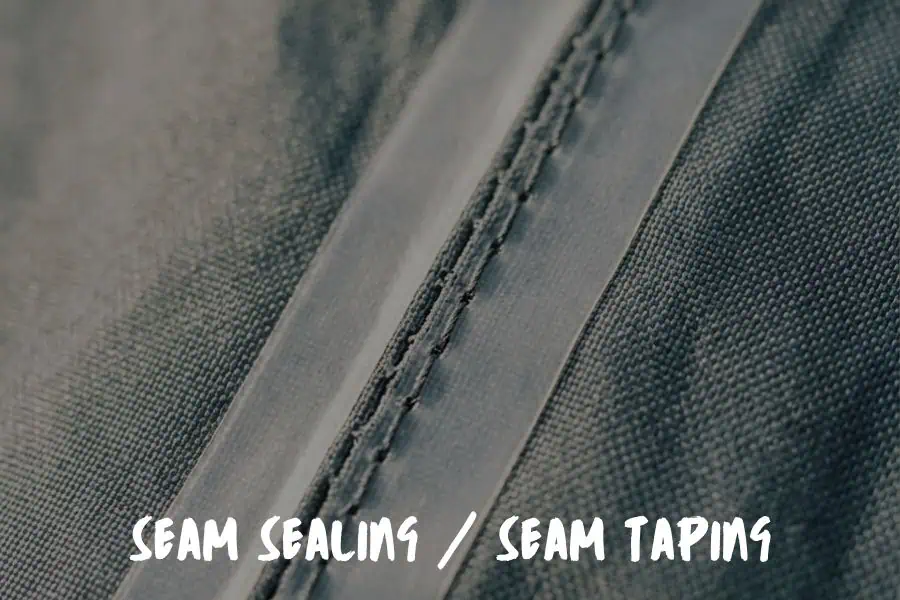
Every stitch hole in a tent fabric is a potential entry point for water. Seam sealing fills those holes with a waterproof sealant. Seam taping applies a waterproof tape strip over the seams from the inside.
Fully seam-taped or fully seam-sealed tents are waterproofed at every seam from the factory. Critically seam-sealed tents only treat the most critical seams (usually the fly and floor). Non-sealed tents require you to apply seam sealer yourself after purchase.
This spec matters more than most buyers realize. A tent with a 3,000mm fly but unsealed seams will leak in heavy rain. Always check the seam treatment spec before buying a tent for wet-weather use.
Related terms: Hydrostatic Head, Silnylon
Our top picks: Best tent seam sealers
Tent Types and Shapes
Tent shapes aren't just aesthetic — they determine livability, weather performance, setup complexity, and weight. Here's a breakdown of every major tent form factor. For a more visual overview, see our full guide to all types of tents.
Dome Tent
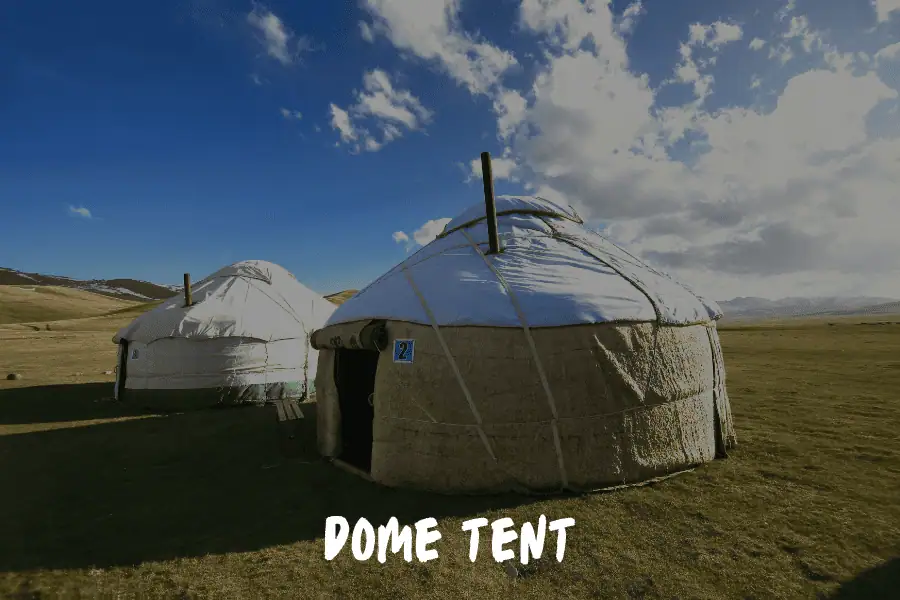
The dome tent is the most common tent design in the world. Two or more poles cross over the tent in an arc, creating a curved, dome-shaped structure. Dome tents are freestanding, easy to set up, and handle wind reasonably well because their curved walls deflect rather than catch the wind.
The classic two-pole dome is the entry-level design — simple, affordable, and widely available. More advanced dome designs use three or four poles for more internal volume and better weather resistance. For general-purpose camping, a well-made dome tent is hard to beat. See our picks for the best dome tents and best 4-person dome tents.
Related terms: Geodesic, Freestanding
Geodesic Tent
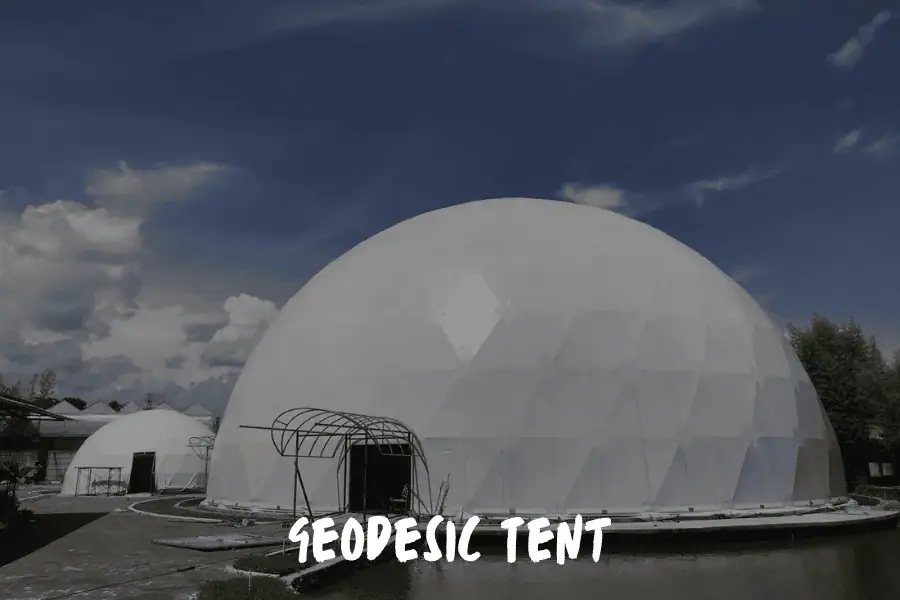
A geodesic tent uses three or more poles that cross at multiple points, creating a triangulated structure. The result is a tent that's significantly stronger and more stable than a standard dome — at the cost of more poles, more weight, and a more complex setup.
Geodesic tents are the shelter of choice for serious mountaineering and four-season camping. They excel in high winds and heavy snow loads because the triangulated pole structure distributes force across the entire frame rather than relying on two single-pole arcs. If you're camping above treeline, in exposed alpine terrain, or in genuinely severe conditions, a geodesic design is worth the extra weight.
Related terms: Dome Tent, Four-Season Tent, Tent Poles
Cabin Tent
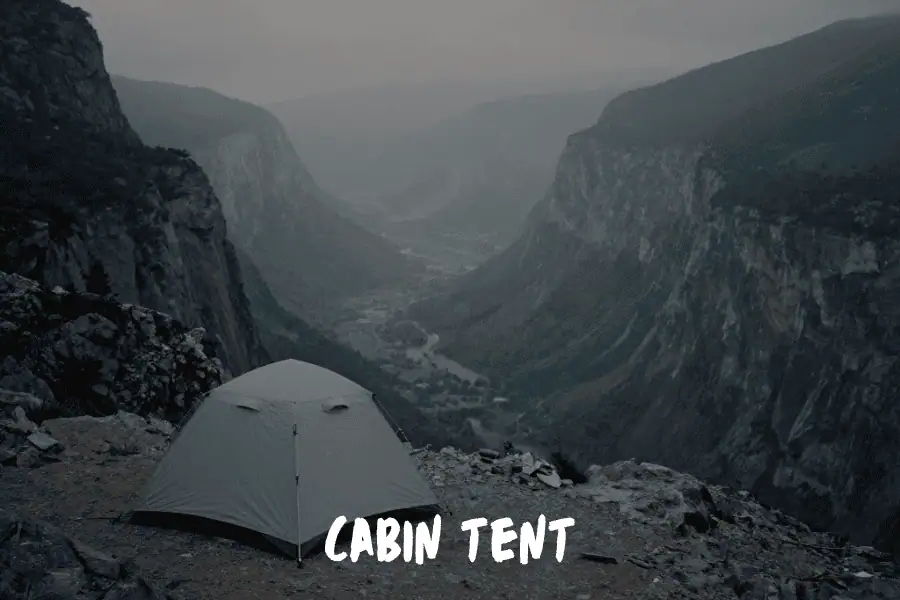
A cabin tent features near-vertical walls that maximize interior standing room and living space. Unlike dome tents whose walls slope inward immediately, cabin tents maintain their full floor width all the way up to a higher point before the roof angles in.
Cabin tents are the choice for family car camping where comfort and space matter more than weight and packability. They're larger, heavier, and typically require more stakes and more setup time than dome tents. Many 8-person and 10-person tents use a cabin design for this reason. The trade-off: those vertical walls catch wind, making cabin tents less suitable for exposed campsites.
Related terms: Dome Tent, Three-Season Tent
See our picks: Best cabin tents
Multi-Room Tent
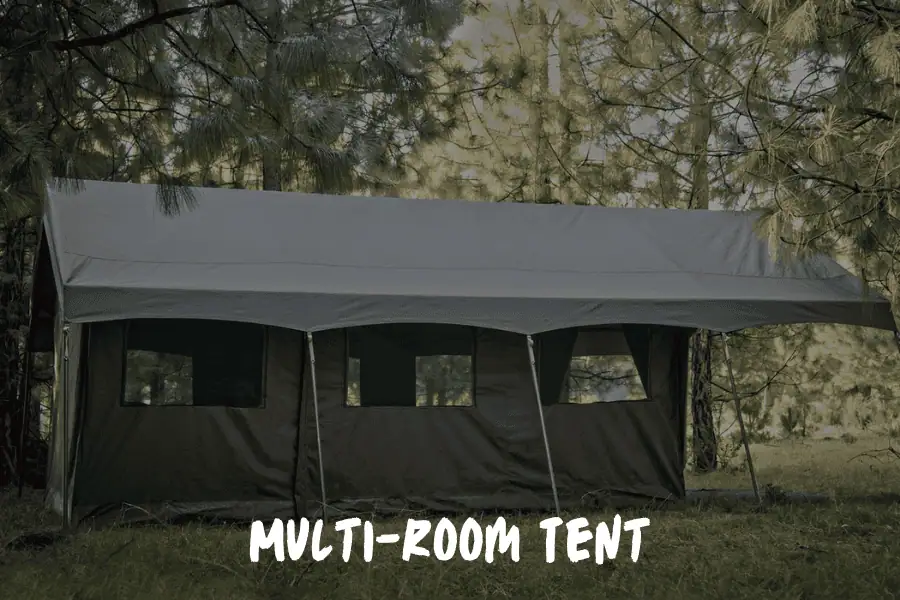
A multi-room tent has more than one enclosed interior compartment. This is achieved through three main approaches: built-in room dividers that partition a single large interior, separate rooms connected by a shared wall or short tunnel, or a fully enclosed screen room attached to the main sleeping area.
Common configurations you'll see on the market:
- Two sleeping rooms — a large tent divided into two separate bedrooms, usually via a zip-in divider. Common on 6-person and larger cabin tents. Great for families where adults and kids want their own space.
- Sleeping room + screen room — a fully enclosed bug-proof living area connected to the main sleeping tent. Ideal for shoulder-season camping or high-bug environments where you want a common area that doesn't require retreating inside the tent.
- Sleeping room + storage room — a smaller attached vestibule-style room for gear and muddy boots, more substantial than a standard vestibule.
Multi-room designs add setup time and usually a few pounds over a comparable single-room tent. For weekend camping with family or a group, the livability payoff is well worth it — having defined spaces eliminates a lot of the friction of group camping. See our roundups of the best 2 room tents and best 3-room tents for top multi-room options.
Related terms: Cabin Tent, Room Divider, Vestibule, Tent Capacity
Tunnel Tent
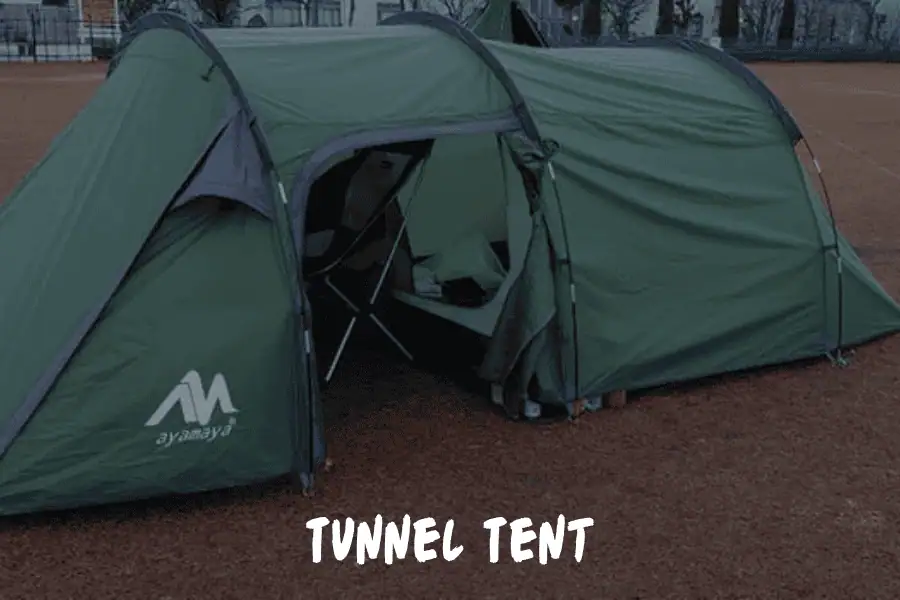
A tunnel tent uses parallel hoops along the length of the tent, creating a tube-shaped shelter. The design provides excellent interior volume relative to weight and is popular in European backpacking and expedition camping.
Tunnel tents are not freestanding — they rely entirely on stakes for their structure. Properly staked, they're extremely stable in wind because the curved profile has minimal wind resistance when oriented correctly (with the rounded end facing into the wind). Without stakes, they collapse. If you're camping in consistently windy alpine terrain and don't mind the non-freestanding setup, tunnel tents offer one of the best space-to-weight ratios available.
Related terms: Freestanding vs. Non-Freestanding, Tent Stakes
A-Frame Tent
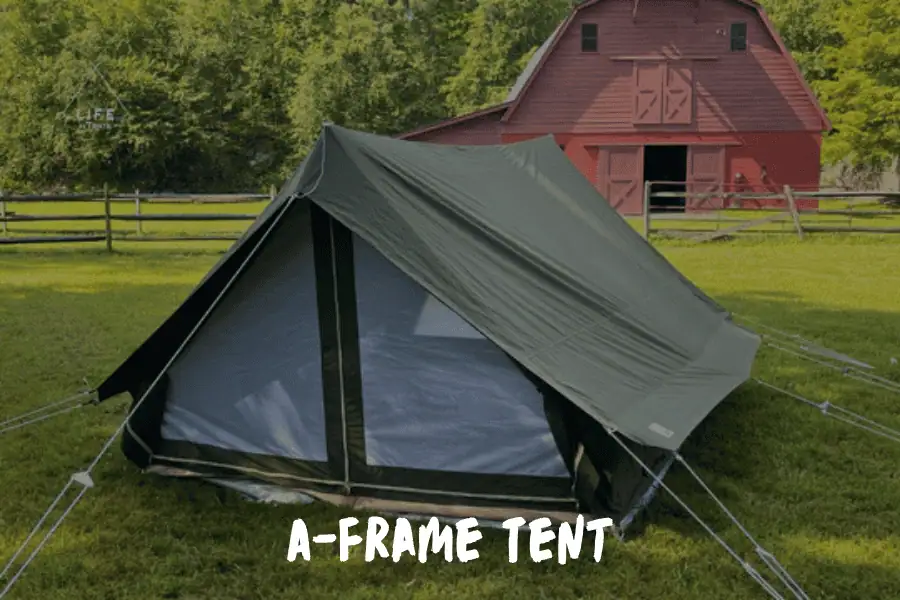
The A-frame is the original tent design — a ridge pole running along the top with the fabric sloping down from it to the ground on both sides, forming an "A" shape when viewed from the end. A-frames are simple, time-tested, and still used in ultralight tarptents and bikepacking shelters.
Traditional A-frames have low interior headroom and limited livability compared to dome or cabin designs. Modern takes on the A-frame concept — like the Hilleberg Akto or various tarptent designs — have evolved to address these issues while keeping weight minimal.
See our guide: Best A-Frame Tents
Bivy Sack (Bivouac Sack)
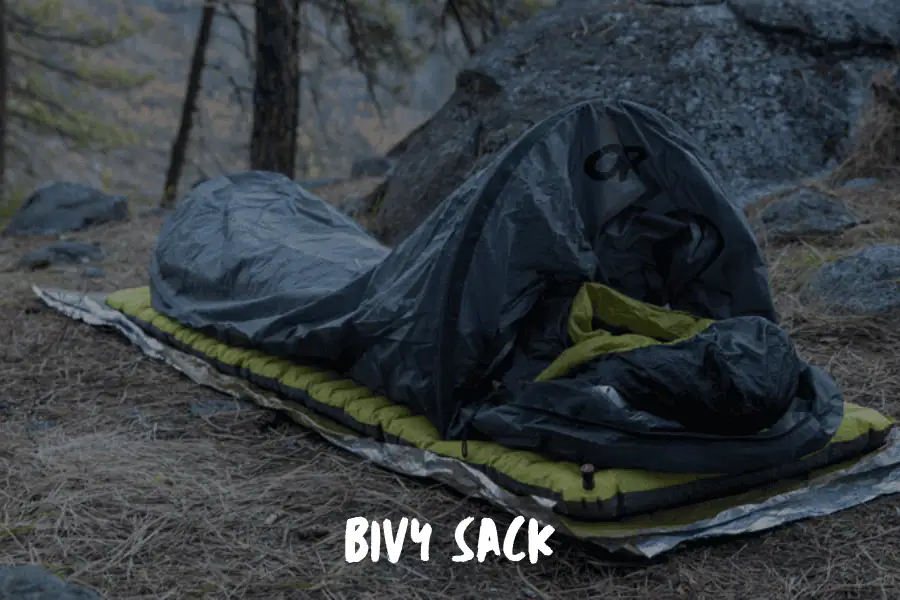
A bivy sack is a minimalist waterproof shell that goes directly over your sleeping bag. It's the most stripped-down form of shelter — no poles, no stakes required, no interior space beyond your sleeping bag.
Bivies are used by fast-and-light mountaineers, ultrarunners, and anyone who needs emergency weather protection with near-zero weight. They're not comfortable for multi-night camping but are invaluable as emergency backup shelter or for true ultralight trips.
Emergency bivies (mylar emergency blankets shaped into a bag) are different from performance bivies — the former is a survival item, the latter is a legitimate lightweight shelter.
See our guide: Best Bivy Sacks
Tarp Shelter
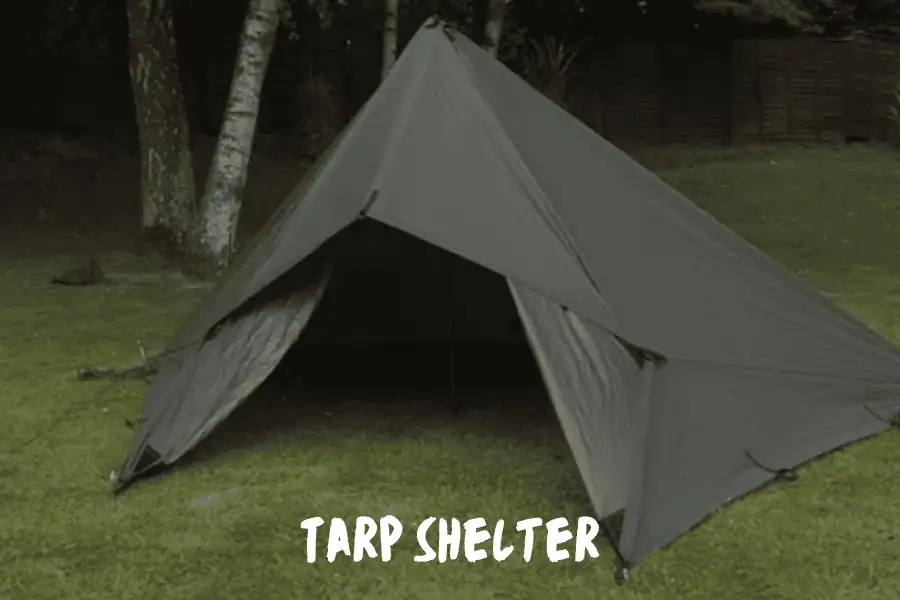
A tarp shelter is exactly what it sounds like — a flat or shaped piece of waterproof fabric configured into a shelter using trekking poles, trees, or dedicated poles. No floor, no walls, maximum airflow, minimum weight.
Tarps are the choice of ultralight backpackers and hammock campers who accept the trade-off of minimal protection for maximum weight savings. A quality silnylon tarp can weigh under 10 ounces and provide protection from most rain when pitched correctly. The skill ceiling is higher than a freestanding tent — there are dozens of tarp configurations, and learning them takes practice.
Explore options and techniques: Best Camping Tarps | Tarp Shelter Configurations Guide
Rooftop Tent (RTT)
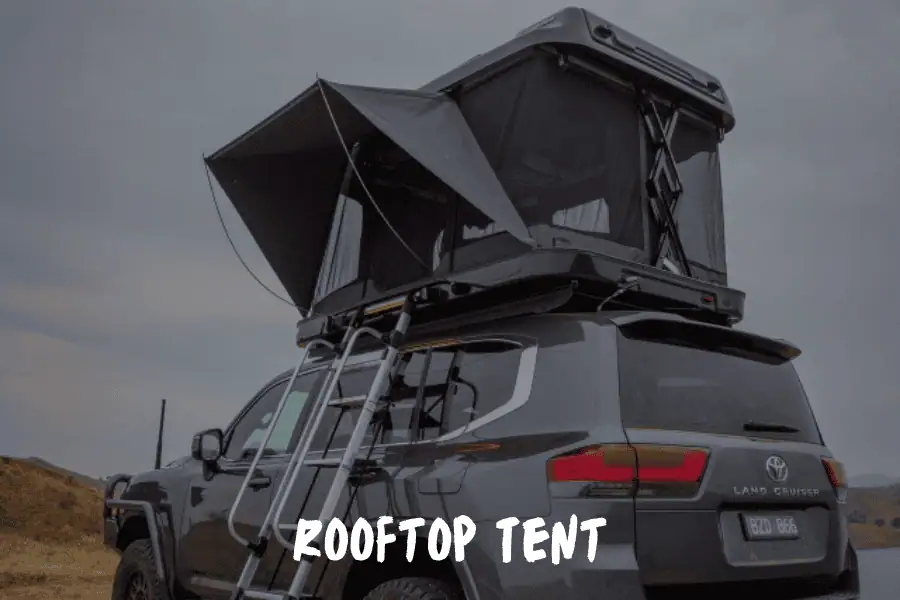
A rooftop tent mounts directly to a vehicle's roof rack and unfolds into a sleeping platform above the vehicle. Rooftop tents have become enormously popular in the overlanding and car camping community for their convenience and the comfort of sleeping elevated off the ground.
Rooftop tents come in two main configurations: hard-shell (clamshell or pop-up designs that open quickly) and soft-shell (folded designs that unfold like a book, typically with more interior space). Both require a properly rated roof rack and come with a weight penalty — most weigh between 80 and 150 pounds. See our full breakdown of the best rooftop tents for every vehicle type and budget.
Related terms: Hard-Shell RTT, Soft-Shell RTT
Key Tent Specifications
These are the spec sheet terms that actually tell you whether a tent is right for your use case. Learn these and you'll be able to evaluate any tent on the market.
3 Season Tent
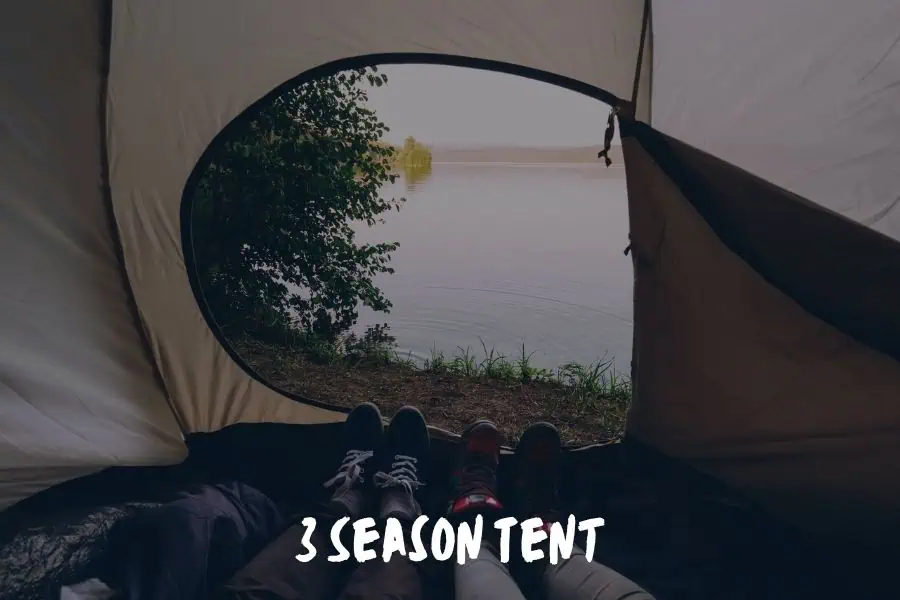
A 3-season tent is designed for spring, summer, and fall camping — meaning everything except true winter conditions. It handles rain, wind, and cool temperatures well, but isn't built to carry heavy snow loads or withstand sustained extreme cold.
Three-season tents are the most popular category for a reason: they balance weather protection, weight, ventilation, and price better than any other type. The vast majority of recreational camping — weekend trips, backpacking, family car camping — is best served by a quality three-season tent.
If you camp in shoulder seasons with cold nights and potential frost, look for a three-season tent with solid fly coverage and fewer mesh panels.
Also read: 3-Season Vs. 4-Season Tents – Differences Explained!
Related terms: Three-Plus-Season Tent, Four-Season Tent
3+ Season Tent (Extended Season)
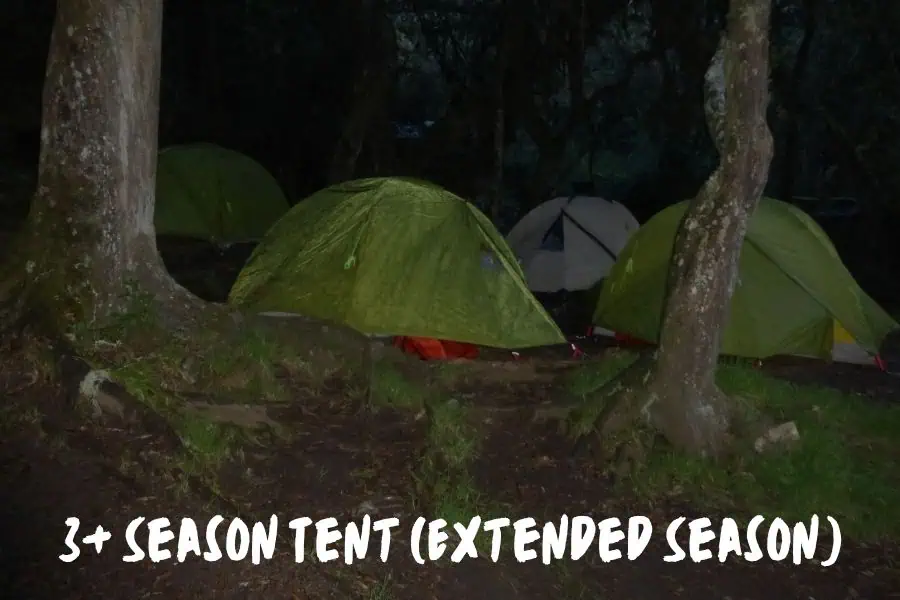
A 3+ season tent bridges the gap between three-season and four-season designs. They have more solid wall panels than three-season tents for better cold-weather insulation, but are lighter than true four-season tents because they're not designed for full winter use.
If your camping calendar includes regular late fall or early spring trips with possible light snow and temperatures in the teens or single digits, a three-plus-season tent is often the smartest choice. They handle those conditions better than a standard three-season tent without the weight penalty of a four-season design.
4 Season Tent (Winter Tent)
A four-season tent is engineered for true winter and mountaineering use. They feature stronger poles (typically more of them), minimal mesh, more solid fabric panels, and structural designs optimized to shed snow loads.
Four-season tents are heavier, less ventilated, and more expensive than three-season alternatives. They're the right tool when you're camping in conditions where getting your shelter wrong could genuinely endanger your life — high-altitude mountaineering, winter camping in exposed terrain, snowpack environments. For summer or three-season use, they're overkill. See our guide to the best winter camping tents for specific recommendations — including our best budget four-season tent picks if you don't want to spend expedition-level money.
Freestanding vs. Non-Freestanding
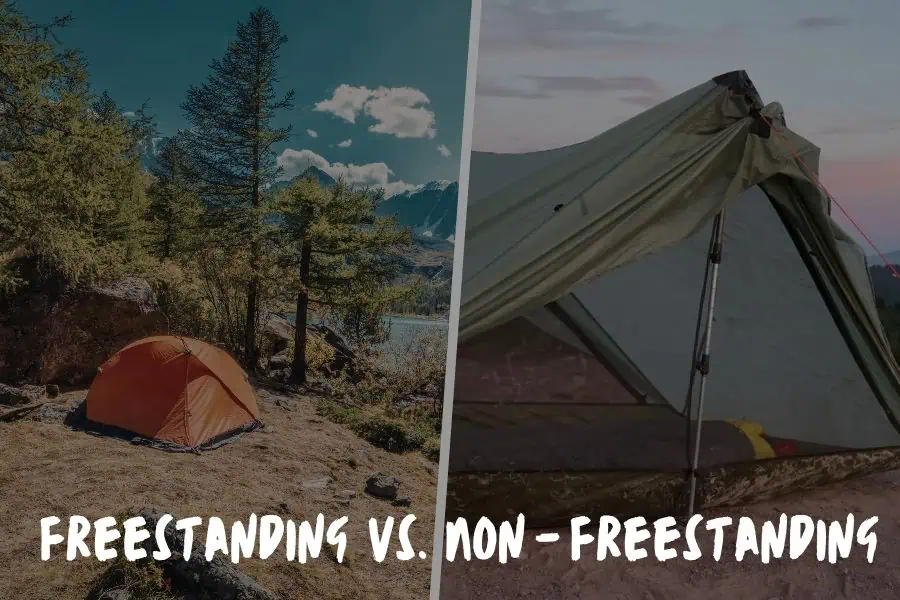
A freestanding tent holds its shape using only its poles — no stakes required to make it stand. You can pick it up and move it after it's assembled. Most dome, cabin, and geodesic tents are freestanding.
A non-freestanding tent requires stakes to achieve its structure. Without stakes, it collapses. Tunnel tents, tarps, and some ultralight designs fall into this category.
Freestanding tents are more convenient for most campers — you can set up on hard or rocky ground where staking is difficult, and you can shake debris out of the tent by lifting and flipping it. Non-freestanding tents trade that convenience for lower weight and often a better space-to-weight ratio.
Note: even freestanding tents should be staked out fully in any kind of wind. A freestanding tent that isn't staked is an airborne tent waiting to happen.
Related terms: Tent Stakes, Guylines
Double-Wall Construction
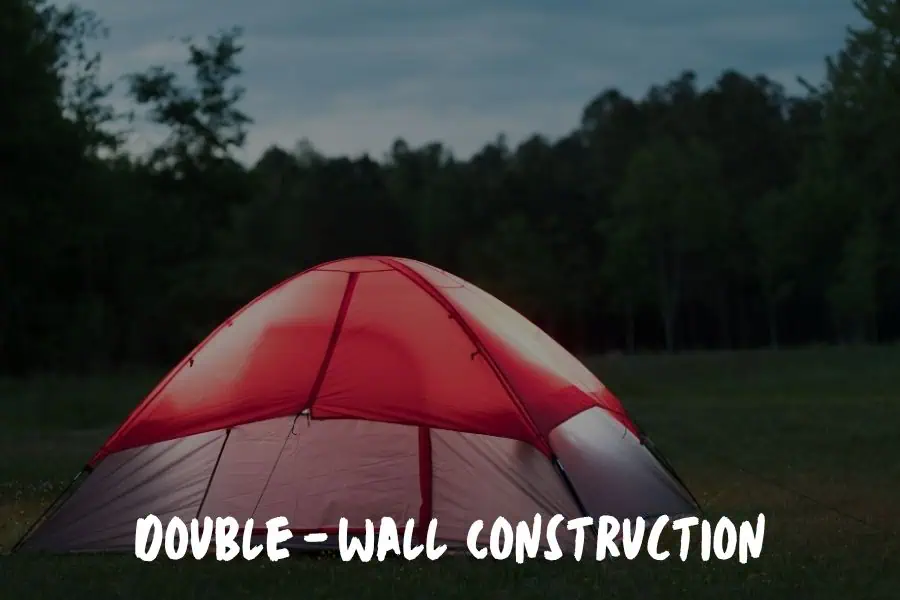
A double-wall tent has two separate layers: the inner tent (mesh or fabric tent body) and the outer rain fly. There's an air gap between them.
That air gap is the key. Warm, moist air from your breath and body heat rises, hits the cold fly, and condenses on the outside of the fly rather than the inside of your tent. The result is significantly less interior condensation compared to single-wall designs. Double-wall construction is the standard for quality backpacking and camping tents for good reason — it makes a real difference in comfort, especially in cold or humid conditions.
Related terms: Single-Wall Construction, Condensation
Single-Wall Construction
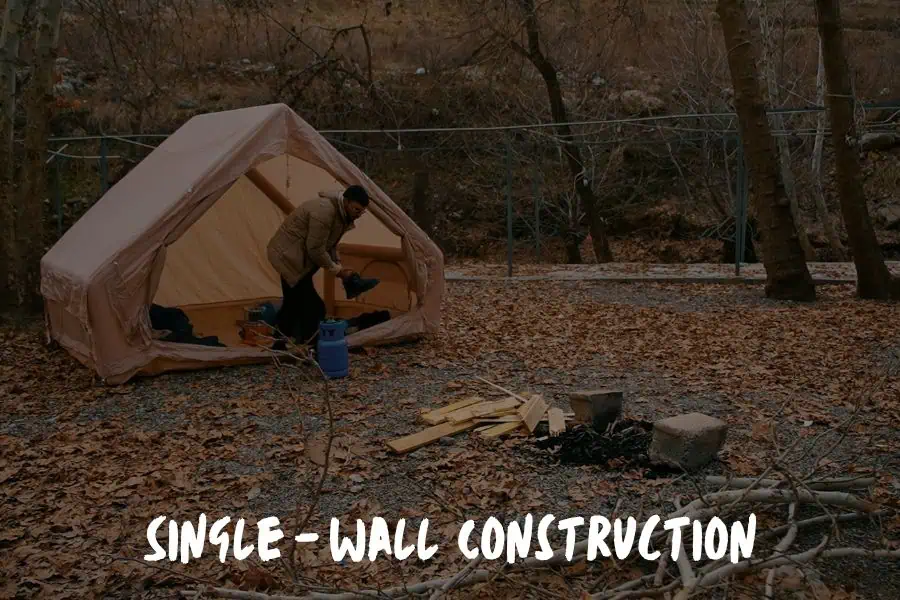
A single-wall tent uses one layer that serves as both the shelter and waterproofing. No separate inner tent, no separate fly. The single layer is typically made from a waterproof-breathable material like Gore-Tex or eVent.
Single-wall designs are lighter (fewer pieces, less material) and faster to set up. The trade-off is condensation management — even breathable fabrics can't match the condensation performance of a well-ventilated double-wall design. Single-wall tents are most common in ultralight backpacking and expedition mountaineering, where weight is the primary constraint.
Condensation
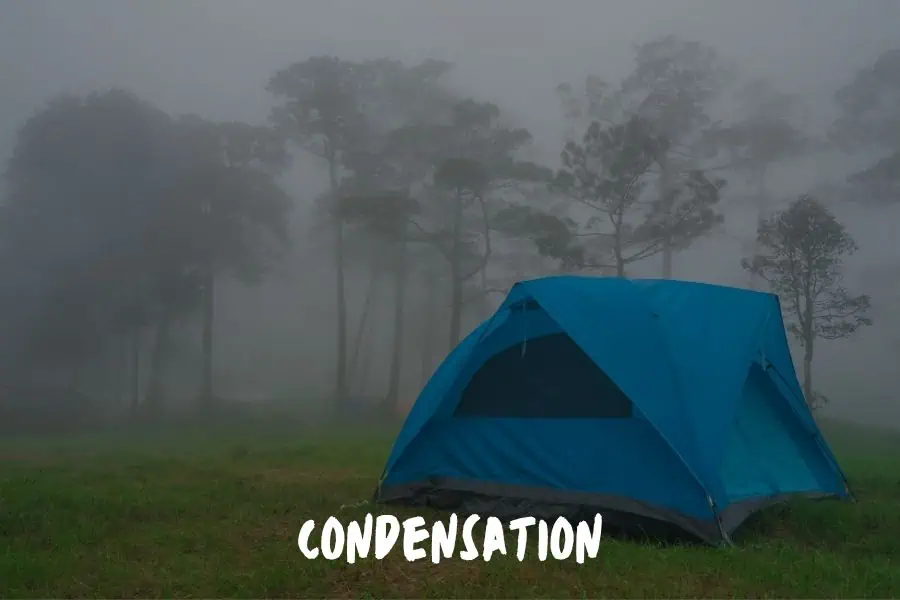
Condensation is the moisture that forms on tent surfaces when warm, humid air meets cooler surfaces. It's one of the most common complaints in camping and one of the most misunderstood — many campers blame their tent for leaking when the real culprit is interior condensation dripping from the ceiling.
Managing condensation comes down to three things: ventilation (keep air moving through the tent), fabric choice (double-wall construction keeps condensation on the fly, not the inner tent), and campsite selection (avoid low areas and enclosed hollows where cold, damp air pools).
In general, more mesh = better ventilation = less condensation, but also less insulation in cold weather. The balance between ventilation and warmth retention is one of the core design trade-offs in tent making.
Related terms: Double-Wall Construction, Vents
Pack Weight vs. Trail Weight
Pack weight (also called packaged weight) is the total weight of everything that ships with the tent — poles, stakes, stuff sack, and all accessories. Trail weight (also called minimum weight) is just the bare essentials you'd actually carry on a backpacking trip — typically the tent body, fly, and poles, minus extra stakes or storage bags.
When comparing tents for backpacking, use trail weight for apples-to-apples comparisons. Pack weight includes packaging stakes and accessories that you may replace or leave behind. Be aware that some manufacturers define these terms slightly differently — always check exactly what's included in each measurement.
Tent Capacity (Person Rating)
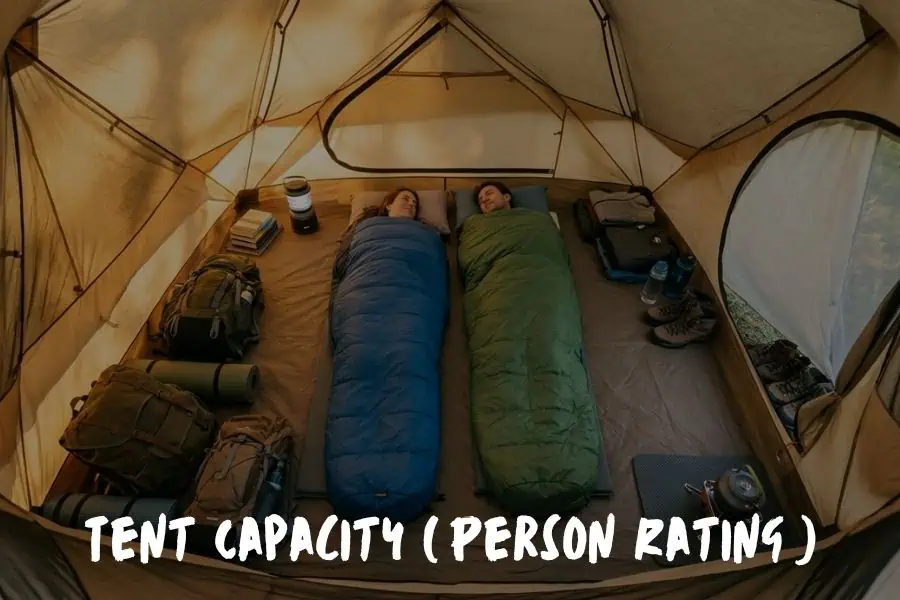
Tent capacity ratings — 2-person, 4-person, 6-person — are based on how many average-sized sleeping bags can fit on the floor with no gear inside. No packs. No space between you. Basically: the maximum number of bodies that could technically squeeze in.
In practice, most experienced campers size up. A 2-person tent comfortably sleeps one person with gear, or two people who don't mind close quarters. A 4-person tent works well for two people who want real space, or three who don't mind being cozy. Family campers typically want a tent rated for at least one or two more people than they're actually bringing.
Browse by capacity: 1-person | 2-person | 4-person | 6-person | 8-person | 10-person
Peak Height (Interior Height)
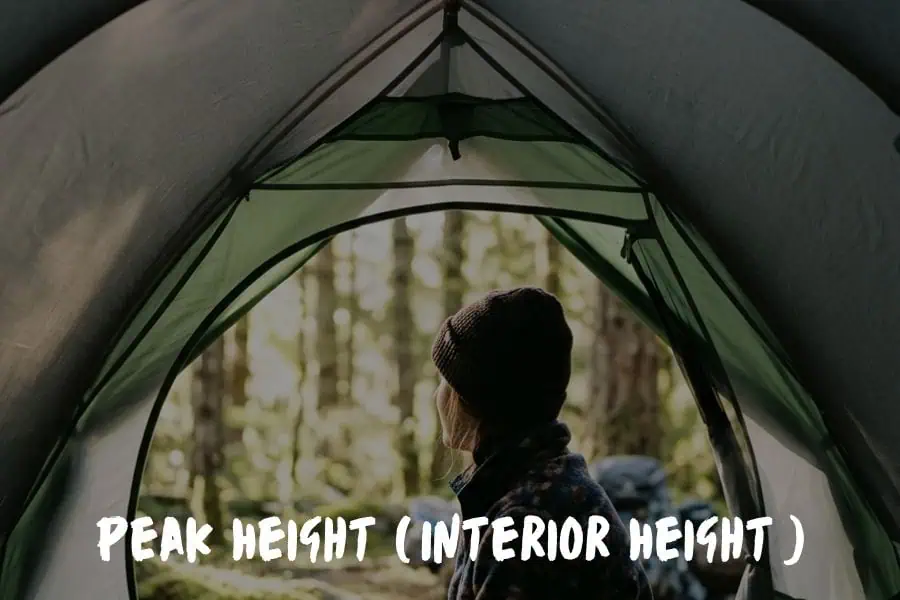
Peak height is the maximum interior height at the tallest point of the tent. It's the single number most relevant to how comfortable you'll feel inside — whether you can sit up, change clothes, or move around without hunching over.
For backpacking tents, 40–48 inches of peak height is typical. You won't stand up, but you can sit comfortably. For car camping and family camping tents, look for 60+ inches (5 feet) to allow standing room. Cabin tents often hit 72–84 inches — full standing room for most adults.
Vestibule Size
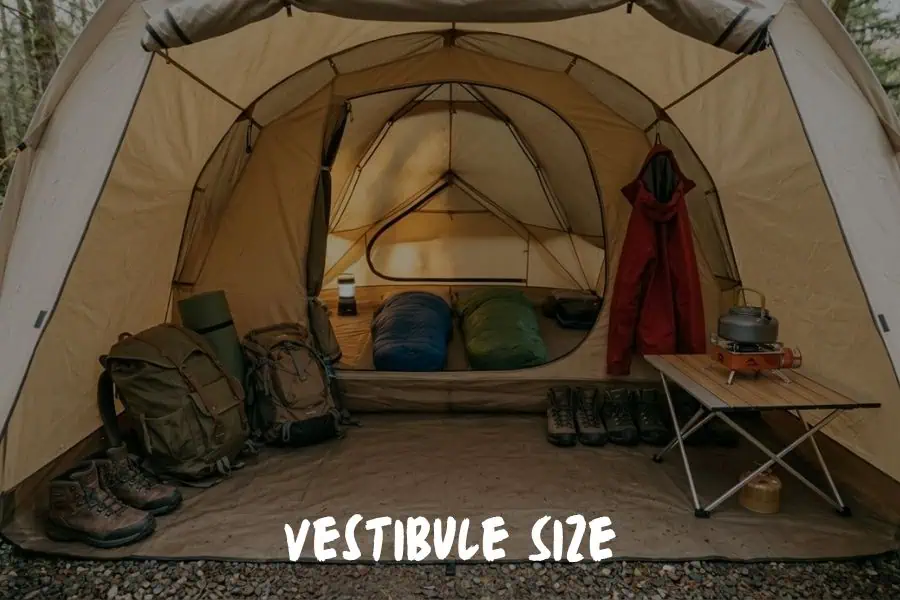
Measured in square feet, vestibule size tells you how much covered outdoor storage space the tent provides. Small vestibules (under 8 sq ft) fit boots and maybe a small pack. Medium vestibules (8–15 sq ft) can store full packs and some gear. Large vestibules (15+ sq ft) give you genuine outdoor living space — room to cook in the rain, store bikes, or change clothes without getting wet.
Mesh Inner
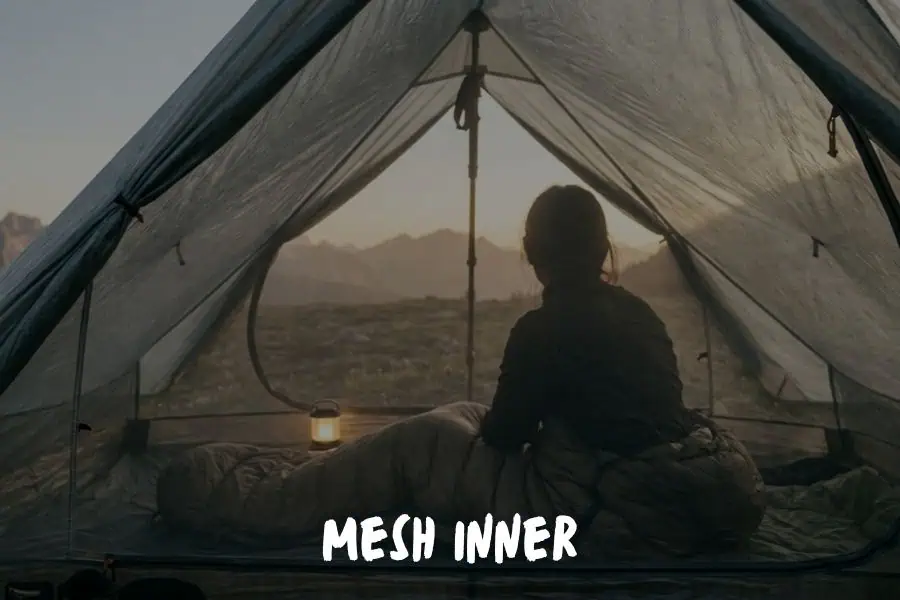
A mesh inner tent is one where the walls and ceiling of the inner tent are made primarily from fine mesh fabric rather than solid nylon or polyester. Mesh provides maximum airflow, significantly reduces condensation, and cuts weight.
The obvious trade-off: mesh provides almost no insulation. In cold weather, a mesh inner tent is noticeably colder than a solid-fabric inner because there's no material trapping warm air. In summer backpacking or warm-weather camping, a full-mesh inner is wonderful. For cold-weather camping, look for a solid-panel inner or at least a mix of mesh and solid panels.
Related: Best tents for hot weather | Best tents for stargazing
Ultralight Tent
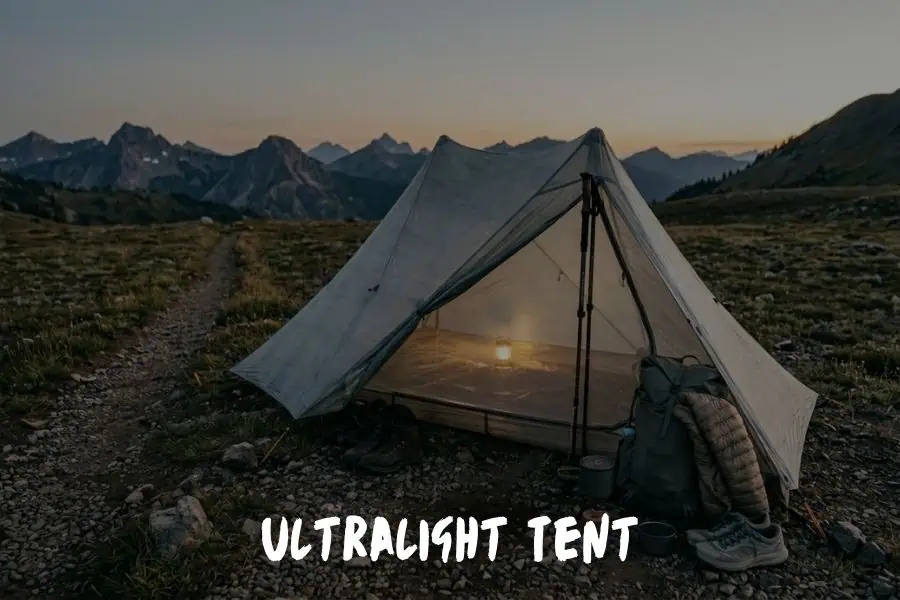
In backpacking, "ultralight" means different things to different people, but a common benchmark is a tent with a trail weight under 2 pounds (32 oz) for a one-person shelter, or under 3 pounds for a two-person shelter. True ultralight tents often use silnylon, silpoly, or DCF fabrics and minimal hardware.
Ultralight tents require more care and attention than heavier alternatives — lighter fabrics tear more easily, and ultralight pole designs have less margin for abuse. If every ounce matters on long-distance trails, ultralight tents are worth exploring. For weekend camping, the weight savings may not justify the cost or durability trade-offs. See our guide to the best backpacking tents for the top-rated ultralight options.
Campsite and Setup Terms
Groundsheet
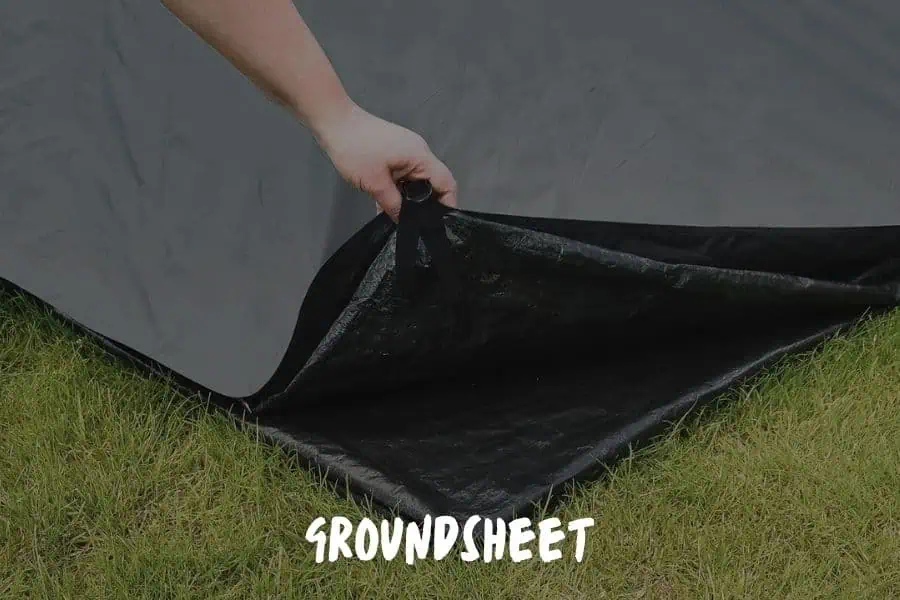
A groundsheet is any material placed under your tent for ground protection. It's a broader term than footprint — a footprint is a custom-fit groundsheet, while a groundsheet can be any tarp or cut piece of material that does the same job.
A simple piece of Tyvek (the white house-wrap material) cut to your tent's dimensions makes an excellent lightweight groundsheet. It's waterproof, durable, and far cheaper than a branded footprint.
Also See: Tent Footprint vs Tarp – Which is better?
Stake-Out Points
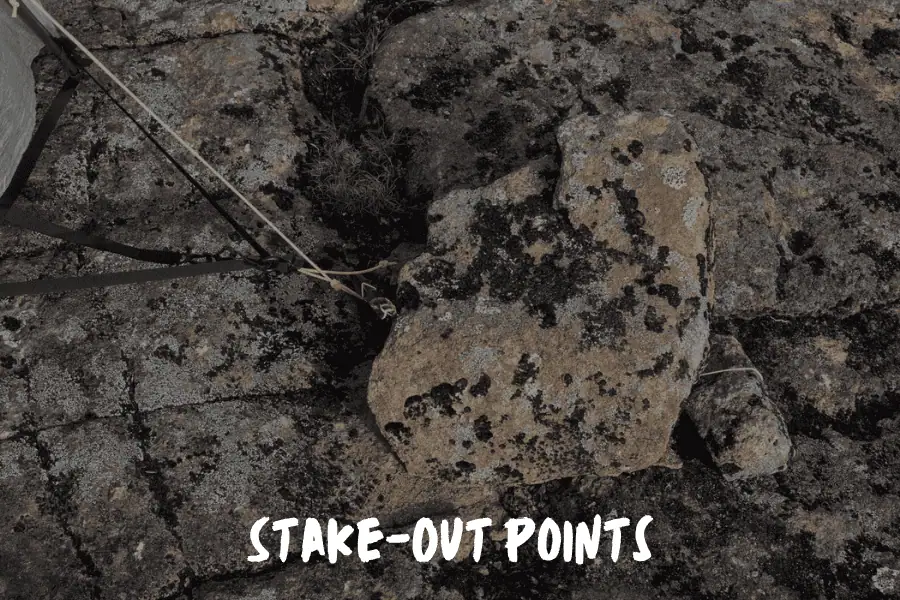
Stake-out points are the loops, webbing, or clips on your tent and fly where you attach stakes and guylines. The number and placement of stake-out points directly affects how well the tent can be tensioned and secured in wind.
More stake-out points generally mean better control over tent tension and better weather resistance. A tent with eight stake-out points gives you more options than one with four.
Loft
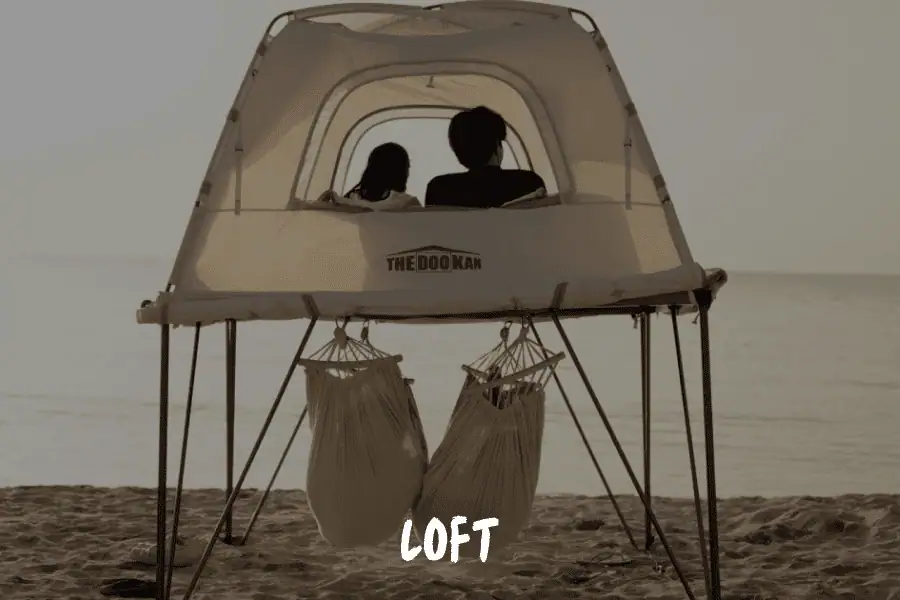
In tent context, loft refers to the puffiness or fullness of the tent when pitched — how much volume it takes up. A tent with good loft looks full and taut; an under-tensioned tent looks saggy and shapeless.
Proper staking and guyline tension are what give a tent its loft, which in turn is what gives it its weather performance.
Quick-Reference Term List
| Term | Short Definition |
|---|---|
| Rain Fly | Waterproof outer shell covering the tent body |
| Footprint | Custom-fit ground cloth protecting the tent floor |
| Vestibule | Covered porch area at the tent entrance for gear storage |
| Bathtub Floor | Floor with waterproof material extending up the walls |
| Denier | Thread thickness measurement — higher = more durable |
| Hydrostatic Head | Waterproofness rating in millimeters |
| Silnylon | Silicone-coated nylon; light but stretches when wet |
| Silpoly | Silicone-coated polyester; light and dimensionally stable |
| DCF / Dyneema | Ultra-premium ultralight laminate fabric |
| Seam Sealing | Waterproofing treatment applied to stitched seams |
| DWR | Surface water-repellent treatment on outer fabrics |
| Double-Wall | Two-layer design (inner tent + separate fly) reduces condensation |
| Freestanding | A tent that stands without stakes, using poles alone |
| Three-Season | Spring/summer/fall design; not for winter |
| Four-Season | Winter/mountaineering tent built for extreme conditions |
| Geodesic | Multi-pole crossing structure for maximum strength |
| Dome Tent | Most common design: two crossing pole arcs |
| Cabin Tent | Vertical walls for maximum interior headroom |
| Room Divider | Removable panel splitting the tent interior into separate compartments |
| Multi-Room Tent | Tent with two or more distinct enclosed areas |
| Tunnel Tent | Parallel hoops; excellent space-to-weight ratio |
| Guylines | Cords running from the tent to the stakes for wind resistance |
| Condensation | Moisture forms when humid air meets cold tent surfaces |
| Canvas | Heavy-duty breathable fabric for wall/glamping tents |
| Rooftop Tent (RTT) | Tent mounted on vehicle roof rack |
| Person Rating | Max sleeping capacity (size up from this number) |
| Ripstop | Grid-woven fabric that prevents tears from spreading |
The Bottom Line
Tent terminology can feel like a foreign language when you're first getting into camping gear. But once you know these terms, reading a tent spec sheet goes from confusing to actually useful — and you stop relying on marketing language and start comparing tents on what actually matters.
Here's my quick cheat sheet for what to prioritize when evaluating a tent:
For backpacking: trail weight, hydrostatic head, seam treatment, double-wall construction, and whether you need freestanding or non-freestanding. Our best backpacking tents guide runs through all of these in detail.
For family car camping: peak height, capacity rating (size up), vestibule size, and cabin vs. dome design. Browse by size: 4-person, 6-person, 8-person, 10-person. Or browse by comfort sleep capacity.
For winter or extended-season camping: four-season or three-plus-season rating, pole count and material, minimal mesh, and full seam sealing. See our winter camping tent guide.
For overlanding and vehicle camping: check out our rooftop tent guide and our canvas tent guide.
And if you're starting from scratch and not sure which brand to trust, our guide to the best tent brands breaks down who consistently delivers quality at every price point.
Any other tent terms you've come across that I didn't cover here? Drop them in the comments and I'll add them to the list.
Find Your Perfect Tent — In Minutes, Not Hours.
Ask our AI or take the 5-question quiz.
Find My Tent →