

You're standing in the camping gear aisle…Or more likely, three browser tabs deep at midnight, staring at a wall of tents that all claim to be the best.
The problem is, "best" means something completely different depending on whether you're grinding out miles on the PCT, setting up a backyard base camp for the kids, or pulling off the highway to sleep under the stars for the first time.
That's what this guide is for. We scored over 350 tents across seven criteria: space and comfort, weather resistance, quality & durability, ease of use, intangibles (unique features), and real user reviews.
Then we chose the top performer in 12 distinct categories. So whether you need something lighter than your water bottle or big enough to stand up in, you'll find a clear recommendation here.
So without further ado, here are the best tents of 2026 by type:
- Best Backpacking Tent: ALPS Mountaineering Zephyr 1-Person Tent – Full mesh canopy delivers airflow that actually matters in humid conditions, and the $150 price point is half what most competitors charge.
- Best Ultralight Backpacking: NEMO Hornet OSMO Ultralight 2P Tent – Sub-two-pound packweight without sacrificing livable interior space or weather protection.
- Best Budget Tent Under $100: Coleman Sundome 4 Person Tent – Reliable car camping for occasional trips at a price that won't make you hesitate to replace it if needed.
- Best Budget Tent Under $200: Kelty Discovery Element 6 Person Tent – Sleeps six comfortably with a pre-attached rainfly system that makes setup genuinely easy at $200.
- Best for Bad Weather: The North Face Wawona 6 Tent – Nearly vertical walls and generous vestibules create actual livable space for families who bring more than sleeping bags.
- Best Family Tent: CORE 9 Person Instant Cabin Tent with Full Rainfly – One-minute setup with a full rainfly that extends beyond the tent body means dry gear when weather turns, a feature most instant tents skip.
- Best Instant Tent: CORE 6-Person Lighted Instant Cabin Tent – Built-in LED lighting and room divider deliver functionality that costs extra or doesn't exist on similarly priced competitors.
- Best Pop-up Tent: Gazelle T4 Hub Tent – Hub design means 90-second setup without compromising on four-person headroom or ventilation control.
- Best Rooftop Tent: Tuff Stuff Ranger Overland – Hardshell construction and three-person capacity at $1,705 undercuts most two-person hardshells by $500 or more.
- Best Motorcycle/Bikepacking Tent: Klymit Maxfield 2-Person Tent – Dual 12-square-foot vestibules keep packs and boots out of the sleeping area without adding meaningful packweight.
- Best 4-Season/Mountaineering Tent: The North Face Mountain 25 Tent – Four-season geodesic design built to handle mountaineering conditions most tents can't survive.
- Best Glamping Tent: White Duck 13′ Regatta Bell Tent – Canvas construction and 133 square feet of interior space make it the most livable shelter for extended stays and group camping.
→ See how we score and evaluate every tent on this list — graded across 7 criteria, including weather resistance, durability, and value.
Best Camping Tents 2026: Our Top Picks
Best Backpacking Tent: ALPS Mountaineering Zephyr 1-Person Tent
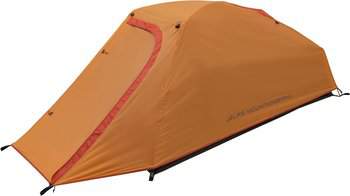
The Zephyr is built for solo campers who prioritize airflow over packweight, particularly in humid summer conditions where condensation becomes a real problem.
The tent uses a two-pole freestanding design with a 75D polyester fly that resists sagging in wet weather, a practical advantage over lighter fabrics that stretch when damp.
At 4 pounds 12 ounces, this tent is too heavy for backpackers covering serious miles, and several owners report the pole tips fitting loosely enough to slip out during setup in windy conditions.
Pros
- 36-inch peak height allows comfortable sitting room inside
- Two-pole freestanding setup completes in under five minutes
- 75D polyester fly stays taut in wet conditions
- Includes mesh storage pockets and gear loft
- Limited lifetime warranty covers manufacturing defects
Cons
- Heavy 4 lb 12 oz weight limits backpacking use
- Pole tips fit loosely and can slip during setup
Best For: Solo car campers in hot, humid climates
Best Ultralight Tent: NEMO Hornet OSMO Ultralight 2P Tent
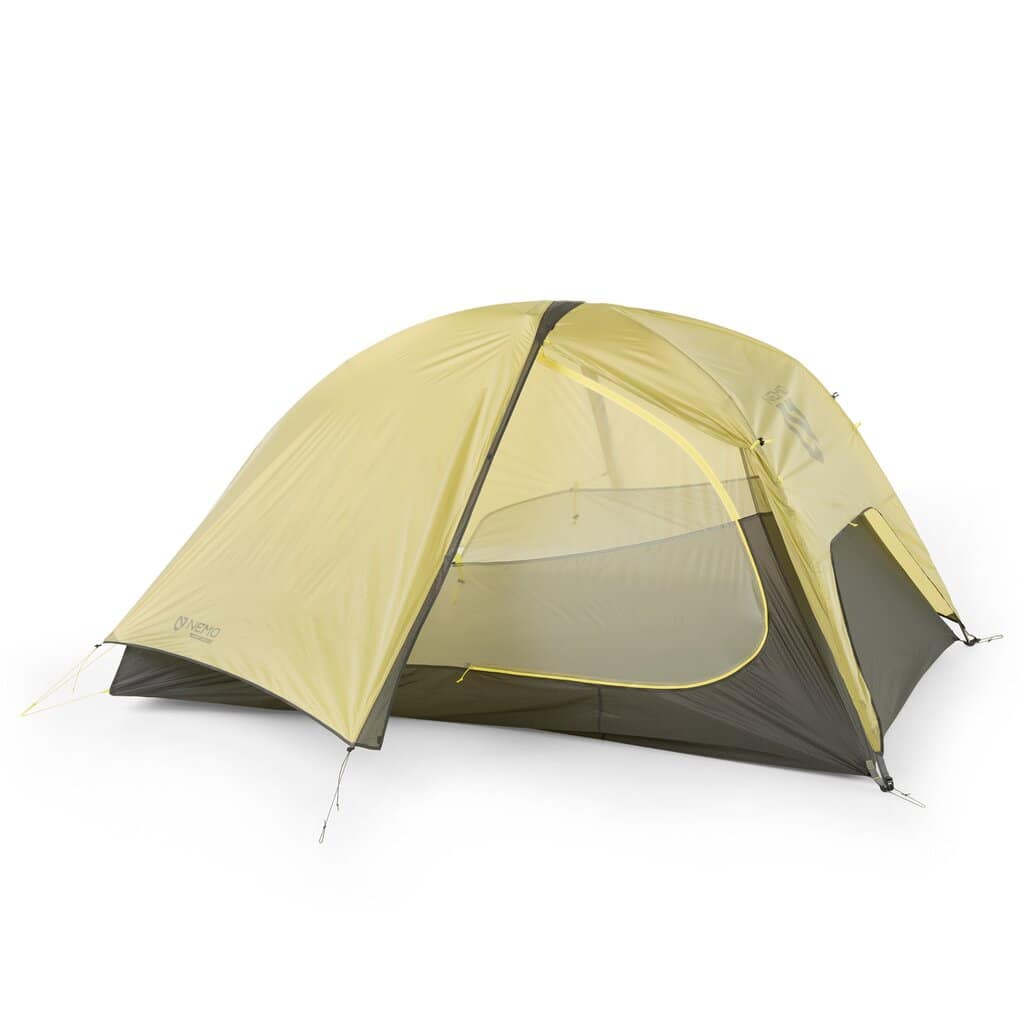
This tent is built for solo backpackers who want a true two-person footprint without carrying two-person weight.
At 2.1 lbs of trail weight, the Hornet OSMO undercuts most ultralight shelters while offering 28 square feet of floor space and dual doors, so you can spread out gear inside instead of stuffing it into vestibules.
The OSMO fabric eliminates the sag and stretch that silnylon develops when wet, so you won't wake up at 3 a.m. re-tensioning guylines in a rainstorm.
The single-pole design pitches fast, and we were able to put this tent up fully in under 5 mins.
Nightlight Pockets turn your headlamp into diffused ambient light, and the Gatekeeper tiebacks let you secure the door one-handed while holding a water bottle or trekking pole.
The real limitation is interior volume for actual two-person use.
At 39 inches peak height and a tapered floor, two average-height adults will be shoulder-to-shoulder with minimal room to sit up or move around. For that reason we recommend this tent for one person.
Pros
- Weighs just 2.1 lbs with high-quality stakes and guylines included
- OSMO fabric stays taut in wet conditions without re-pitching
- Dual doors eliminate the need to crawl over your partner
- Sets up in under five minutes with a single pole
- Lifetime warranty covers manufacturing defects
Cons
- Interior feels tight for two adults on multi-day trips
- Cannot pitch fly-only for ultralight configurations
Best For: Solo backpackers who want extra floor space without the weight penalty
Best Budget Tent Under $100: Coleman Sundome 4 Person Tent
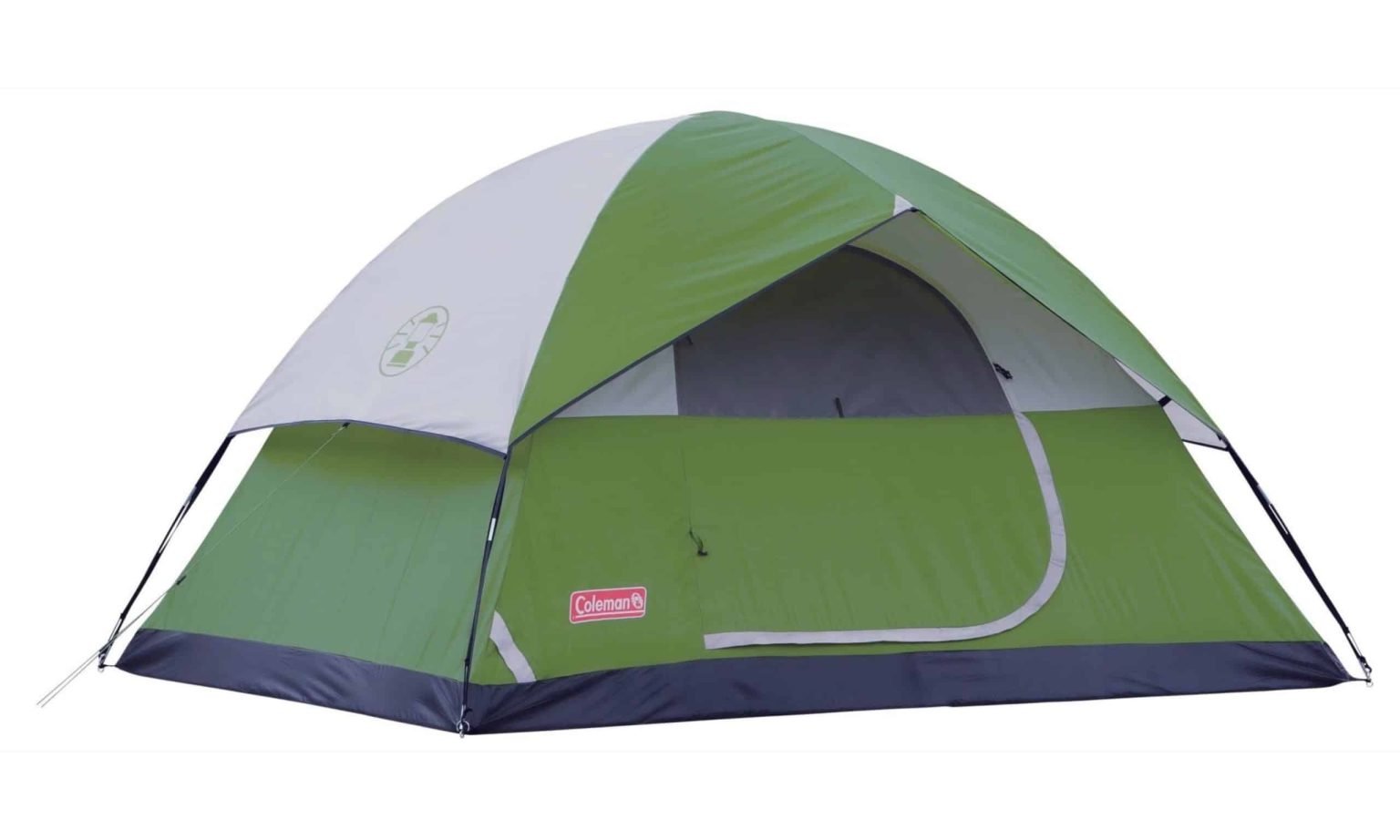
The Sundome is the tent for occasional campers who need something reliable without overthinking the purchase.
It anchors itself with a solid 1000D polyethylene bathtub floor that holds up to rocky campsites and muddy ground better than the thin nylon floors common in this price range.
The rainfly only covers the roof, leaving sidewalls exposed to wind-driven rain and condensation.
Ultimately, this tent works for protected campgrounds but fails in exposed or stormy conditions.
However, Coleman knows what it is doing as a budget-friendly value camping brand, and the Sundome is one of the most popular budget tents for a reason.
Pros
- 63 sq ft floor fits two adults comfortably with gear
- Rugged 1000D polyethylene floor resists punctures and abrasion
- Sets up solo in under 10 minutes with minimal practice
- Costs under $100 for a tent that lasts multiple seasons
- 59-inch peak height allows most people to stand upright inside
Cons
- Fiberglass poles flex noticeably in wind
- Short rainfly leaves sidewalls exposed to rain
Best For: Weekend campground trips where weather protection matters less than price
Best Budget Tent Under $200: Kelty Discovery Element 6 Person Tent
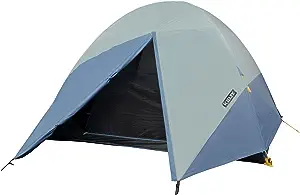
This is the tent for families who need a lot of space on a tight budget and don't plan to camp in serious weather.
The 89 square feet of floor area gives a family of four room to spread out without stepping on each other, and the 77-inch peak height means most adults can stand upright while changing clothes…a huge must in our opinion.
The fiberglass poles flex noticeably in wind, and the rainfly traps heat badly on warm nights, making this a poor choice for exposed sites or summer trips where ventilation matters.
But for the money, you are getting a very solid value tent from Kelty.
Pros
- Quick Corner setup pitches the tent in roughly 10 minutes
- 89 sq ft floor sleeps three adults comfortably with gear inside
- 77-inch peak height lets most people stand upright
- Massive front vestibule stores muddy boots and wet gear
- Limited lifetime warranty covers manufacturing defects
Cons
- Fiberglass poles bend easily in moderate wind
Best For: Budget car camping for families in mild weather
Best Tent for Bad Weather: The North Face Wawona 6 Tent
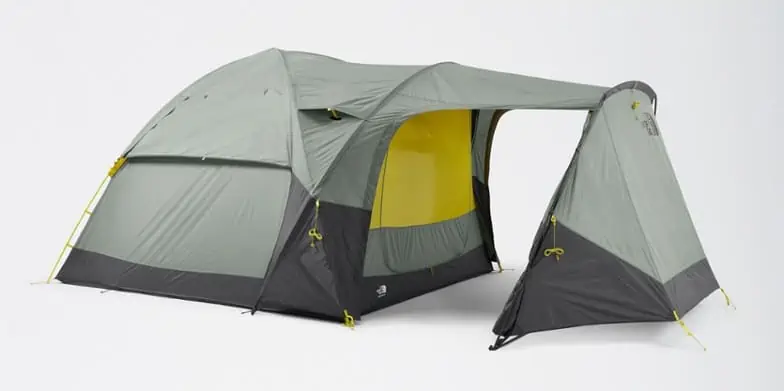
The Wawona 6 is built for families who camp frequently enough to justify investing in a shelter that actually stands up to weather and wear, but not so often that they'll tolerate a complicated pitch.
The 44.7-square-foot covered vestibule is the defining feature here, functioning as a genuine outdoor room where gear stays dry, and kids can play without tracking mud into the sleeping area.
The DAC MX pole system delivers real structural integrity in wind, something you'll notice immediately if you've owned flimsier family tents that bow and flex in moderate gusts.
At 76 inches of standing height, most adults can move around the interior without hunching, which matters more on a rainy weekend than you'd think.
The weight and bulk make this a car camping tent only, and the setup process requires two people and attention to stake placement, particularly if you're setting up the vestibule awnings.
Pros
- Massive 44.7 sq ft covered vestibule functions as a second room
- 76-inch peak height allows most adults to stand upright
- DAC MX poles provide genuine wind stability for a family tent
- 86 sq ft floor area comfortably sleeps four with gear inside
- Limited lifetime warranty covers manufacturing defects
Cons
- Vestibule setup requires two people and careful staking
Best For: Families who camp regularly and need weather protection with standing room
Best Family Tent: CORE 9 Person Instant Cabin Tent with Full Rainfly
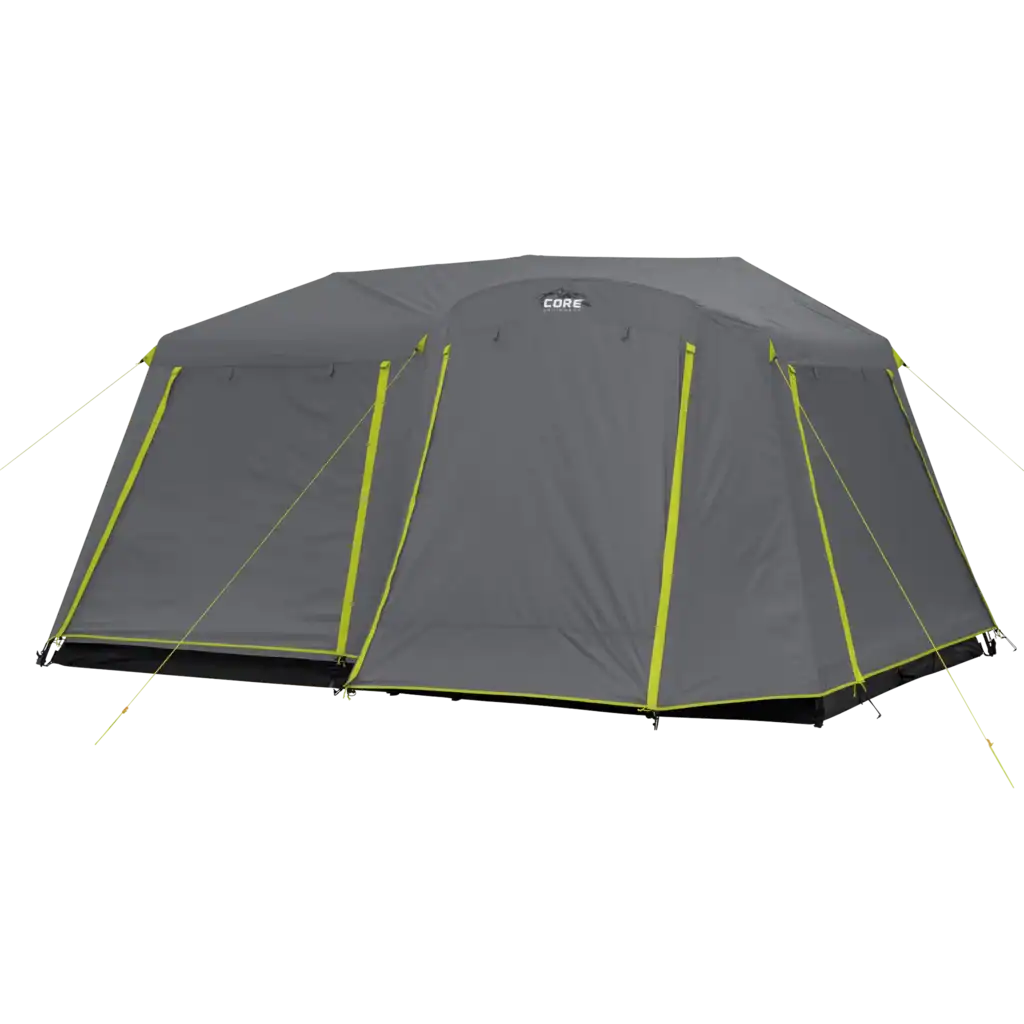
This is the tent for families who want campground comfort without the setup ordeal.
The instant frame pitches in under two minutes with pre-attached poles that eliminate the usual fumbling, though the full rainfly admittedly takes another 10 minutes or so to get attached and staked down properly.
However, the real benefit of this tent is the 78-inch peak height, which means anyone under 6′ 5″ can walk upright without stooping.
We used this tent on our last family camping trip and loved it. Highly recommend.
The one downside is that while the full rainfly does its job keeping water out, but can end up trapping too much heat on hotter days.
Pros
- 126 sq ft floor fits five adults with room for gear
- Pre-attached poles set up in under two minutes solo
- Full rainfly with vestibule adds weather protection and gear storage
- Huge 78″ peak height means all but the tallest adults can stand up without crouching
Cons
- 48-inch long packed size makes this a pretty big tent to haul to campsites
Best For: Fast-setup family car camping at established campgrounds
Best Instant Tent: CORE 6-Person Lighted Instant Cabin Tent with Full Rainfly

This is the tent for families who want campground comfort without the half-hour setup ordeal.
The instant setup technology uses pre-attached poles that unfold the tent structure in about sixty seconds, which means you can have shelter up before the kids finish unloading the car.
The built-in LED lighting is extremely nice to have so you don't have to worry about hauling around too many lanterns, or if you want to play a late-night card game, though it runs on D batteries that you'll need to pack separately.
The 99 square feet of floor space can fit a family of four, though we'd recommend it for three, while the 72-inch peak height means most adults can stand upright in the center without hunching.
The full-coverage rainfly with vestibule keeps rain off the door and creates a dry entry zone, something cheaper instant tents skip entirely.
The door zipper catches on the fabric flaps more often than it should, which gets annoying by the third or fourth entry.
The included stakes are also too flimsy, so budget another fifteen dollars for a set of heavy-duty replacements before your first trip.
Pros
- Sets up in under 90 seconds with pre-attached poles
- Built-in LED lighting eliminates the need for lanterns
- 99 sq ft floor fits four people with gear comfortably
- Full rainfly with vestibule keeps the entry zone dry
- Affordable for the floor space and features you get
Cons
- Door zipper catches on fabric flaps frequently
- Included stakes bend easily in firm ground
Best For: Families wanting fast campground setup with built-in lighting
Best Pop Up Tent: Gazelle T4 Hub Tent
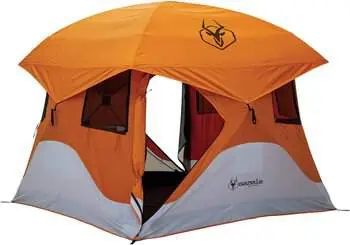
The Gazelle T4 is built for campers who value speed and standing room over packability, particularly overlanders and car campers who set up and break down frequently across a trip.
The hub system pitches in under two minutes without instructions, and the 78-inch peak height means adults can dress, move gear, and change kids without crouching.
The downside is that the packed size is absurdly large, closer to a duffel bag than a tent stuff sack, and the doors sit low enough that tripping over the threshold is a recurring complaint from owners with kids or dogs.
This tent works for weekend warriors driving to established sites, not backpackers or anyone hauling gear more than fifty feet.
Pros
- Sets up in 90 seconds with the hub frame system
- 78-inch peak height allows full standing room for most adults
- Removable floor makes cleaning easy after muddy trips
- Six windows provide ventilation without sacrificing weather protection
- Affordable for the floor space and setup speed you get
Cons
- Packed size is too large for anything but car camping
- Low door thresholds create a tripping hazard at night
Best For: Car campers and overlanders who prioritize setup speed and standing room
Best Glamping Tent: White Duck 13′ Regatta Bell Tent
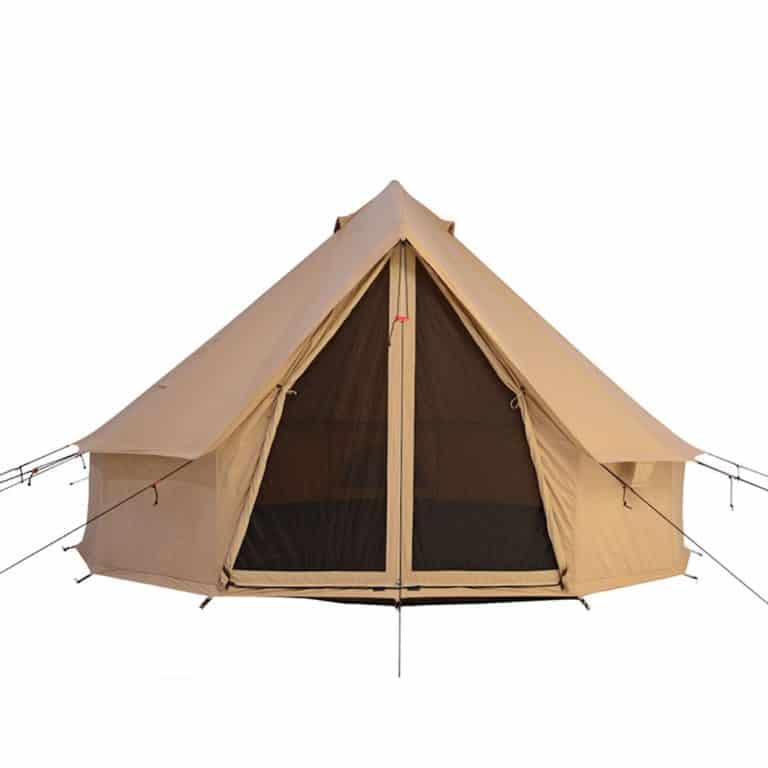
This is a 4-season glamping tent built for groups who want real shelter in conditions that would shut down most recreational camping.
White Duck's Dynatek canvas construction handles snow load and wind without the flex and noise you get from synthetic fabrics, and the pre-installed stove jack makes it genuinely usable with a wood-burning stove in winter conditions.
The 71-pound packweight and 20-minute setup time mean this is not a tent you move frequently, and the center pole creates a dead zone in the middle of the floor that limits furniture placement.
This is a base camp tent for hunting trips, winter glamping, or extended group stays where you set up once and stay put.
Pros
- Pre-installed stove jack for wood-burning stove compatibility
- 132 sq ft floor fits three adults with room for gear
- Dynatek canvas resists snow load and wind better than synthetic fabrics
- 98-inch peak height allows full standing room throughout most of the tent
- Lifetime warranty covers manufacturing defects
Cons
- 71-pound packweight makes it impractical for frequent moves
- Center pole creates unusable space in the middle of the floor
Best For: Glamping and hunting base camps where you set up once and stay put
Best Rooftop Tent: Tuff Stuff Ranger Overland
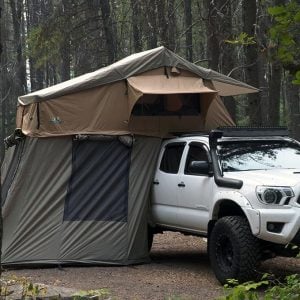
The Ranger Overland is built for families who want a rooftop tent that sleeps up to three without the four-figure price shock that typically comes with that capacity.
The 96-inch width gives three adults actual shoulder room instead of the sardine-can squeeze you get in most rooftop tents rated for three, but let's be honest, this is mostly going to be comfortable for two.
This softshell tent features a 420D Oxford polyester rain fly. This strong, lightweight fabric provides great protection from the elements.
When not in use, the included 1000D PVC driving cover keeps the tent safe from damage.
The waterproof storage bag is a nice addition, too. Made of the same material as the cover, the bag is extremely rugged and suitable for storing anything you might need fast access to.
The same goes for the storage hammock, which can be mounted inside or outside the tent.
The main downside is the 37-inch peak height forces you into a permanent crouch when changing clothes or organizing gear.
Pros
- Comes with an annex room that encloses the ladder and gives space for additional storage or a sleeping area
- Features three windows with mesh screens for plenty of air and light
- Low profile and sturdy frame can withstand severe weather, including +70 mph winds, rain, hail, and snow
- Features a storage bag and hammock for keeping essential things close at hand
Cons
- 37-inch ceiling forces constant crouching inside
Best For: Overlanders looking for the best overall rooftop tent
Best Motorcycle/Bikepacking Tent: Klymit Maxfield Tents 2-Person
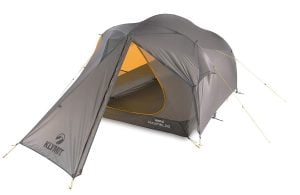
This is the tent for backpackers who carry a lot of gear and need somewhere to put it without crowding the sleeping area.
The defining feature here is the massive vestibule, which owners consistently describe as large enough to store two full packs, boots, and cooking gear with room left over.
The roll-style stuff sack makes packing easier than the typical compression bag, and the ventilation system keeps condensation manageable even in humid conditions.
At 4 pounds 3 ounces for a two-person tent with this much storage, the weight is competitive with other backpacking two-person tents that offer far less vestibule space.
The 37-inch peak height is the real limitation, low enough that sitting upright feels cramped for anyone over average height. The fly's water resistance is adequate for light rain but not trustworthy in sustained downpours, and several owners report needing to seam-seal it before the first trip.
This is not the tent for tall campers or anyone planning multi-day trips in consistently wet climates.
Pros
- Weighs just 4 lb 3 oz with a 29 sq ft floor
- Oversized vestibule stores two full packs and boots
- Roll-style stuff sack packs faster than compression bags
- Strong ventilation reduces condensation in humid conditions
- Limited lifetime warranty covers manufacturing defects
Cons
- 37-inch peak height feels cramped for taller campers
- Fly requires seam sealing for reliable rain protection
Best For: Backpackers, bikepackers, and motorcycle campers who carry bulky gear and need serious vestibule space
Best Mountaineering Tent: The North Face Mountain 25 Tent
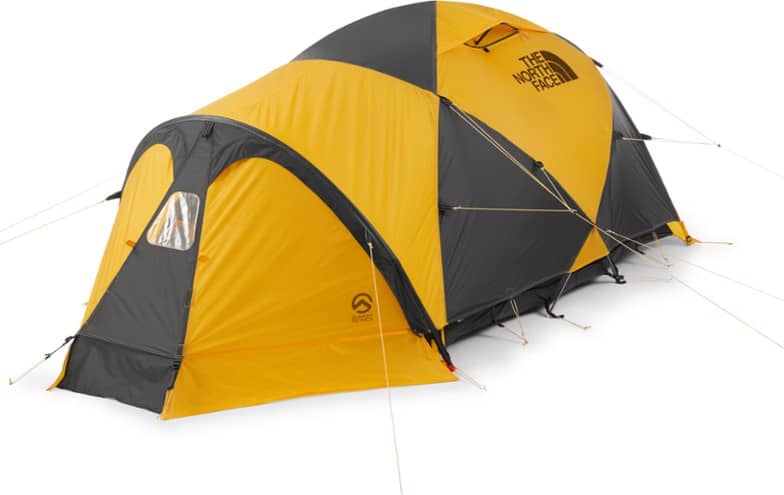
This is a geodesic dome built for mountaineers who need a tent that won't collapse when the wind picks up at 12,000 feet.
The eight-pole geodesic structure distributes wind load across the entire frame rather than concentrating stress at corner joints, which is why alpine climbers trust this design in conditions where lighter tents simply flatten.
The pole-sleeve setup takes roughly ten minutes and requires patience, especially in cold weather when your hands are stiff.
Eight internal storage pockets keep headlamps, fuel canisters, and navigation gear organized without cluttering the 32 square feet of usable floor space.
The dual-entry front vestibule means you can access gear without fully unzipping the tent body, which matters when outside temps are well below freezing.
At 9 pounds 13 ounces trail weight, this tent is too heavy for fast-and-light alpinists who count every ounce.
If you're ski touring or moving camp frequently, the packweight will slow you down noticeably compared to single-wall shelters in the 4 to 5 pound range.
This tent is not the right call for summer backpacking trips or anyone prioritizing speed over storm protection.
Pros
- Geodesic dome design handles extreme wind without collapsing
- Eight internal pockets keep essential gear organized and accessible
- Dual-entry vestibule allows gear access without opening the tent body
- Footprint included in the purchase price
- Limited lifetime warranty covers manufacturing defects
Cons
- Trail weight of nearly 10 pounds limits mobility
- Pole-sleeve setup takes around 10 minutes in good conditions
Best For: High-altitude mountaineering and winter expeditions where storm protection matters more than packweight
How To Choose A Camping Tent (2026 Buyers Guide)
Picking the right tent comes down to matching the shelter to the trip, not buying the most impressive spec sheet.
Here is what actually matters, and what each factor means in practice.
Also be sure to check out our Tent Finder to help you narrow your tent search if you are still confused.
Tent Type: Match the Shelter to the Trip
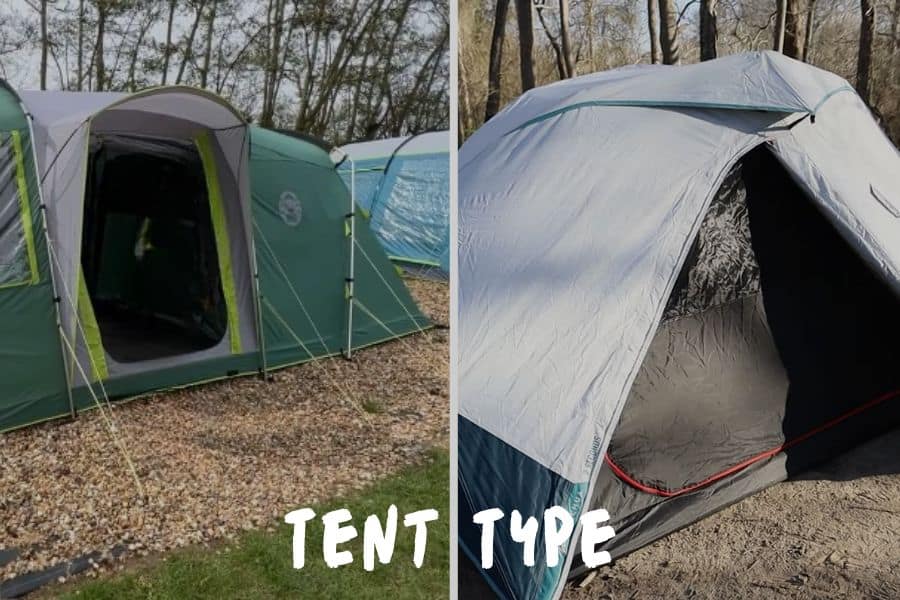
Dome tents are the most common shape for a reason: they are freestanding, relatively easy to pitch, and handle wind from multiple directions without needing a lot of staking.
Dome tents in most cases are the right default for most car campers and backpackers.
Cabin tents sacrifice some weather performance for livability, and the near-vertical walls give you significantly more usable headroom and floor space, which matters when you are camping with kids or spending a full rainy day inside.
Tunnel tents lean on guylines for structure but reward the extra setup effort with exceptional interior volume relative to their packed weight, making them popular for basecamp-style camping.
Geodesic tents use a network of crossing poles to create a structure that distributes wind load across the entire frame, which is why mountaineering tents almost always use this design.
Bell tents are a different category entirely: heavy, gorgeous, and purpose-built for glamping, group camps, and anyone willing to trade packability for ambiance and genuine vertical space.
Also See: 24 Different Types Of Tents – A Complete Guide
Capacity: What the Numbers Actually Mean
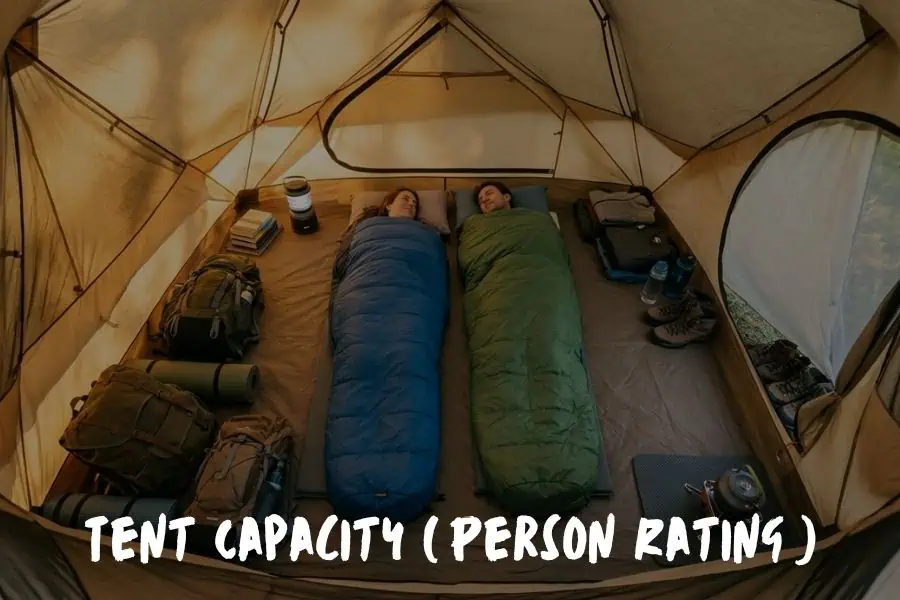
A tent's stated capacity is almost always optimistic.
Two adults in a "2-person" tent will be sleeping shoulder-to-shoulder with no room for gear inside.
We generally recommend halving the capacity to come to a comfortable sleeping capacity.
A family of four is usually better served by an 8-person cabin tent than a 4-person dome, especially on trips lasting more than a single night.
Couples meanwhile can opt for a 4-person tent, which means they should have enough room for a double mattress pad and gear.
Floor area is the honest metric: anything under 30 square feet per person starts to feel cramped by morning two.
Also see: Camping Tent Sizes: What Size Tent Do I Need?
Seasons and Weather Ratings
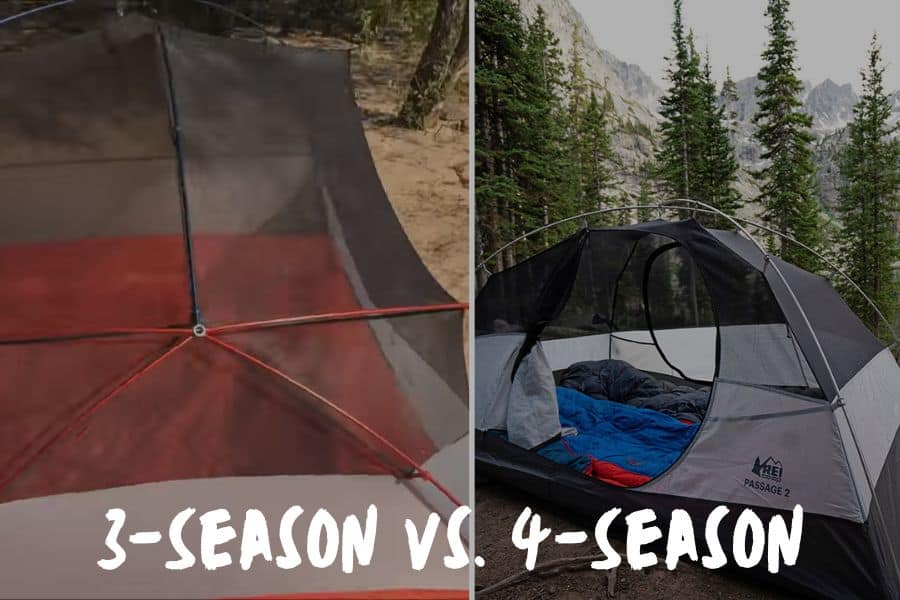
A 3-season tent is designed for spring through fall camping, meaning it handles rain, wind, and cold nights but is not engineered for sustained snow load or extreme wind.
The majority of campers will never need anything more than a well-made 3-season shelter.
A 4-season tent uses more poles, heavier materials, and a geometry specifically built to shed snow and stand up to alpine conditions.
The tradeoff is weight and ventilation: 4-season tents run warmer in summer and heavier on the trail, which is worth it if you actually need the protection and a real problem if you do not.
Extended-season tents, sometimes labeled "3+ season," sit in between and add reinforcement for shoulder-season snow and stronger wind without going all the way to full mountaineering construction.
Hydrostatic head (HH) ratings tell you how much water pressure the fabric can resist before leaking: 1,500mm HH is the minimum worth trusting in real rain, 2,000mm handles steady downpours, and anything above 3,000mm is meaningfully waterproof in sustained bad weather.
More: 3-Season Vs. 4-Season Tents – Differences Explained!
Weight vs. Livability
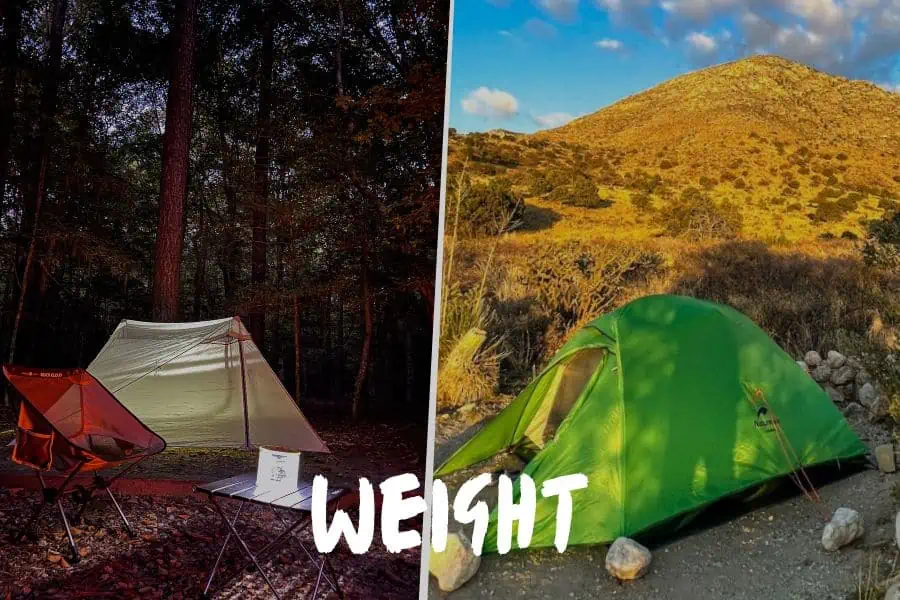
For backpackers, weight is a real constraint because every pound in your shelter is a pound you carry for every mile of the trip.
Ultralight backpacking tents come in under 2.5 pounds for a 1-person shelter, but they usually achieve that by thinning the floor material, reducing pole count, and minimizing vestibule size.
For car camping, weight is essentially irrelevant, and the calculus flips: a heavier cabin tent with thick poles and a full-coverage rainfly will be more comfortable and more durable over years of use.
The mistake most people make is buying a tent optimized for one use case and then using it for the other.
If you are mostly car camping but want one tent for an occasional overnight hike, a mid-weight dome tent in the 4 to 6 pound range is usually a better compromise than a true ultralight shelter.
Quality & Durability
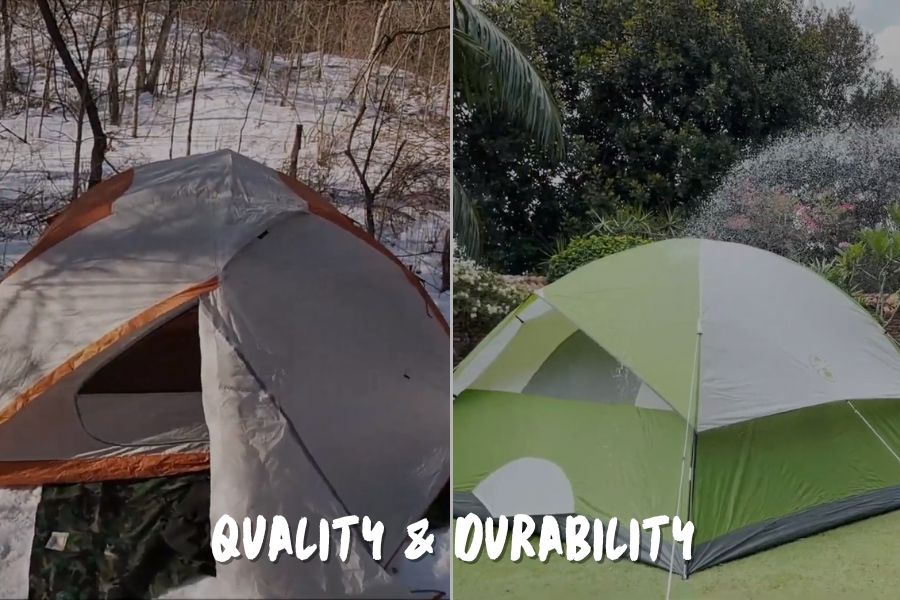
Aluminum poles are the standard for any tent worth recommending: they are lighter than fiberglass, flex without snapping under load, and hold up through years of regular use.
Fiberglass poles are common in budget tents under $80 and are acceptable for calm-weather camping, but they will crack in cold temperatures or strong wind over time.
Carbon fiber poles appear on premium ultralight tents and offer the best strength-to-weight ratio available, but they are expensive to replace if they break.
For floors, denier (D) rating tells you the thread thickness: a 70D floor is noticeably more puncture-resistant than a 40D floor, which matters on rocky or root-covered ground.
Bathtub floors, where the waterproof material wraps several inches up the tent wall before seaming, do a better job of keeping ground moisture out than flat floors with a seam right at the base.
More: Tent Glossary: Every Term You Need to Know Before You Buy
Ease of Use
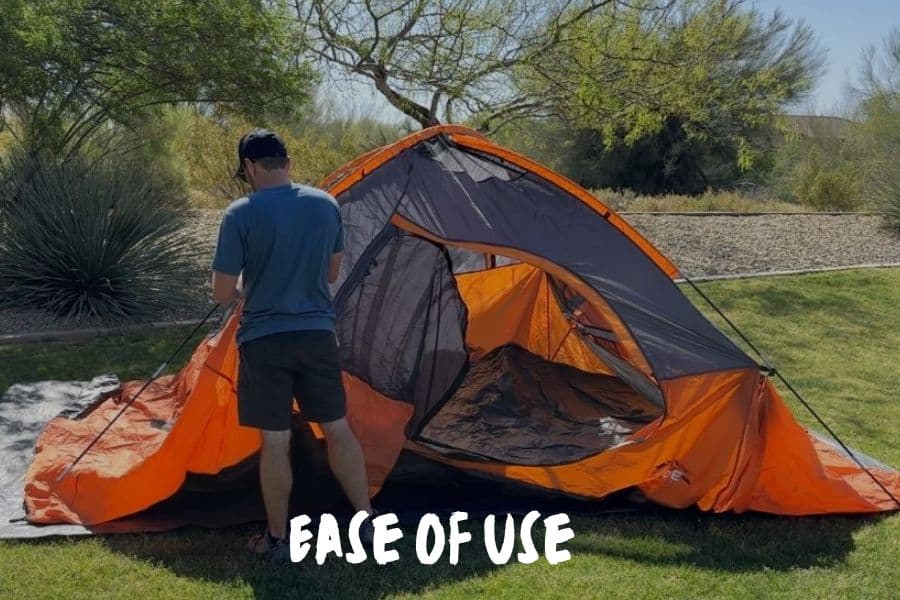
Instant tents use pre-attached, hub-connected poles that expand the tent in one motion, and the best ones genuinely live up to their two-to-three minute pitch claims.
They are worth the weight premium for families, festival campers, and anyone who arrives at a site after dark with regularity.
Traditional pole-sleeve tents take longer to pitch but typically weigh less and pack smaller, which is why they remain the standard for backpacking.
Freestanding tents hold their shape without stakes, which is useful on hard or rocky ground where staking is difficult.
Non-freestanding designs require careful staking to hold their shape and add setup complexity, but they often weigh significantly less, and that weight savings is the entire reason they exist.
Also see: How To Set Up A Tent: A Step-By-Step Guide
Budget

Under $100 buys a tent that will work for occasional fair-weather camping, but expect thinner floor material, fiberglass poles, and seams that may need sealing before a wet-weather trip.
The Clostnature we reviewed is a genuine outlier at this price, but most tents in this range have real material compromises worth knowing about before you buy.
Between $150 and $300 is where the value-to-performance ratio is strongest: aluminum poles become standard, waterproofing ratings improve meaningfully, and build quality tightens up enough for regular use in real conditions.
Between $300 and $600 is the performance tier, and this is where you start getting lighter materials, better ventilation engineering, larger vestibules, and construction standards that will hold up through several hundred nights of use.
Above $600, you are paying for specialty performance: extreme weather resistance, ultralight weight, or materials specifically engineered for long-term durability in demanding conditions.
The $600-plus tier is worth it for mountaineers, serious backpackers, and canvas-tent buyers who want a shelter that lasts decades, but it is not necessary for most camping trips.
FAQs
What is the best camping tent for beginners?
For most first-time campers, we recommend an instant tent like the CORE 6 or 9 Person Instant Cabin Tents.
They set up quite easily with pre-attached poles and offer a good amount of weather resistance for a weekend camping trip.
Now, they're not going to weather bad storms, but first-time campers should avoid bad weather when possible.
What is the most durable camping tent?
Canvas tents are the most durable shelter category by a significant margin, with properly maintained canvas lasting 20 to 30 years of regular use.
For synthetic tents, durability comes down to denier ratings on the floor and fly, pole material, and seam construction, and none of those things are cheap to do well.
Geodesic designs also outlast dome tents structurally because load is distributed more evenly across the frame, reducing stress on any single pole or junction.
How long should a camping tent last?
A well-made tent in the $200 to $400 range, stored dry and kept out of prolonged UV exposure, should last 10 or more years of regular seasonal use.
UV degradation of the fly is usually what ends a tent's life before the poles or floor give out, which is why storing your tent out of direct sunlight matters more than most people realize.
Budget tents under $100 typically last two to five seasons under regular use before seams start separating or pole sleeves wear through.
What tent is best for high winds and rain?
A geodesic or dome design with a full-coverage rainfly, a minimum 3,000mm HH rating, and aluminum poles is the right combination for serious weather.
The North Face Mountain 25 is the extreme end of this category, but for most campers facing a rough shoulder-season storm, a well-staked 3-season dome from a reputable brand with a 2,000mm fly will handle more than people expect.
Proper staking matters as much as tent design: an unstaked geodesic performs worse in wind than a properly staked dome.
Is a 3-season tent good enough for winter camping?
It depends on what you mean by winter camping.
A 3-season tent will handle cold temperatures and light snow at a car-accessible campsite without much trouble.
If you are camping above treeline, dealing with sustained snowfall, or sleeping in temperatures below about 20 degrees Fahrenheit regularly, a 4-season design is the safer choice.
The structural risk is snow load: a 3-season tent's pole configuration and fly geometry are not built to shed accumulating snow, and a heavy wet snowfall can collapse one.
What is the difference between a hot tent and a regular tent?
A hot tent has a stove jack, which is a reinforced, heat-resistant port in the tent wall or roof that allows a wood-burning stove's chimney pipe to pass through safely.
This lets you heat the interior with a small wood stove, which changes winter camping entirely and makes sub-zero nights genuinely comfortable rather than a test of willpower.
Hot tents are almost always canvas, which handles heat and spark exposure far better than nylon or polyester.
The tradeoff is weight: hot tent setups with a stove run 50 pounds and up, which puts them firmly in the basecamp and vehicle-accessible camping category.
The Bottom Line
There is no single best camping tent because there is no single type of camping trip.
The ultralight backpacker and the family setting up camp for a week at a state park need completely different shelters, and trying to find one tent that does both jobs well usually means ending up with one that does neither particularly well.
Use the categories above as your starting point: figure out which type of camping you actually do most, and buy the best tent for that use case within your budget.
If you want to go deeper on any of these categories, we have full roundups for the best backpacking tents, best family camping tents, and best ultralight tents.
And if you are just straight up confused, be sure to head over to our Tent Finder tool to help you narrow your search in minutes.
Find Your Perfect Tent — In Minutes, Not Hours.
Ask our AI or take the 5-question quiz.
Find My Tent →