

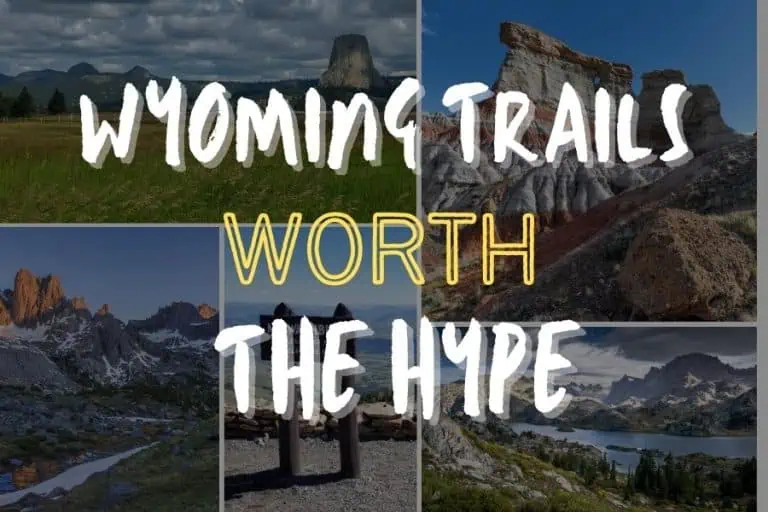
Wyoming isn't JUST about famous national parks; it's a vast canvas of raw, untamed beauty waiting to be explored.
Too often, we settle for the well-trodden paths, missing out on the deeper, more profound experiences that lie just a little further afield.
We challenge you to step beyond the ordinary, with our curated selection of nine exceptional trails that promise not just stunning views, but a true connection with the American West.
Whether you crave a quick, rewarding loop, a multi-day journey into granite wilderness, or a quiet escape into colorful badlands, these routes will redefine your understanding of adventure.
Prepare to discover the Wyoming that stays with you long after you've returned home:
Taggart-Bradley Loop: Grand Teton's Instant Alpine Reward
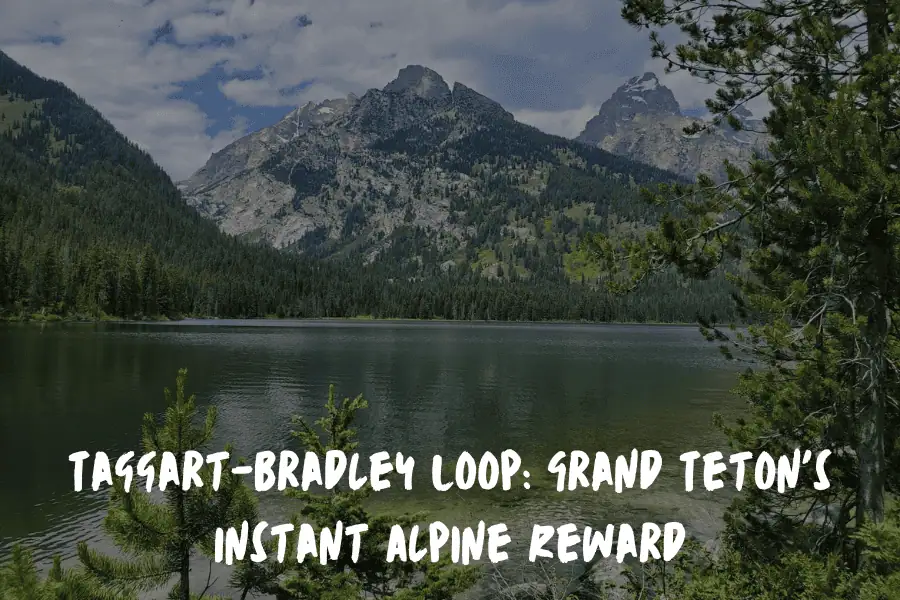
My favorite Wyoming hike is the Taggart Lake + Bradley Lake Loop in Grand Teton National Park.
I love it because you get that "big payoff" Teton view without needing an all-day sufferfest.
I'm usually coordinating fast turnarounds and utility hookups for families living in our travel trailers after fires/floods, so I'm biased toward trails that are efficient and low-drama.
This loop feels like a clean, reliable setup: steady grade, clear junctions, and constant scenery dividends.
What makes it special is the contrast — quiet pine forest, then you hit the lakes and the Tetons suddenly look like they're right on top of you, especially when the water is glassy.
It's also flexible: I've done it as a quick reset when schedules are tight, or stretched it out with a long shoreline break.
Practical tip: go early and bring a basic "field kit" mindset — 2L water, a layer even in summer, and bear spray (I treat it like an essential tool the same way I treat power/water/sewer on an RV placement).
If you're towing the day with kids or new hikers, it's one of the best "everyone wins" routes I've found.
Jonathan Dies, Owner, DFW RV Rentals
Cascade Canyon: Delving Deep into the Heart of the Tetons
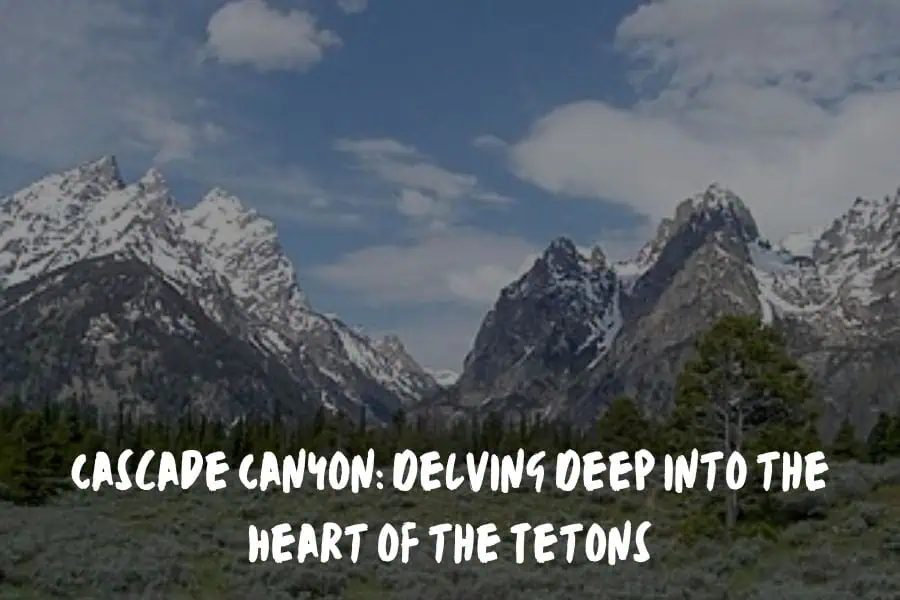
The Taggart-Bradley Loop shows you the Tetons from the lakes. Cascade Canyon trail takes you into them.
The difference in experience is significant enough that both routes deserve space on any serious Teton list.
The trail starts at the String Lake trailhead, crosses into the canyon via a shuttle boat or a short walk along the lake, and follows Cascade Creek through increasingly dramatic terrain.
The canyon walls rise on both sides as you move deeper, moose are commonly spotted in the willow flats along the creek, and the route eventually opens onto the Upper Cascade area where the scale becomes genuinely alpine.
The full out-and-back to the canyon fork runs about 9 miles round trip.
What makes Cascade Canyon distinct from the more exposed Teton routes is the intimacy of moving through the range rather than looking at it.
The peaks that define the skyline from the valley floor become the walls around you, and that shift in perspective changes how the whole range reads.
The Teton Crest Trail: A Journey Through Endless Alpine Majesty
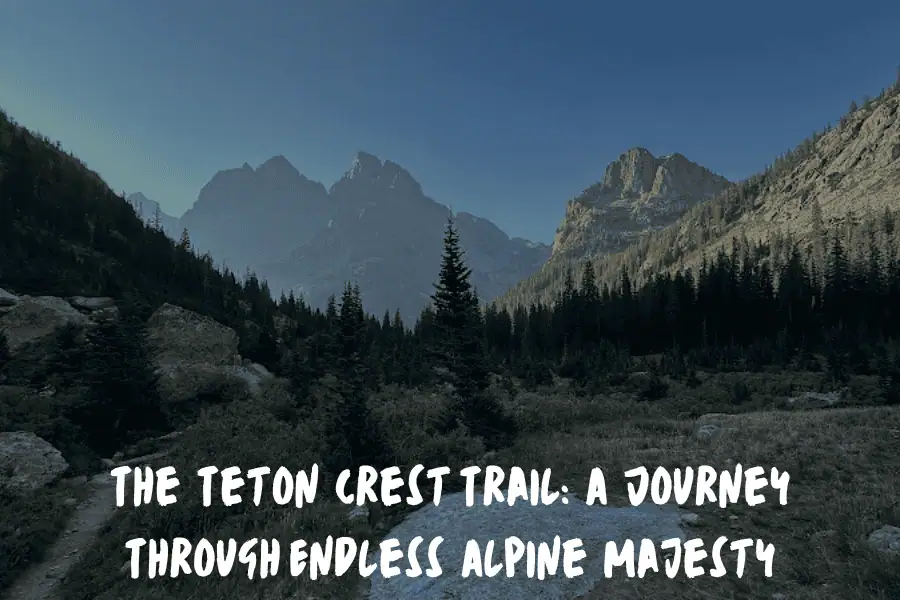
The Teton Crest Trail is the trail that stays with you. Not because of a particular view but because of the way the landscape keeps pulling your attention the whole time that you are moving through it.
Alpine meadows, glacial lakes, and high passes make the trail give you a sense of constantly being shown something it has been saving up.
The part of the shelf to hit hardest is Death Canyon Shelf.
You are walking a wide open plateau with the Tetons rising right beside you with nothing but open sky in all directions.
It feels exposed in the best possible way, and that feeling is maintained for long enough that it ceases to be scenery and comes to feel like something else entirely.
Well, what makes it genuinely special is that it demands what you need of it physically; every high point will be made worth it.
Wyoming at that elevation is not pleasant.
The effort creates a relationship with the landscape that a drive through just simply cannot repeat, and that combination of challenge, solitude and scale is what separates the Teton Crest from almost everything else.
Cal Singh, Head Of Marketing & Partnerships, Equipment Leasing Canada
Fairy Falls Trail: Unlocking Yellowstone's Hidden Grand Prismatic View
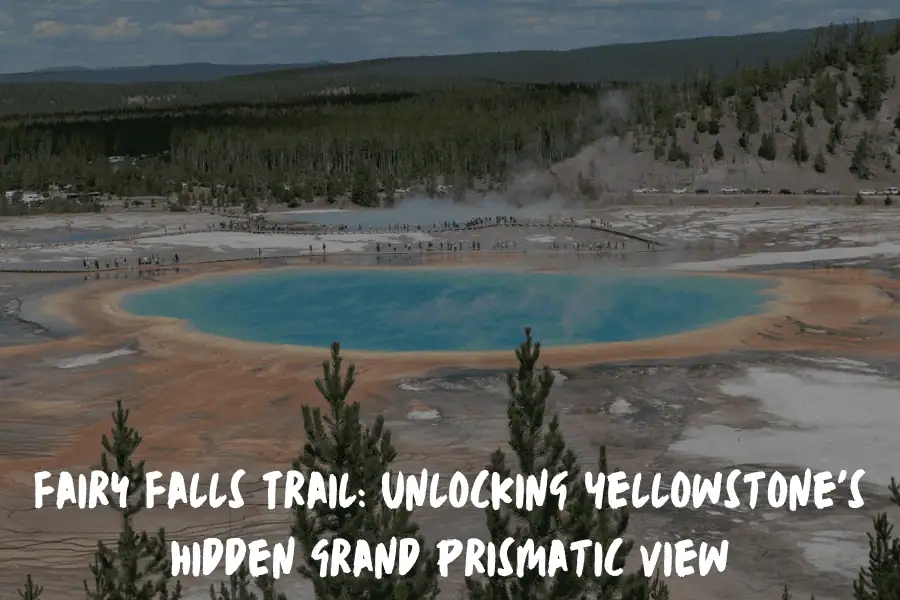
Grand Prismatic Spring is one of the most photographed thermal features on earth, but the famous image — those concentric rings of orange, yellow, green, and deep blue — can only be seen from above.
The Fairy Falls Trail is how you get there.
The hike is about 5 miles round trip from the trailhead off Fountain Flat Drive, passing through a lodgepole pine forest before opening onto the overlook above Grand Prismatic.
The spring is roughly 370 feet across and the color gradient shifts depending on the time of day and the season — early morning produces the most saturated blues at the center.
The trail continues to Fairy Falls itself, a 200-foot cascade that most visitors never reach because the overlook already feels like the destination.
For a park that can feel overwhelmingly crowded at the main pull-offs, this trail offers a version of its most iconic feature that rewards the extra mile.
Mount Washburn: Yellowstone's Panoramic Summit Perspective
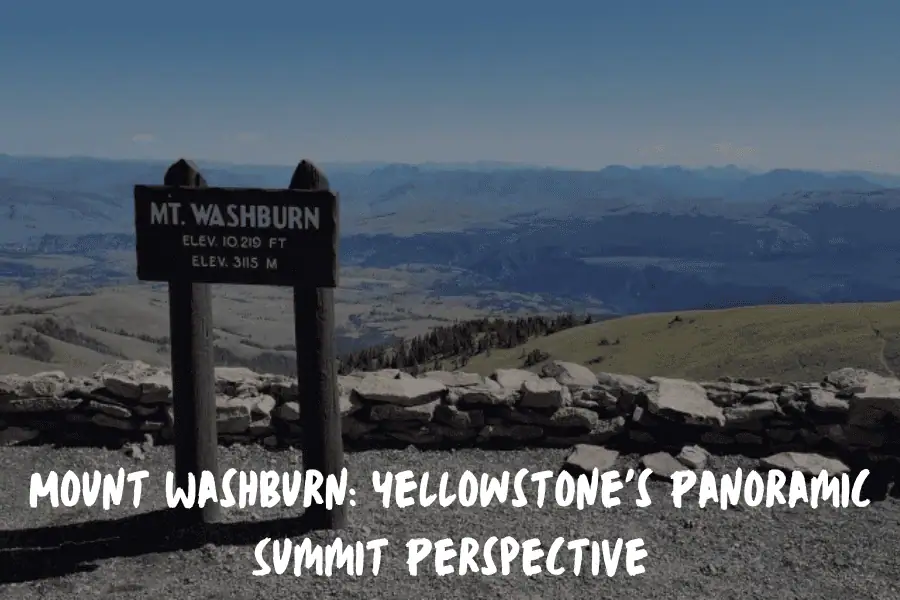
Most people drive through Yellowstone. The Mount Washburn Trail is the antidote to that — a summit hike that puts the entire caldera into perspective from 10,243 feet and makes the scale of the park suddenly, almost uncomfortably, clear.
The trail runs about 6 miles round trip from the Dunraven Pass trailhead and gains roughly 1,400 feet with a steady, manageable grade.
The summit hosts a historic fire lookout with a glassed-in observation deck, and on a clear day the views reach beyond the park boundary in every direction.
Grizzly bears are a genuine presence on the approach — not in a way that should discourage anyone, but in a way that sharpens your attention and makes the hike feel like it belongs to the landscape rather than the other way around.
Yellowstone has no shortage of short boardwalk experiences, but Washburn is where the park stops feeling like a series of attractions and starts feeling like a place.
Dubois Badlands: A Canvas of Solitude and Striking Color
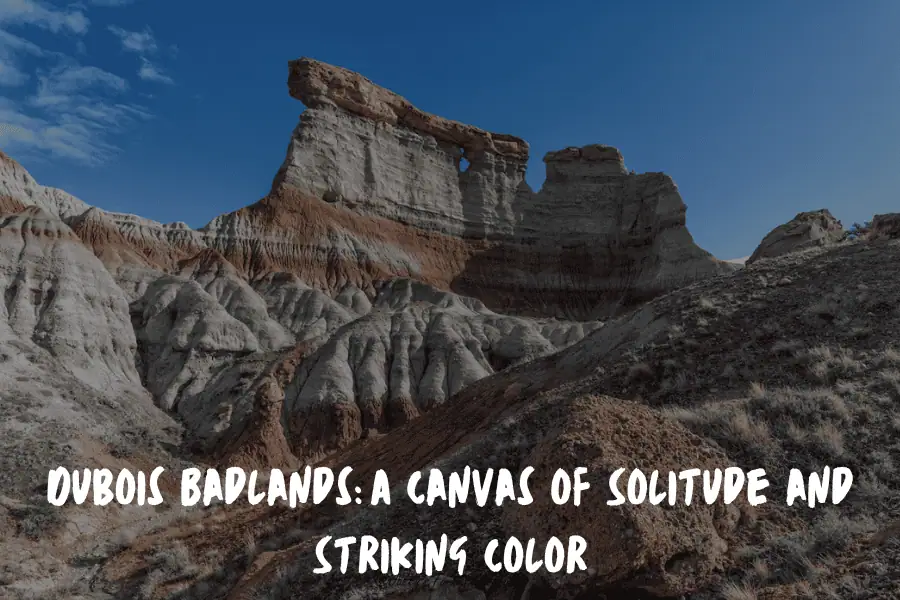
My favorite hiking trail in Wyoming is the Dubois Badlands Trail and I never miss a chance to get on it whenever I visit the state.
It's a relatively short loop of about 3.8 miles, but what makes it special is the sense of quiet isolation.
The trail winds through red-colored canyon formations that feel almost otherworldly, with distant views of snowcapped mountains rising behind the desert landscape.
In many ways, the scenery rivals the canyonlands you see in Utah, but without the crowds.
What I love most is how raw and untouched it feels.
You're hiking through a dry, rugged landscape where you'll often see coyote tracks in the sand, and if you're lucky, you might even spot a bighorn sheep moving along the canyon ridges.
Because the heat can be intense in summer, I usually aim for spring, fall, or very early mornings when the light hits the red canyon walls and the air is still cool.
Declan Somers, CEO, Mobal Communications
Cirque of the Towers: Confronting Wyoming's Untamed Granite Giants
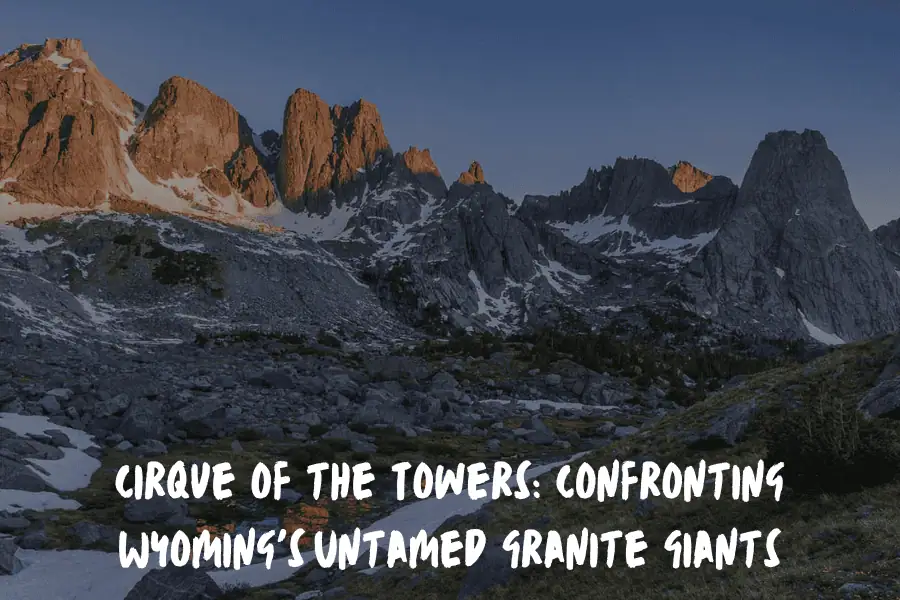
There are backcountry destinations in Wyoming that get talked about, and then there's Cirque of the Towers, the one that tends to end the conversation.
Located in the Wind River Range near Pinedale, the Cirque is a horseshoe of dramatic granite spires surrounding Lonesome Lake at 10,800 feet, and the approach through Big Sandy Lodge makes the reveal feel genuinely earned.
The most common route runs about 20 miles round trip, which puts this firmly in multi-day backpacking territory.
That barrier is exactly what keeps it pristine.
The Wind Rivers see a fraction of the traffic that Grand Teton and Yellowstone absorb, and by the time you reach the lake with those towers reflected in the water, you understand why the people who know Wyoming best tend to point here first.
The Cirque doesn't offer the quick payoff of a day hike — it asks for two or three days and rewards you with a sense of remoteness that's increasingly hard to find.
For anyone willing to carry the weight and put in the miles, this is the version of Wyoming that doesn't appear on highway signs.
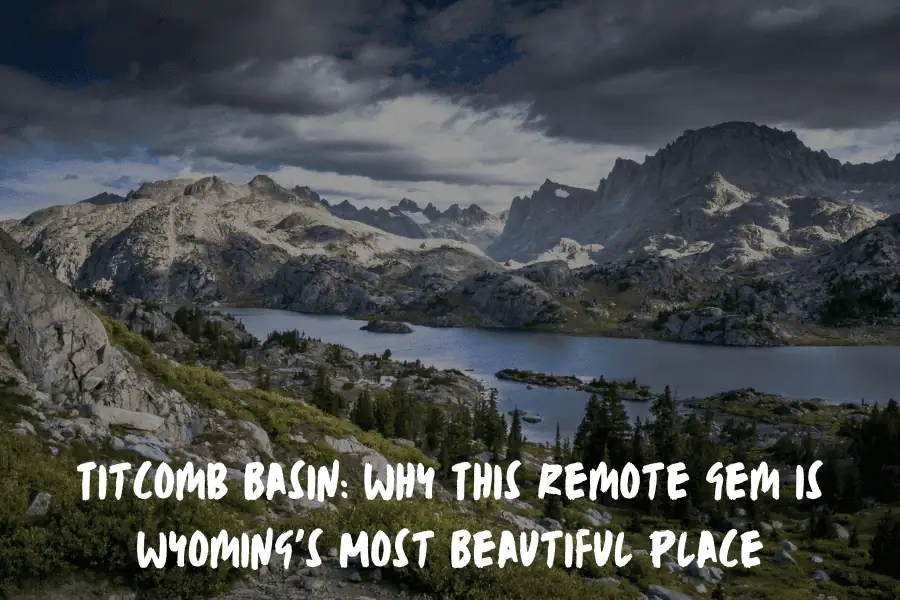
Titcomb Basin: Why This Remote Gem is Wyoming's Most Beautiful Place
The Wind River Range contains more than 40 peaks above 13,000 feet, over 1,300 lakes, and roughly 700 miles of trails.
Titcomb Basin sits at the center of the argument for why this range deserves the same attention that the Tetons and Yellowstone receive.
The standard approach from Elkhart Park runs about 16 miles each way, passing through Photographers Point, Seneca Lake, and Island Lake before reaching the basin at 10,246 feet.
The Fremont and Wind River peaks frame the upper basin, and the chain of Titcomb Lakes reflects them in a series of views that build on each other as you move deeper into the drainage.
This is a multi-day route — most backpackers allow three to five days to do it properly — and the distance acts as a natural filter.
The basin sits beyond the range of day hikers, which means the people who reach it arrived on their own legs and are generally inclined to treat it accordingly.
That combination of earned access, high alpine scenery, and genuine remoteness is what gives Titcomb its reputation among people who have spent real time in Wyoming's backcountry.
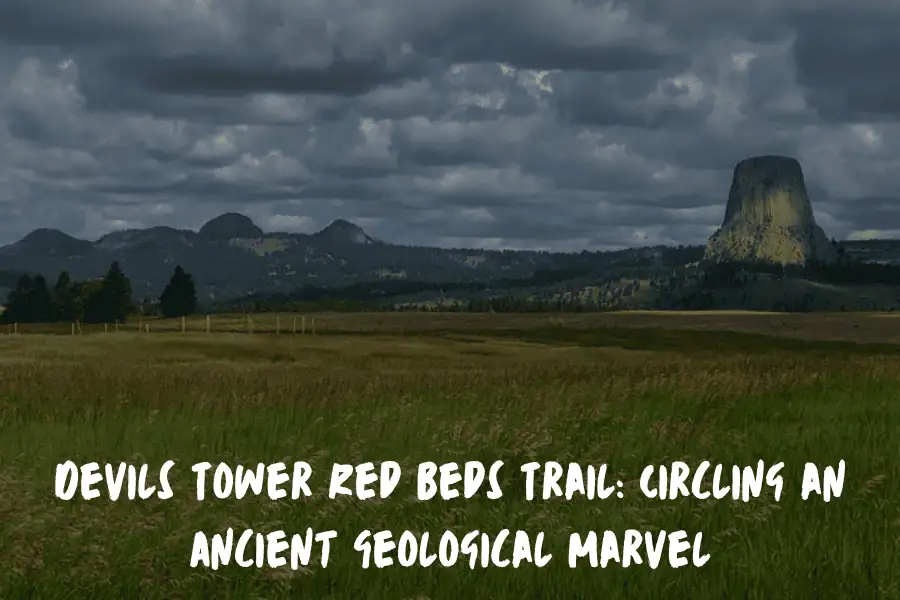
Devils Tower Red Beds Trail: Circling an Ancient Geological Marvel
Wyoming's hiking conversation almost always stays in the northwest corner of the state.
Devils Tower, rising out of the Black Hills in the northeast, represents an entirely different version of the state — and the Red Beds Trail around its base is one of the most quietly rewarding walks in the region.
The loop runs 1.3 miles around the base of the tower, which stands 867 feet above the surrounding terrain and is composed of phonolite porphyry — a volcanic rock that formed the distinctive columnar structure as it cooled.
The Red Beds themselves are the rust-colored sedimentary formations that ring the base, carved by Belle Fourche River erosion over millions of years.
Prairie dogs occupy the meadows just outside the monument boundary, and the ponderosa pine forest along the trail feels nothing like the alpine environment that dominates most Wyoming hiking coverage.
The scale of the tower at close range is difficult to convey in photographs, and the walk around it — unhurried, low-effort, genuinely strange — is the best way to let the geology make its case.
Final Thoughts: Your Wyoming Adventure Awaits
Wyoming is a land of unparalleled beauty and diverse landscapes, offering a lifetime of exploration for every type of hiker.
From the iconic Teton peaks to the solitude of the Wind River Range and the geological wonders of Devils Tower, these nine trails are just a glimpse into the state's vast potential.
Whether you're planning a quick weekend escape or an epic multi-day backpacking trip, remember to prepare adequately, respect the wilderness, and leave no trace.
Each step you take on these trails is an opportunity to connect with nature in its purest form.
So, which Wyoming adventure will you embark on first? Lace up your boots, pack your essentials, and answer the call of the wild. Your next unforgettable journey begins now!