

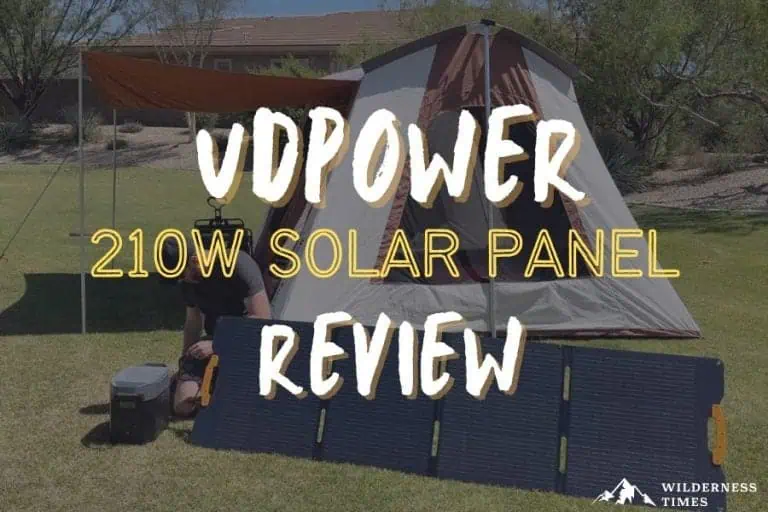
Here's the simple rule on portable solar: efficiency matters more than wattage.
Two panels at the same rated wattage can deliver very different real-world output, especially on partly cloudy days. The difference comes down to cell quality, coating, and how the panel handles imperfect conditions.
The UDPower 210W is one of the few foldable panels we've field-tested that sits at the high end of monocrystalline efficiency. It's the piece that completes a portable power setup — keeping your station topped off without hunting for a wall outlet.
Below is how it performs in real use, who it's right for, the size caveat, and how it stacks against the Jackery and EcoFlow panels at the same price.
Quick Take
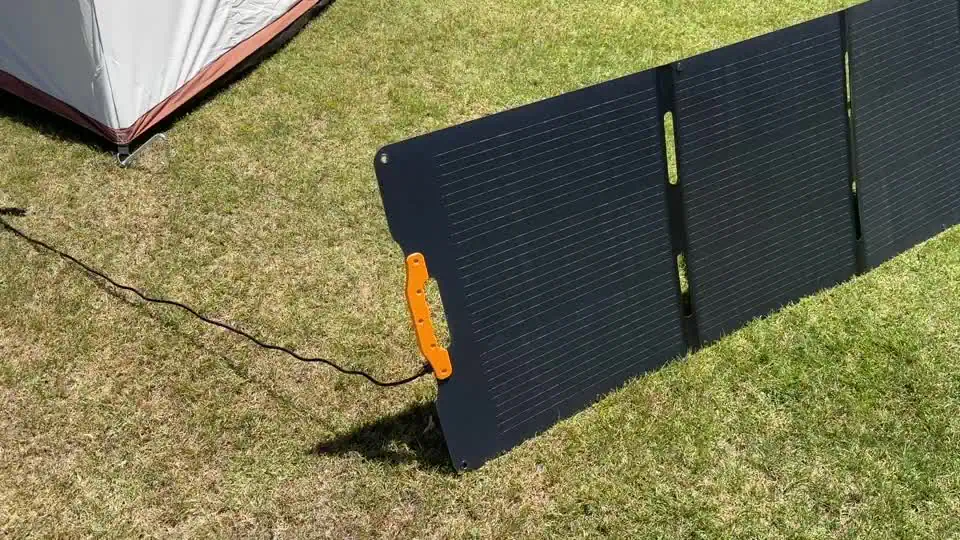
The UDPower 210W is a foldable monocrystalline panel with 22%+ conversion efficiency, ETFE/PET lamination, and an adjustable 60-90 degree kickstand. It's 15.32 pounds folded to roughly 24 by 23 inches.
It's TÜV certified, IP65 waterproofed, and rated for over 10 years of service. Operating range is -40 to 185°F.
The tradeoff: it's a single panel, so charging a 2,000Wh+ station from empty is a full sunny day's work. For most camping and off-grid topping-off, it's one of the best mid-range picks we've tested. For fast solar recharge of a large station, plan on running two in parallel.
What's Actually Good About It
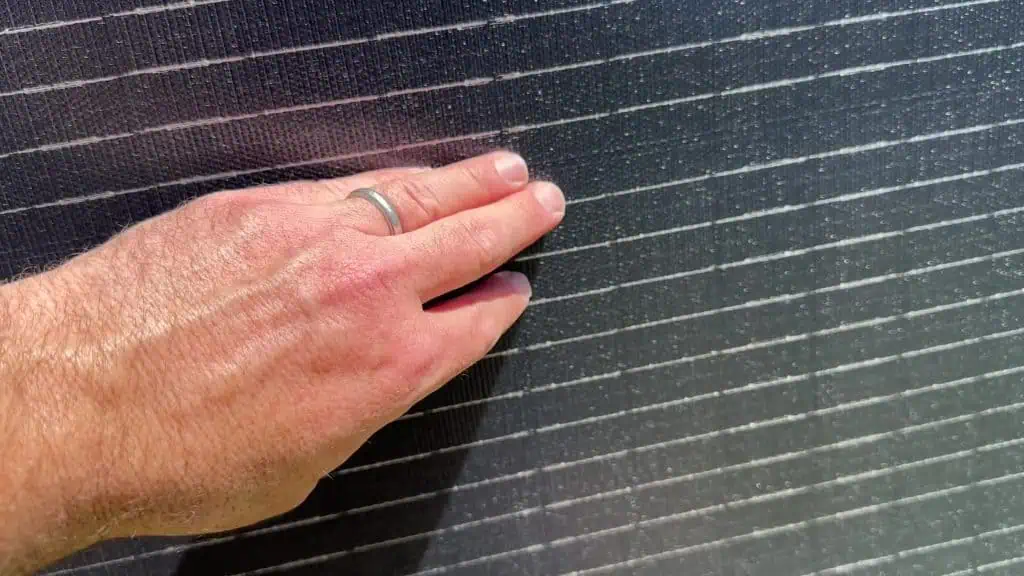
22%+ efficiency is the high end of portable monocrystalline. Most foldable panels in this price range land between 18-21%.
The extra few percentage points matter on partly cloudy days, when every bit of available sunlight has to do real work.
Class-A monocrystalline silicon cells. Same grade used in residential rooftop installs — which is why the efficiency number holds up.
This isn't a B-grade panel relabeled for the camping market.
TÜV certification. Third-party safety and performance testing that isn't universal on portable solar at this price point.
It's a quiet trust signal — confirmation that the panel actually delivers what it claims.
ETFE/PET lamination. ETFE is the same surface material used on high-end permanent solar installations.
It's scratch-resistant, has better light transmission than standard glass-faced panels, and wipes clean easily after a dusty campsite.
Adjustable kickstand — 60 to 90 degrees. You can track the sun across the day without repositioning the whole panel, which matters for sustained output during longer charges.
Durability that holds up to camping. Operating range -40°F to 185°F. IP65 waterproofing handles rain without issue. 10+ year service life.
This is a buy-it-once panel, not something you're replacing after one season.
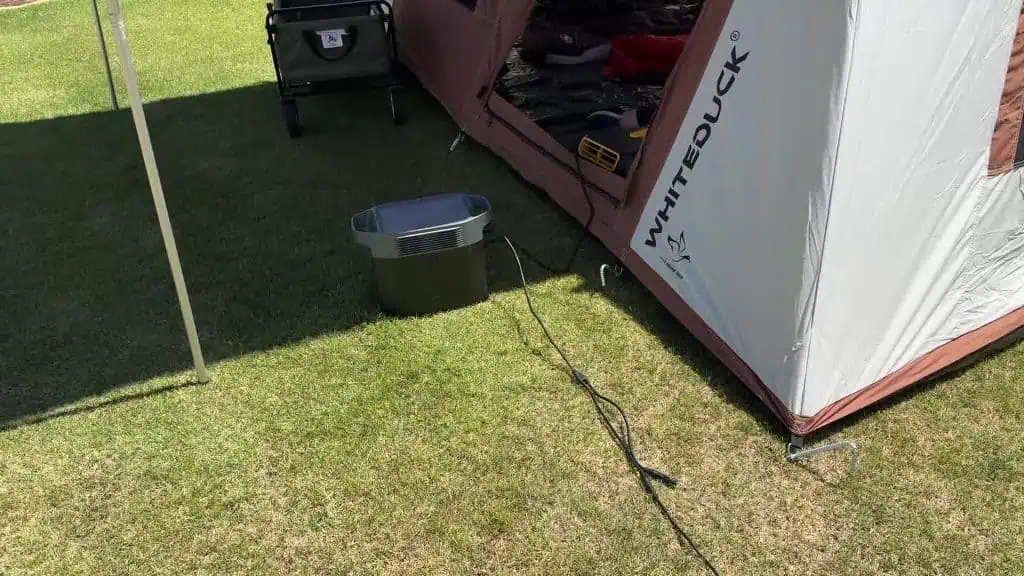
Real-world output is strong. We tested it with an EcoFlow Delta 2 and pulled 58 input watts — more than was being used to run a portable air conditioner at the same time.
Who It's Right For
This panel makes the most sense for:
- UDPower power station owners — built natively for the C600, S1200, and S2400 with direct compatibility
- Off-grid car campers and van lifers who want to top off solar charge without hunting for AC outlets
- Owners of EcoFlow, Jackery, or other MC4-compatible stations looking for an efficiency-first panel at a competitive price
- Anyone running high-draw camping gear like the best tent air conditioner or a portable fridge off battery — the 58W draw we measured kept the station net-positive even while powering AC
- Long-trip campers in long-term camping setups where AC recharge isn't available
What to Know Before You Buy
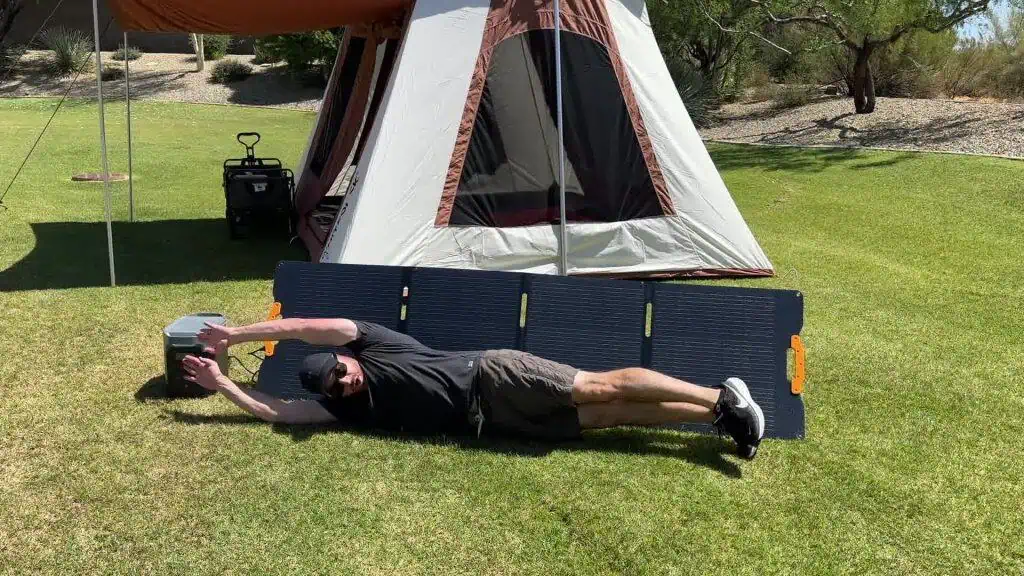
It's not small unfolded. 15.32 pounds and roughly 24 by 23 inches folded down — but when it's deployed, it's long.
You can see in our testing it's longer than a person lying down. That's the tradeoff for the surface area you need to actually generate 210 watts. Plan your campsite layout around it.
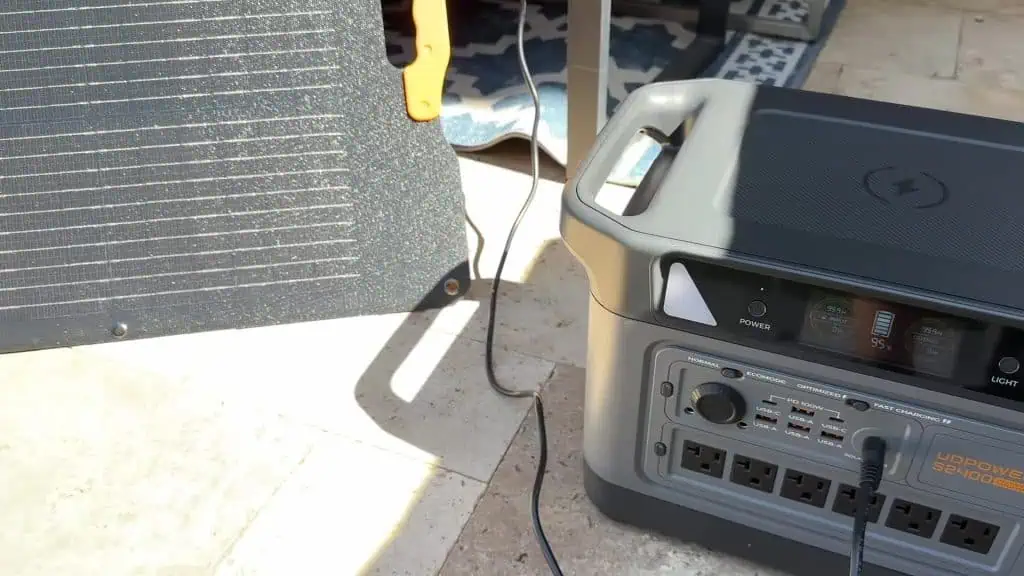
Designed for UDPower stations first. The C600, S1200, and S2400 get plug-and-play compatibility.
It will work with other brands that accept MC4 or compatible connectors, but if you're pairing with a non-UDPower station, double-check voltage and connector type before you buy.
Single-panel setup. At 210 watts, charging a large station like the S2400 from zero takes a full sunny day.
If you need faster solar recharge, budget for two panels rather than one. Most large stations (including the S2400) have higher solar input caps than a single panel can fill — so stacking pays off.
How It Compares
vs. Jackery SolarSaga 200W: Similar wattage class, but the UDPower undercuts on price while matching or beating efficiency specs.
Jackery still wins on brand recognition and ecosystem polish if you're already in the Jackery world.
vs. EcoFlow 220W Bifacial: EcoFlow's bifacial design has a unique angle — it captures reflected light from the back side of the panel.
UDPower delivers comparable monocrystalline efficiency in a more affordable package, and the build quality (ETFE surface, TÜV certification) holds its own.
vs. cheap no-name foldable panels: Wattage claims on budget panels often don't match real-world output.
The UDPower's TÜV certification, Class-A cells, and ETFE coating are the things you're paying for. You feel the difference on cloudy days and over years of use.
Pricing puts the UDPower 210W in solid mid-range territory for the portable solar category. Efficiency-first construction is what earns the spot.
FAQ
Will the UDPower 210W work with my EcoFlow or Jackery station?
Most likely yes — it uses MC4 connectors that pair with most major brands. We tested it with an EcoFlow Delta 2 and pulled 58 input watts. Confirm voltage and connector type for your specific model before you buy.
How long does it take to charge a 2,000Wh station with this panel?
Roughly a full day of direct sun. For a station like the S2400 (2,083Wh), one 210W panel won't refill from empty in a single day under realistic conditions. For faster recharge, run two panels in parallel.
Is it actually waterproof?
Yes — IP65 rating handles rain without issue. The operating range is -40°F to 185°F, so it holds up in realistic camping conditions.
What's the efficiency rating?
22%+ conversion efficiency using Class-A monocrystalline silicon cells — the same grade used in residential rooftop installs.
How heavy is it?
15.32 pounds folded to roughly 24 by 23 inches. Manageable to carry, but it's a drive-up panel, not pack-in gear.
Can I stack two panels for faster charging?
Yes — running two in parallel meaningfully cuts charge time. The UDPower S2400, for example, accepts up to 440W of solar input, so two panels (~420W combined) fill the input cap.
The Verdict
The UDPower 210W Portable Foldable Solar Panel is a strong pick for anyone building out a real off-grid setup that needs efficient, durable solar without paying brand-name premiums.
The 22%+ efficiency, ETFE coating, TÜV certification, and 10-year service life add up to one of the better mid-range foldable panels we've tested — particularly for UDPower station owners, but also for anyone running an EcoFlow, Jackery, or other MC4-compatible setup.
Just plan around the single-panel constraint if you're refilling large stations.
Next step: If you're still sorting out the rest of your power setup, our EcoFlow Delta 2 review covers a popular station this panel pairs with. And if you're building a hot-weather off-grid kit, see the best tent air conditioner roundup for what to run on the other end.