

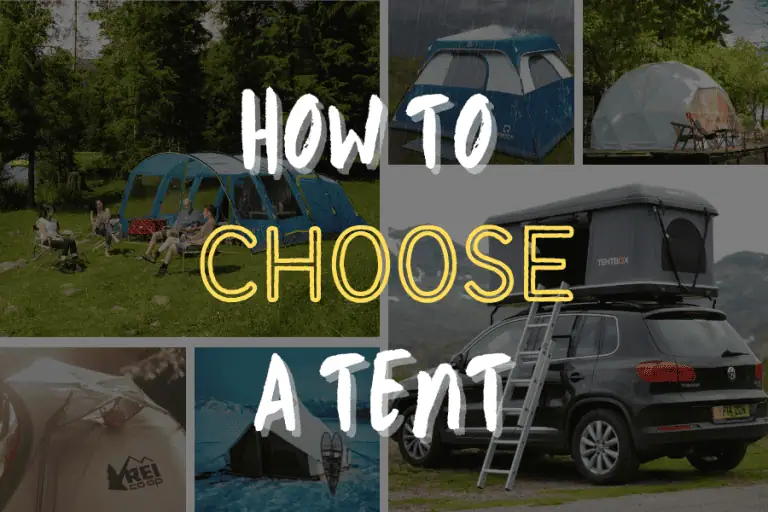
I've seen it happen over and over again.
Someone buys a tent based on a friend's recommendation, shows up to the trailhead, and realizes it's a 10-pound monster built for car camping — not a three-day backpacking trip.
Or they go the other way: they buy the lightest tent they can find, then take it on a family trip where everyone is crammed in like sardines.
The good news? Choosing the right tent isn't hard. It just takes knowing which questions to ask before you start shopping.
In this guide, I'm going to walk you through the four key factors that determine which tent is right for you — then break down every major tent type so you know exactly what to look for.
Whether you're buying your first tent or upgrading from something you've had for years, this guide will get you to the right answer fast.
Not sure what tent category you're even shopping in? Our guide to 24 different types of tents covers the full landscape in one place.
The 4 Questions That Determine Your Perfect Tent
Before you compare features, specs, and prices, answer these four questions:
- How do you plan to camp?
- How many people are going?
- What weather will you face?
- What's your budget?
Answer those, and the field narrows dramatically.
Let's go through each one.
Question 1: How Do You Plan to Camp?
This is the single most important question — it determines your tent type before anything else.
Car Camping (Drive-Up Campgrounds)
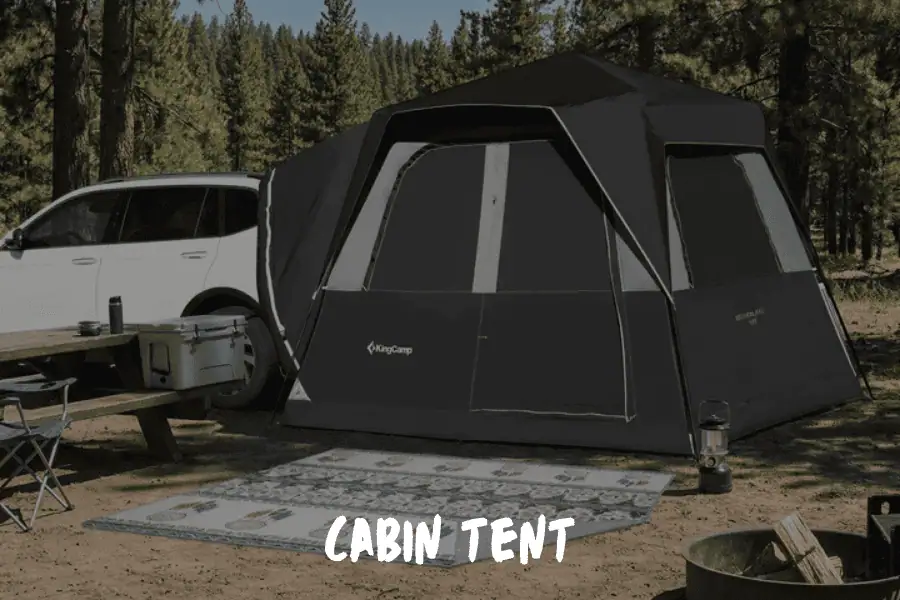
If you're driving right up to your campsite, you need a car camping tent — sometimes called a cabin tent.
Weight doesn't matter here, so lean into comfort: tall ceilings (aim for at least 6 feet), large doors, and good ventilation.
One of the biggest upgrades in this category over the last few years is the instant tent — pre-attached poles that cut setup time to under two minutes.
If you hate pitching tents (and honestly, who doesn't?), that's where to start. Pop-up tents take it even further.
Read more: Car Camping Essentials w/ Printable Car Camping Checklist
Backpacking (More Than a Mile From Your Car)
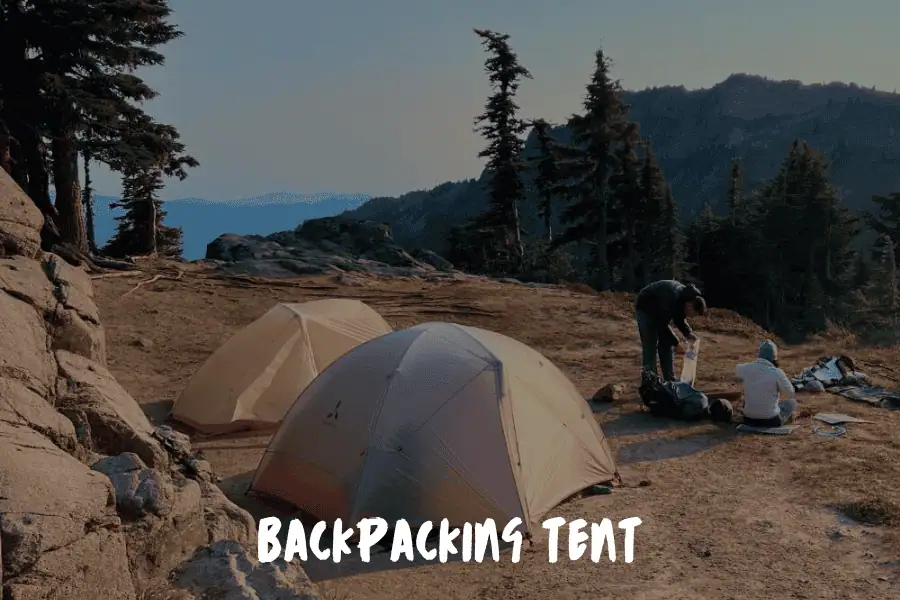
If you're carrying your shelter on your back, weight and packability become everything.
Don't even consider a car camping tent here — you'll regret it by mile two.
You're looking for something under 4 lbs with solid weather resistance and a compact packed size.
A dedicated backpacking tent is the only right call. New to hiking? Check out our full primer on what backpacking actually is before you gear up.
Also see: Overnight Backpacking Checklist (Downloadable & Printable PDF)
Family Camping (Kids or Groups)
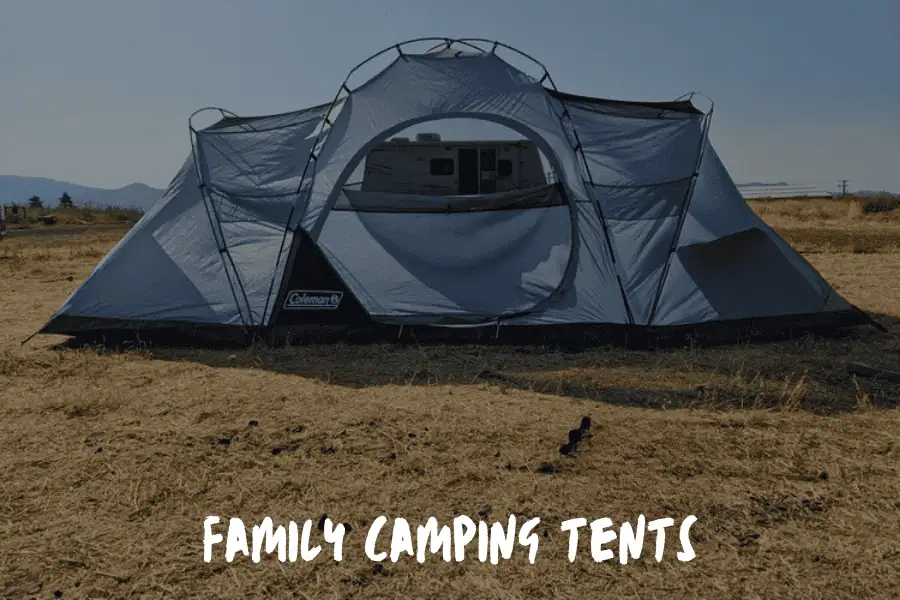
Go bigger than you think. I'll get into the exact sizing rules in the next section, but the short version is this: tent capacity ratings are almost always optimistic.
A "6-person" tent comfortably fits about 2–3 adults with gear. For a family of four, start at 8-person.
Family tents also tend to have room dividers, taller peak heights, and more weather protection than standard car camping tents.
See our best family camping tents guide for the full breakdown.
Read more: 15 Tips for Camping with Kids
Overlanding / Moving Camp Frequently
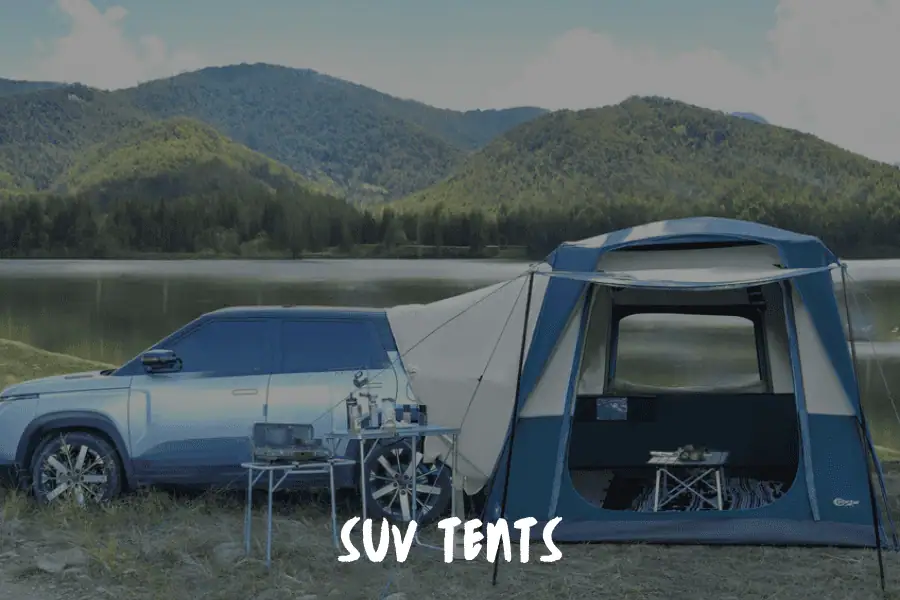
If your camping involves a truck, SUV, or Jeep heading off the beaten path, a rooftop tent is worth serious consideration.
Hard-shell and soft-shell rooftop tents mount to your vehicle's roof rack and set up in about 60 seconds.
You drive up, pull a couple of latches, and your sleeping platform is ready. No ground prep, no rocks in your back, no guessing whether the terrain is level.
If you're working with an SUV specifically, also browse our best SUV tent guide for ground-based options that work with your vehicle.
Long-Term Basecamps and Winter Camping
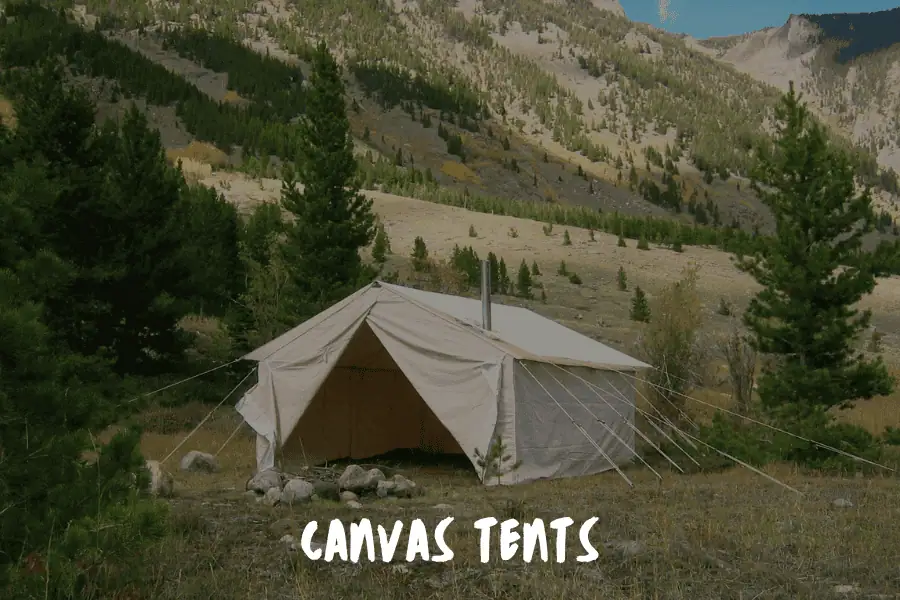
Canvas is king here.
Canvas tents are heavier and more expensive than synthetic options, but they regulate temperature better than any synthetic material and they last decades with proper care.
Most come with pre-cut stove jacks, meaning you can run a wood stove inside. That's a game-changer in cold weather.
They're also the go-to for glamping setups and extended stays where you want real comfort.
Explore our guides to the best canvas tents and best long-term camping tents for all the details.
Question 2: How Many People Are Going?

Here's one of the most common (and most expensive) rookie mistakes: trusting the tent's stated person capacity.
Tent manufacturers calculate capacity based on everyone sleeping shoulder-to-shoulder with zero gear inside the tent.
That's not real-world camping. Nobody is leaving their boots, packs, and sleeping bags outside.
My rule: size up at least one capacity level from your actual group size. Ideally two.
Here's the quick guide:
- Solo camper → 2-person tent (or 1-person if you're going ultralight)
- 2 adults → 4-person tent
- 2 adults + 1 kid → 6-person tent
- Family of 4–5 → 8-person tent or 10-person tent
- Large group of 6+ → 12-person tent or check the biggest camping tents
When in doubt, size up — especially for car camping, where there's no weight penalty for a bigger tent.
And remember: most campgrounds can accommodate two tents, so bringing two mid-size tents can sometimes work out better than one giant one.
For a complete breakdown of how to match tent size to your group, our camping tent sizes guide covers every scenario.
One more thing worth mentioning: if anyone in your group is on the taller side, pay attention to peak height. Tents vary wildly here.
Our guide to the best tents for tall people is worth a look if crouching all weekend sounds miserable (it is).
Question 3: What Weather Will You Be Camping In?
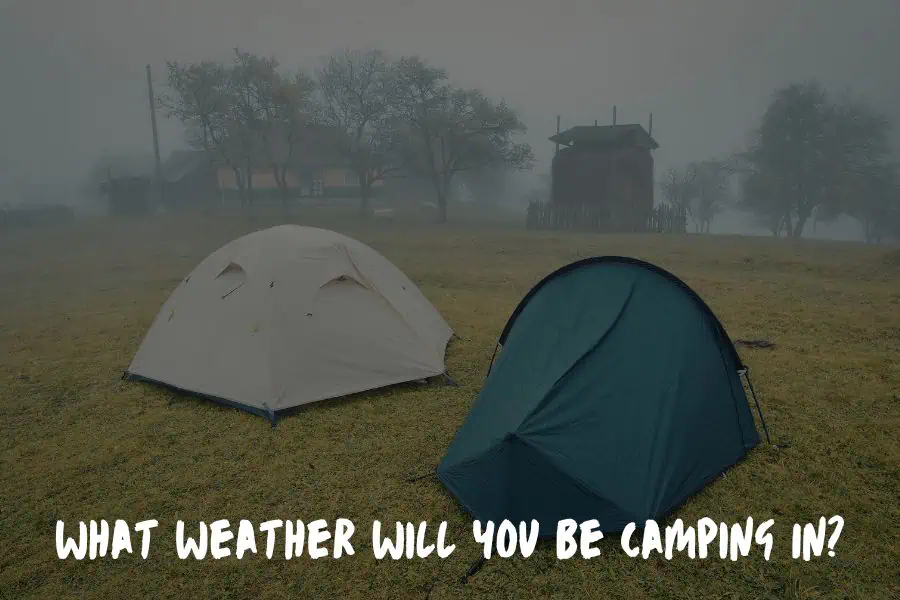
This one gets overlooked a lot, but it can make or break a trip.
The tent that's perfect for a dry July weekend in the Southwest is going to be a miserable, sweaty coffin on a rainy September trip in the Pacific Northwest.
Hot and Humid Climates
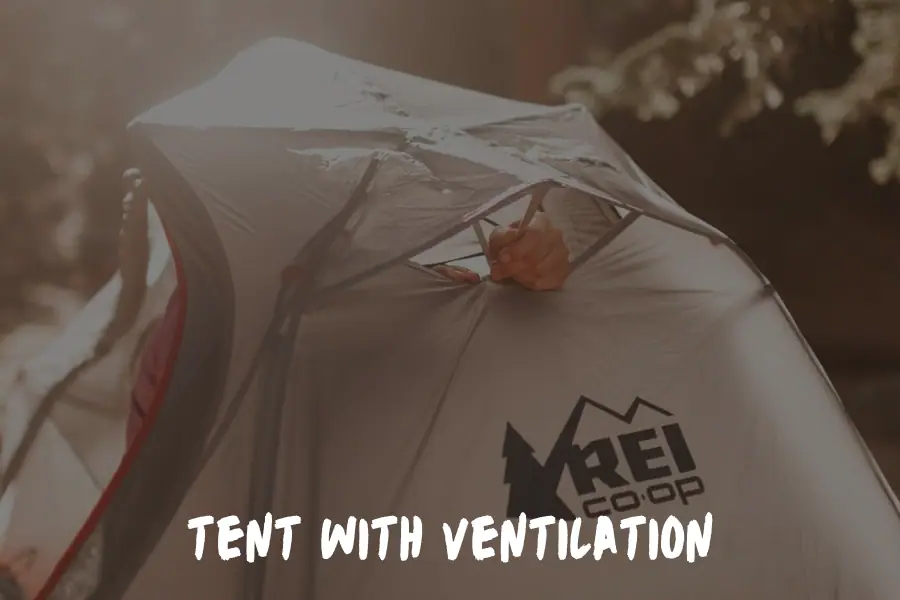
Ventilation is your number one priority.
Look for:
- Full mesh inner walls or ceiling panels
- Large windows with good cross-ventilation
- Tall peak height to let hot air rise
- Big vestibules to keep gear outside without it getting wet
In humid conditions, condensation inside the tent can be almost as bad as rain coming in. Good airflow solves both problems.
See more: Camping In Hot Weather & The Ultimate Guide To Staying Cool
Windy Conditions
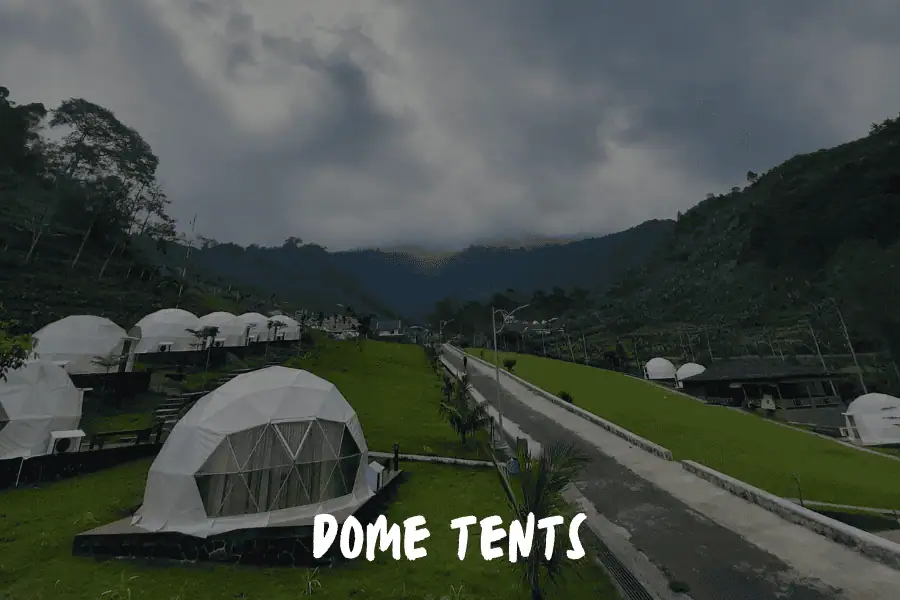
Dome tents handle wind significantly better than cabin-style tents.
The aerodynamic shape deflects wind instead of catching it like a sail. Look for cross-pole structures and low-profile designs.
Our best tents for high winds guide covers the top options.
We also break down the key structural differences in our dome vs. cabin tent comparison — worth reading if you're not sure which style fits your camping style.
Read more: How To Secure A Tent In High Winds & A Complete Guide
Rainy Weather
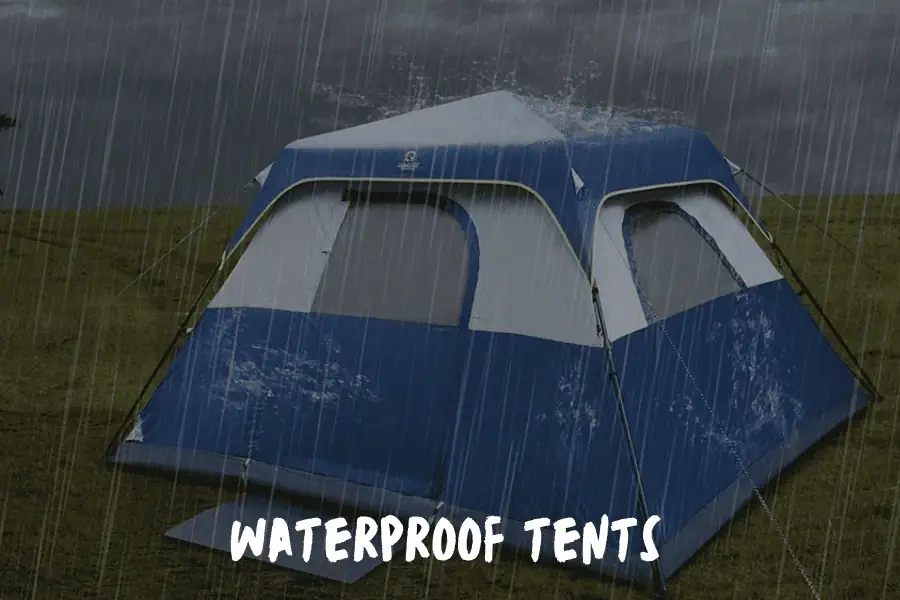
Check three things: hydrostatic head rating (2,000mm+ for the floor, 1,500mm+ for the rainfly), fully taped seams, and a bathtub-style floor that wraps up the sides a few inches.
That wrap-up floor keeps groundwater from seeping in during heavy rain. Our best waterproof tents guide is a great starting point.
Also See: Camping in the Rain (Tips, Tricks, and Hacks to STAY Dry)
Cold and Winter Camping
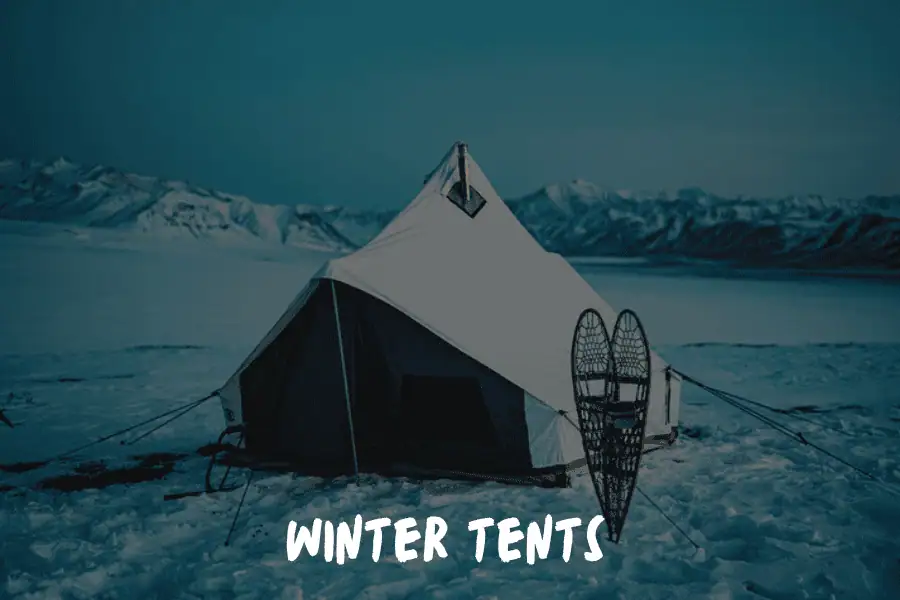
This is where 4-season tents and canvas tents earn their place.
Four-season tents use stronger poles (to handle snow load), less mesh, and sturdier rainflies to keep heat in.
Canvas tents take it further — the cotton material breathes naturally to reduce condensation, and they can be safely heated with a wood stove.
For serious cold-weather camping, browse our best winter tents guide and our budget 4-season tent roundup.
If you want to extend the life of a 3-season tent into colder temps, our tips on how to insulate a tent for winter camping are a must-read.
Read more: Once you have your shelter sorted, our winter camping guide and winter camping checklist will help you nail everything else.
Question 4: What's Your Budget?

The good news: there are solid tents at nearly every price point.
Here's an honest breakdown.
Under $150 — Entry-Level Weekend Camping
You're in entry-level territory, but that doesn't mean garbage.
Brands like CORE and Ozark Trail offer genuinely decent options in this range — especially for casual weekenders who camp once or twice a year in fair weather.
Check our Ozark Trail tent reviews to see what's available at the low end.
For backpacking on a shoestring, our best budget backpacking tents guide shows what's possible under $200.
$200–$350 — The Reliable Majority
This is where most reliable car camping and family tents live.
You'll get better waterproofing, sturdier poles, and more thoughtful design features.
Brands like Kelty, REI, and Eureka start to shine here. The REI Co-op Wonderland 6 is a strong example of what this range can deliver.
$350–$600 — Premium Comfort and Serious Backpacking
This is the sweet spot for frequent campers and serious backpackers.
You'll find ultralight tents from MSR and NEMO that are built to handle years of hard use.
For car camping, you'll get genuine standing room, multiple rooms, and better weather protection across the board.
$800+ — Canvas, Rooftop, and Overlanding Setups
These are long-term investments, not impulse buys.
A quality canvas tent can last 20+ years if you maintain it. Rooftop tents in this range are built with thicker materials, better insulation, and faster deployment systems.
If you're spending this much, you want to know you're getting the right product. Our best tent brands guide breaks everything down by brand reputation, warranty, and price tier.
Find Your Perfect Tent — In Minutes, Not Hours.
Ask our AI or take the 5-question quiz.
Find My Tent →A Deep Dive Into Every Major Tent Type
Now that you've answered the four questions, here's what to actually look for in each category.
Car Camping Tents
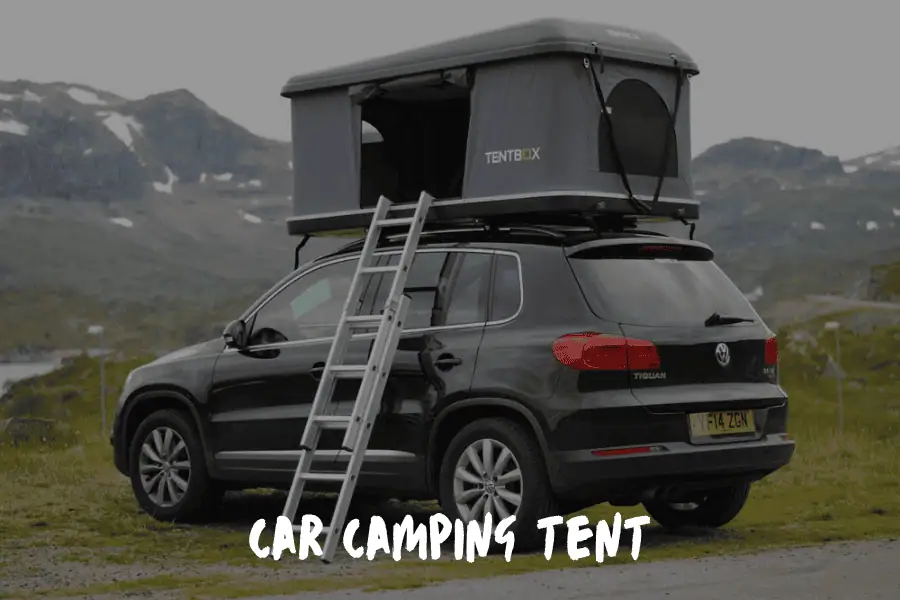
These are the workhorses of recreational camping — what most people use, and what I recommend for any first-timer.
If you've never camped before, start here.
What to look for:
- Tall ceilings — at least 6 feet for comfortable standing (7+ is even better)
- Large, easy-access doors
- Good ventilation: mesh inner panels and large windows
- Setup time under 15 minutes — ideally under 5
If easy setup is your top priority, look at our best instant tents — pre-attached pole systems that cut setup to under two minutes.
Pop-up tents are even faster if that matters to you. For options with a screen room, see our best cabin tents guide.
Top picks:
- CORE 6-Person Instant Cabin Tent (see our full review)
- Kelty Wireless 4 or 6 Person Tent
- REI Co-op Wonderland 4 or Wonderland 6
Best for: Weekend camping, first-timers, anyone at a drive-up site.
Family Tents
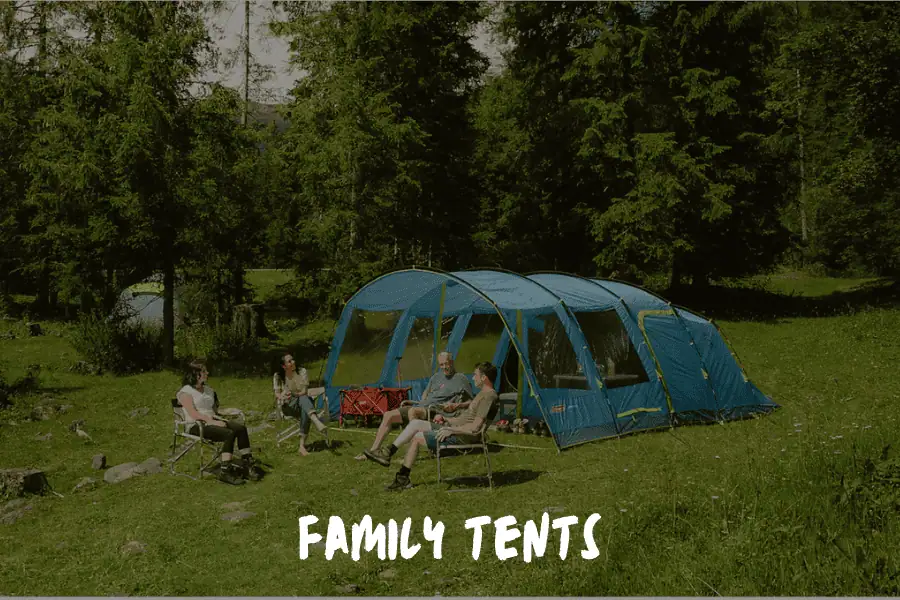
Think of these as car camping tents with the dial turned up: more space, taller, often with multiple rooms.
If you're camping with kids, this is your category.
What to look for:
- Peak height over 70 inches — 78–80+ inches is ideal
- Room dividers for privacy between adults and kids
- Large mesh ceiling panels for ventilation and stargazing
- Solid weather protection across the full rainfly
And I'll say it again: size up.
For a family of 3–4, start at 6-person. For a family of 4–5, move to 8-person or 10-person. For 6 or more, see our best 12-person tents and biggest camping tents guides.
Top picks:
- CORE 9-Person Instant Cabin Tent with Rainfly
- Eureka Copper Canyon LX 8-Person Tent
- Ozark Trail 10-Person Instant Cabin Tent
Best for: Families of 4–6, multi-night car camping trips, group camping.
Backpacking Tents
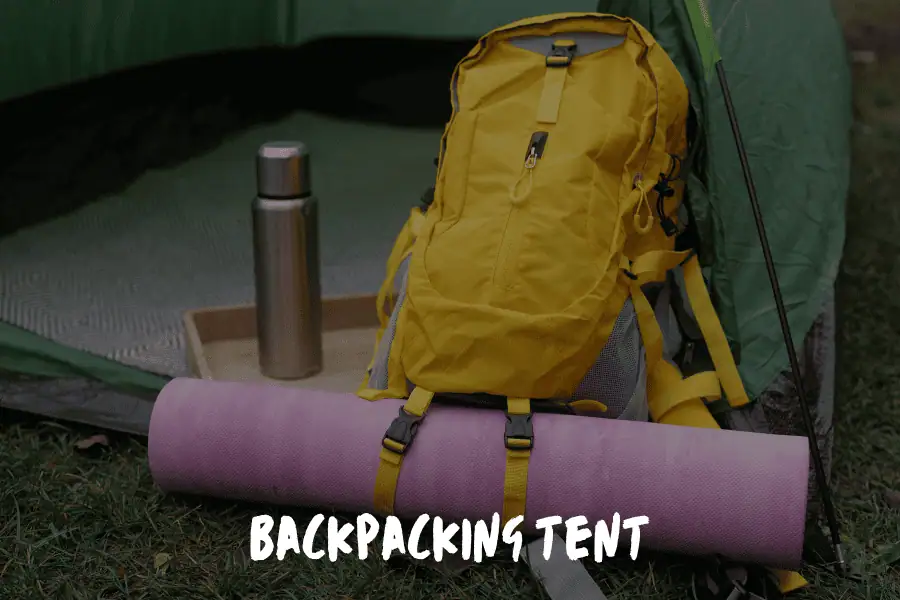
Built for hikers who carry everything on their backs. The priorities completely flip from car camping.
Weight and packed size matter more than anything else.
What to look for:
- Total packed weight under 4 lbs (under 3 lbs for ultralight)
- Strong weather resistance — you can't drive back to your car if a storm rolls in
- Easy setup, ideally by one person in the dark
- Reasonable internal space for the weight — knee room matters
The most common mistake with backpacking tents is going too heavy.
Not sure what weight range to target? Our guide on how much a backpacking tent should weigh is required reading before you buy.
Browse by group size: best 1-person tents, best 2-person tents, best 3-person tents.
Need to keep costs down? See our best budget backpacking tents — you can get solid performance for under $200.
Top picks for 2026:
Best for: Solo hikers, couples, thru-hikers, anyone with overnight mileage.
Rooftop / Overlanding Tents
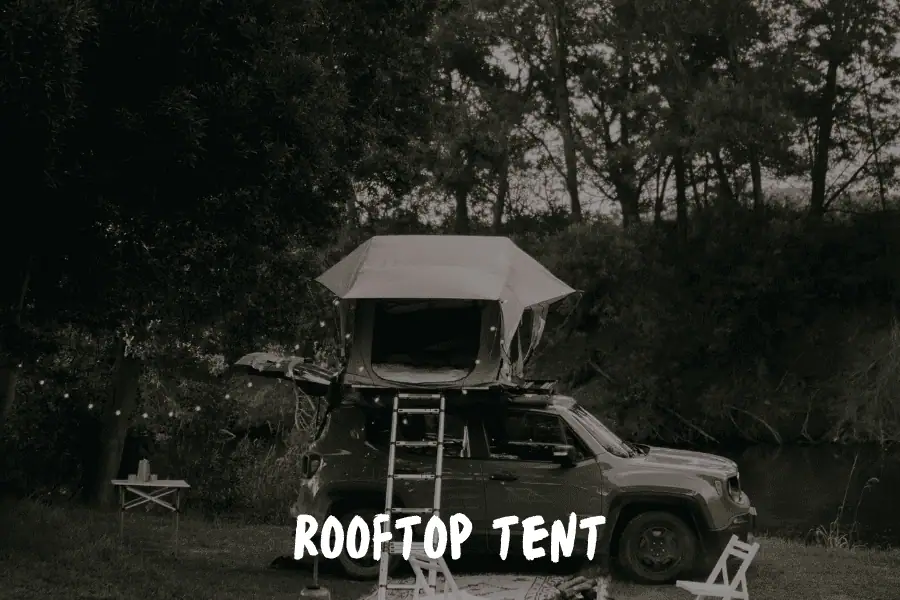
If your camping involves a 4×4, truck, or SUV on rough terrain, a rooftop tent changes the game.
Drive up, pull a couple latches, and your sleeping platform is deployed in about 60 seconds.
No ground prep, no rocks in your back, no guessing whether the terrain is level.
What to look for:
- Hard shell (faster deployment, more weatherproof) or durable soft shell (lighter, better views)
- Thick foam mattress — most quality options include one
- Weight capacity compatible with your vehicle's roof rack rating
- All-weather rating appropriate for your conditions
Browse our full best rooftop tents guide for 2026 for the complete breakdown.
Or check our best SUV tents guide if you're working with an SUV specifically.
Top picks:
- Thule Approach Medium Rooftop Tent
- Smittybilt GEN2 Overlander Tent
- Roofnest Condor 2 Air Hard-Shell Tent
Best for: SUV and truck adventurers, off-road explorers, remote camping, moving camp frequently.
Canvas and Specialty Tents
Canvas tents are the oldest tent style around, and there's a reason they're still here.
Nothing comes close for durability, temperature regulation, and long-term comfort.
The trade-off is weight and cost — you're not carrying this on your back.
But if you're driving in and planning to stay a while, canvas is in a category of its own.
What to look for:
- True cotton canvas — not synthetic "canvas-look" materials
- Stove jack option for winter and cold-weather setups
- Heavy-duty steel or aluminum poles (not fiberglass)
- Reinforced seams and quality zippers — these tents need to last decades
For glamping setups, bell tents like the White Duck Regatta are stunning and surprisingly livable.
For traditional cabin-style canvas, look at Kodiak and TETON Sports.
Full picks in our best canvas tents guide and best long-term camping tent roundup.
If a standard tent just isn't your thing at all, we've also got a guide to alternatives to tent camping worth a look.
Top picks:
Best for: Glamping, winter camping, basecamps, extended stays.
Quick Reference: Which Tent Is Right for You?
| Camping Style | Tent Type | Recommended Size |
|---|---|---|
| Hiking with a pack | Backpacking tent | 1–2 person (under 4 lbs) |
| Car camping, solo/couple | Car camping / cabin tent | 4-person |
| Family of 3–4 | Family / cabin tent | 6–8 person |
| Family of 5–6 | Family / cabin tent | 10–12 person |
| Off-road / vehicle-based | Rooftop tent | Depends on vehicle |
| Winter / long-term basecamp | Canvas or 4-season tent | Depends on group size |
| Glamping / comfort camping | Canvas bell tent | 4–8 person |
5 Tent-Buying Mistakes to Avoid
Before you head to your cart, here are the mistakes I see come up over and over.
Most of them are easy to avoid once you know about them.
1. Buying the exact capacity your group needs. The "4-person" rating means 4 people with zero gear and zero personal space. Always size up.
2. Ignoring weight when backpacking. Car camping habits die hard. If you're hiking to your campsite, every ounce matters. Check our guide on how much a backpacking tent should weigh before you commit.
3. Using a 3-season tent for genuine winter camping. A standard tent in serious cold and snow can be dangerous. If you're camping in winter conditions, get a 4-season tent or a heated canvas setup.
4. Skipping waterproofing details. A cheap rainfly with untaped seams will ruin a trip fast. Look for hydrostatic head ratings and seam-sealing. Our best waterproof tents guide shows what to look for.
5. Not thinking about setup at all. Some tents take 45 minutes to pitch the first time. Others are up in 2 minutes. If you're camping with kids or arriving after dark, that difference matters. See our best instant tents guide.
For a full rundown of rookie errors across all camping gear, check out our top beginner camping mistakes guide.
And finally, be sure to check out our new Tent Finder tool to help match you to your perfect tent:
Find Your Perfect Tent — In Minutes, Not Hours.
Ask our AI or take the 5-question quiz.
Find My Tent →Frequently Asked Questions
How much should I size up when choosing a tent based on the stated person capacity?
We recommend doubling your capacity size to comfortably sleep the amount of people you need.
Tent manufacturers calculate capacity based on people sleeping shoulder-to-shoulder with zero gear inside, which isn't realistic for real-world camping.
For example, a family of 4–5 should start at an 8-person or 10-person tent, while 2 people should look for a 4-person tent.
What's the main difference between car camping tents and backpacking tents?
Car camping tents prioritize comfort features like tall ceilings (at least 6 feet), large doors, and good ventilation since weight doesn't matter when driving to your campsite.
Backpacking tents focus on weight and packability above all else, typically weighing under 4 lbs, because you're carrying your shelter on your back for miles.
What should I look for in a tent if I'm camping in rainy weather?
Look for three key features: a hydrostatic head rating of 2,000mm+ for the floor and 1,500mm+ for the rainfly, fully taped seams, and a bathtub-style floor that wraps up the sides a few inches.
The wrap-up floor is particularly important as it keeps groundwater from seeping in during heavy rain.
Why are dome tents better than cabin tents in windy conditions?
Dome tents have an aerodynamic shape that deflects wind instead of catching it like a sail, which is what happens with cabin-style tents.
For windy conditions, you should look for dome tents with cross-pole structures and low-profile designs that handle wind significantly better.
What makes canvas tents ideal for long-term camping and winter use?
Canvas tents regulate temperature better than any synthetic material and can last decades with proper care.
They breathe naturally to reduce condensation, and most come with pre-cut stove jacks that allow you to safely run a wood stove inside, which is a game-changer in cold weather.
What budget range should I expect for a reliable car camping or family tent?
The $200–$350 range is where most reliable car camping and family tents are found.
In this price range, you'll get better waterproofing, sturdier poles, and more thoughtful design features from brands like Kelty, REI, and Eureka, with the REI Co-op Wonderland 6 being a strong example.
The Bottom Line
Choosing the right tent comes down to four things: how you camp, how many people are coming, what weather you'll face, and how much you want to spend.
Get those right, and the rest is just picking the best option in that category.
Once your tent is sorted, use our camping essentials checklist to make sure you haven't forgotten anything else for the trip.
And if you want to explore who makes the best gear across every budget and category, our best tent brands guide is a solid starting point.
Happy camping.